基于可复用插件的智能体框架递归自改进 PluginRSI: Recursive Improvement of Agent Harnesses with Reusable Plugins
将智能体框架拆解为可积累复用的插件,通过插件变异与重组实现递归优化
前置知识
智能体框架(Harness)
Harness 是包裹语言模型的「脚手架」程序,定义智能体与环境交互的全部方式:提供哪些工具、扮演什么角色、遵循哪些技能指令与流程、如何存取记忆。同一个模型配上不同 harness,在同一基准上的成绩可以相差几十个百分点。它以普通代码形式存在,可以在完全不改动模型参数的情况下被编辑和替换。
本文的全部内容就是如何自动优化 harness,理解这一概念是读懂优化对象 $H = H(W,P)$ 的前提。
递归自改进(Recursive Self-Improvement, RSI)
指智能体利用自身能力改进自身系统的过程:模型或其外围程序在运行中根据执行反馈不断生成更强的版本,形成「改进产生更强改进者」的循环。本文特指不动模型权重、只优化 harness 的递归框架优化:由一个固定的提议者模型驱动搜索,改进完全体现在外围代码上。
PluginRSI 就是一种 RSI 算法,标题中的 Recursive Improvement 正是指这一循环,理解 RSI 才能明白作者的长期愿景。
插件化设计与标准化接口
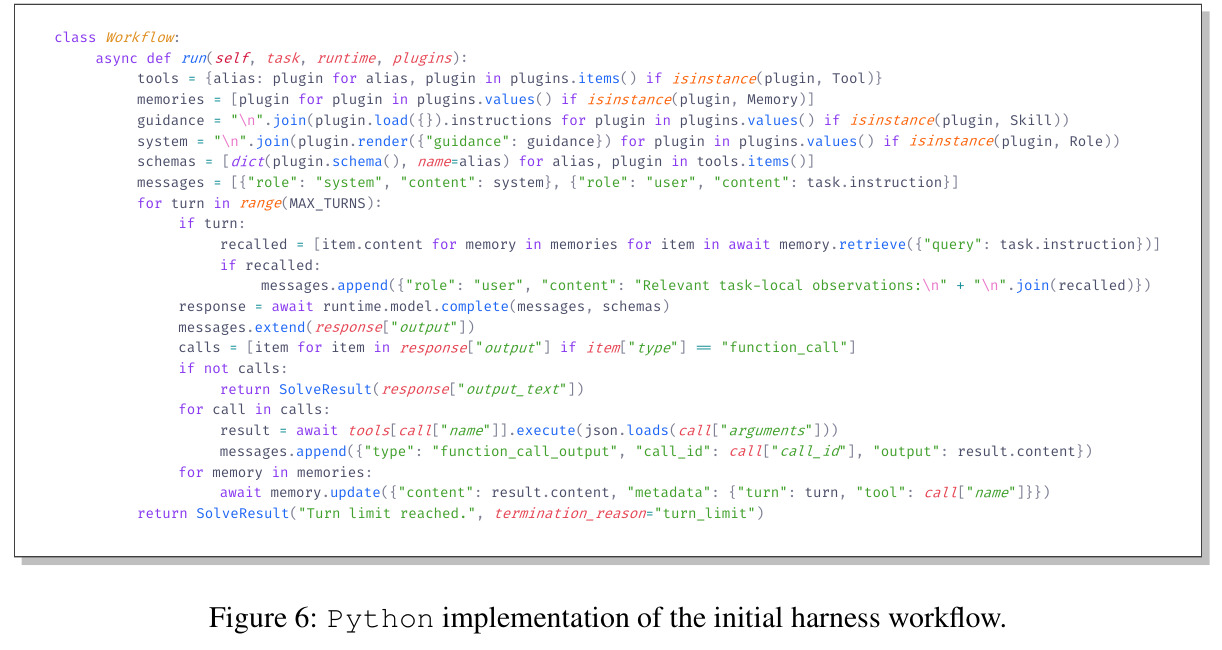
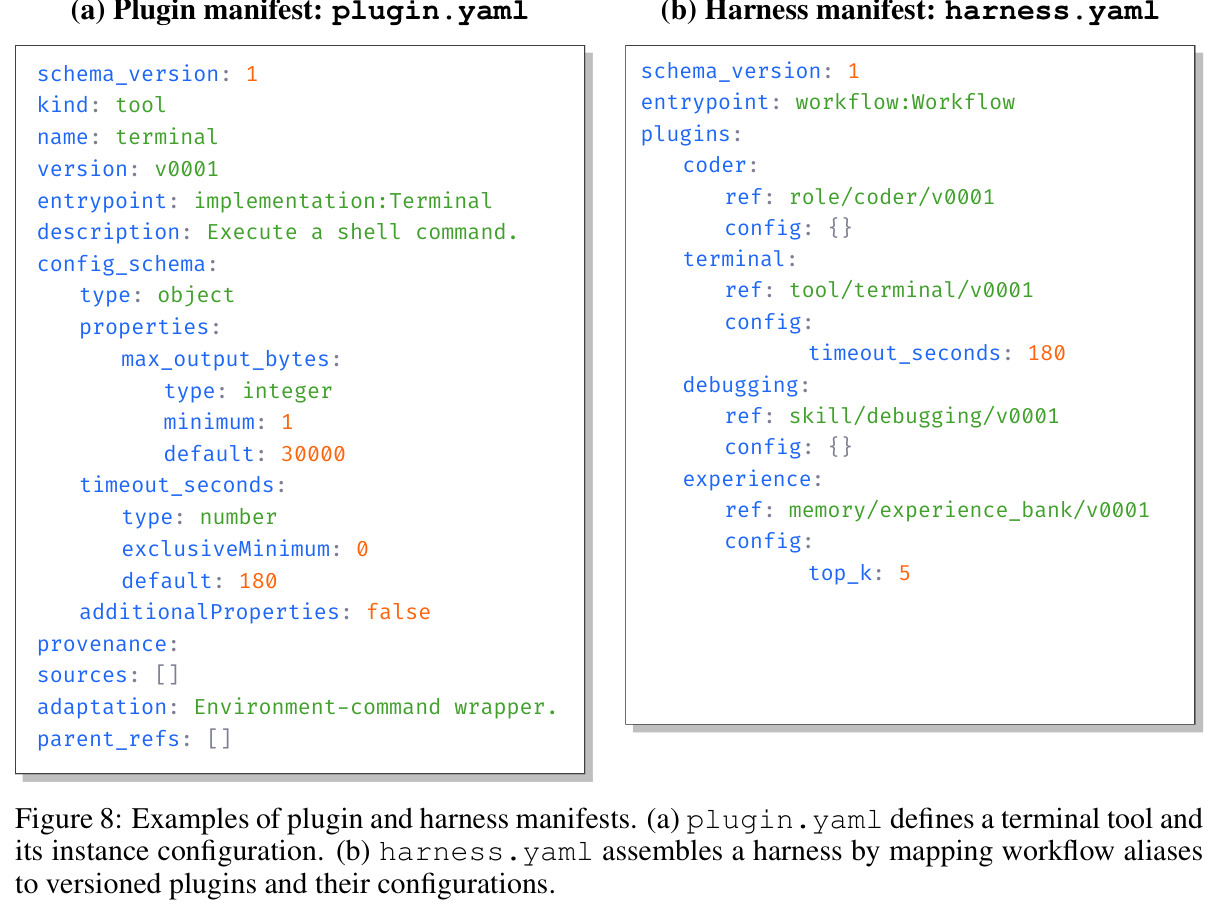
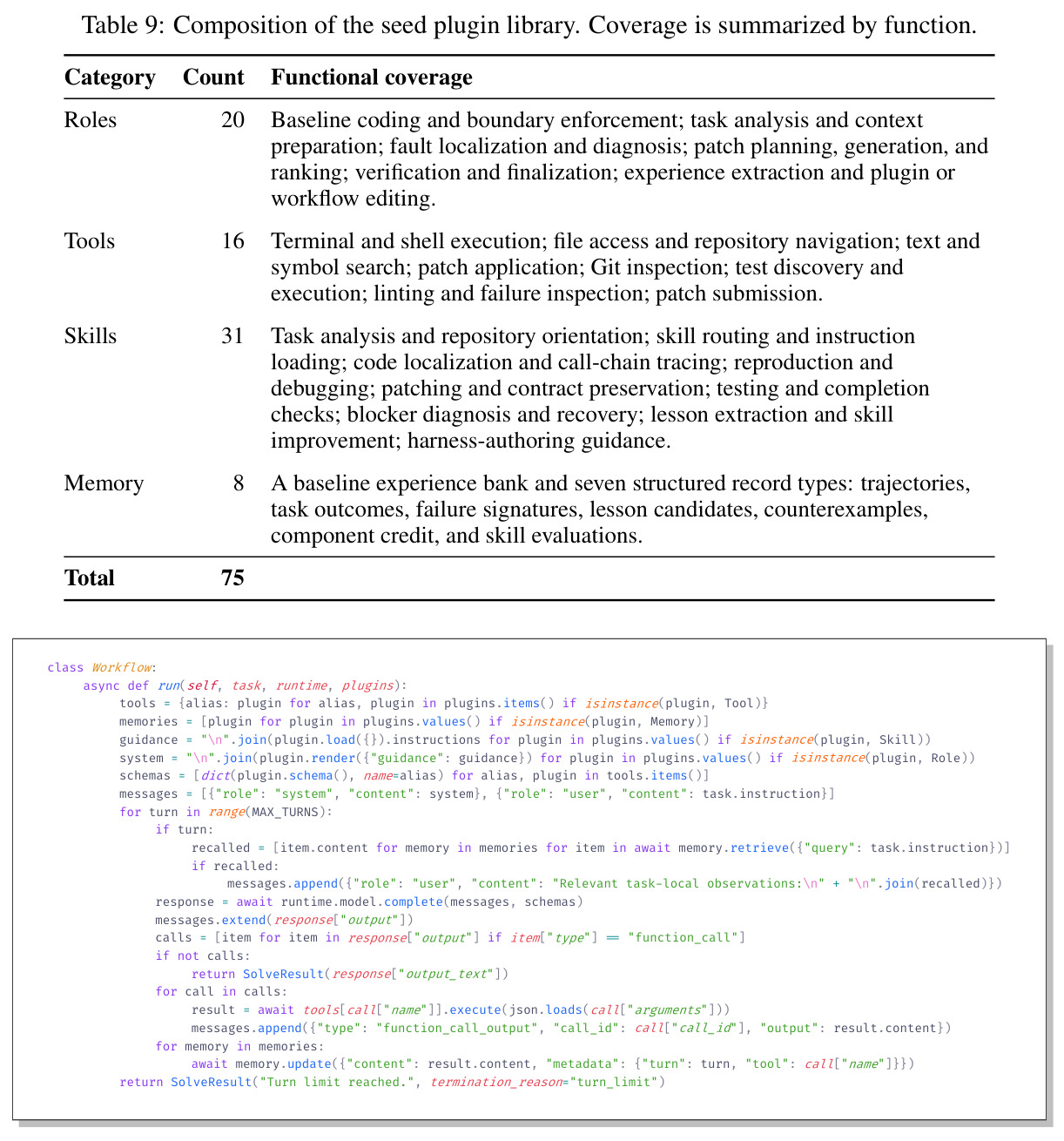
把 harness 中的每个机制(角色、工具、技能、记忆)封装成独立可替换的组件:YAML 清单声明接口与配置(输入输出 schema、提示词、rubric、元数据),Python 代码实现行为。工作流只通过统一方法(如 Tool.execute、Memory.retrieve)调用插件,不关心内部实现,因此可以单独替换某个插件而不影响其余部分。
插件化是本文方法成立的基础:只有接口解耦了,「只改一个插件、其余固定」的受控变异实验才可行,机制贡献才能被单独度量。
提议者-求解者架构
搜索框架中的双角色分工:求解者(solver)是实际执行任务的语言模型(推理档位设为 none),产生轨迹与得分;提议者(proposer)是另一个分析执行反馈、提出改进方案的语言模型(推理档位设为 xhigh)。两者都不做梯度更新,所有改进都体现为 harness 代码的变更,评估成本以 solver rollout 次数计量。
论文的优化循环、开销分析和全部超参数(如每轮 8 个变异提议)都围绕这两个角色展开,不分清二者就无法理解实验预算。
Held-in / Held-out 评估协议
把基准任务划分为优化过程可见的 held-in 集与完全不参与搜索的 held-out 集。本文在 SWE-bench Verified 上做 400/100 划分,在 held-in 上选出最优 harness 后冻结,再测 held-out 与跨求解模型的表现,用于检验改进是否只是对优化任务的过拟合。所有自动优化方法共享同一划分。
论文几乎每张表都同时报告两种得分,而「held-out 增益大于 held-in 增益」正是其最有说服力的核心证据。
研究动机
智能体的实际表现主要由包裹模型的 harness 决定:它组织工具、角色、技能与流程,同一模型在 SWE-bench Verified 上仅因 harness 不同,resolve rate 就能从约 38%(ReAct 零样本)波动到 55% 以上。2025-2026 年出现了用 LLM 迭代重写完整 harness 实现的递归优化方法,如 Darwin-Godel Machine(DGM)与 Meta-Harness,但这类「整程序重写」存在两大结构性缺陷。其一,多种机制(故障定位策略、补丁生成习惯、测试流程等)耦合在同一份代码里,一次重写同时改动所有机制,单个机制的贡献无法被单独度量,提议者难以判断哪个改动真正有效,搜索容易反复收敛到相似设计、难以探索新机制。其二,已经验证有效的局部机制难以保存:下一轮重写可能顺手覆盖掉它,改进无法跨迭代积累成可复用经验。实验中 Meta-Harness 的 held-out 分数随迭代明显波动,25 轮后 GPT-5.6 Terra 优化下仅 55.00%,正是这种「走两步退一步」现象的体现。
本文的目标是本文的目标是把 harness 演化从「每轮重写整个程序」改造为「围绕可复用机制的积累与重组」。具体而言:将 harness 形式化为插件参数化对象 $H = H(W, P)$,其中 $P$ 是从共享插件库中选出的机制集合(角色、工具、技能、记忆四类),$W$ 是调度插件调用时序与信息流的 workflow;在求解模型 $\Theta$ 与提议者均固定的前提下,通过搜索最大化期望回报 $J(H) = \mathbb{E}_{x\sim\mathcal{D},\,\tau\sim\Phi(\cdot\mid x,H,\Theta)}[r(\tau,x)]$。方法需要做到三点:(1) 单个机制可以在其余 harness 完全固定时被独立改进与验证;(2) 有实证增益的机制版本被永久保留在共享库中供后续所有候选复用;(3) 每轮能从不断变大的库中重组出更强的新 harness 候选,最终在不重训模型的情况下持续提升 held-out 性能。
与已有工作不同的是,已有工作分两路:提示词级优化(如 GEPA 的反思式 prompt 进化)只改指令,表达力有限;整程序搜索(DGM、Meta-Harness)表达力强但机制不可分。产业界的模块化 harness 实践(DeepSeek Harness 的「Everything is a plugin」、Claude Code 的插件系统)已经把机制做成可替换组件,但组件由人类专家手动设计与组织。本文的独特切入是把这个工程理念引入自动递归优化:让「插件」成为优化的一等公民——用标准化接口(YAML 清单 + Python 实现)把机制实现与调用它的 workflow 彻底解耦,从而第一次使机制级的受控实验(换一个插件、其余字节不变)、机制级信用分配(minibatch 分数差直接归因于该插件)与机制级复用(版本化插件库跨候选、跨 harness 传递)同时成为可能,把「发现机制」与「组装 harness」解耦成两个互补的搜索算子。
核心方法
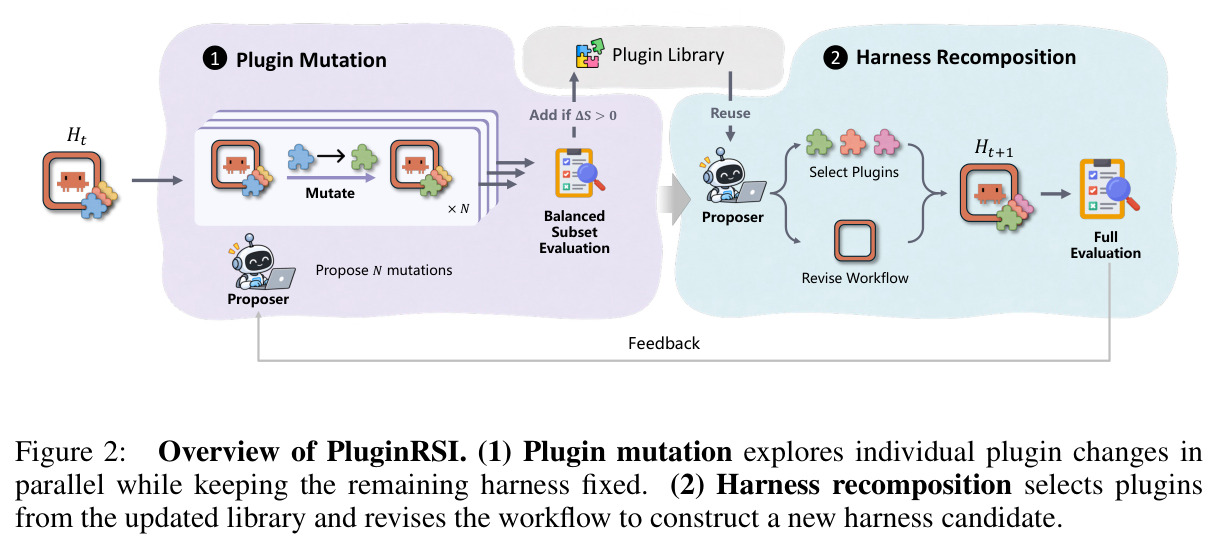
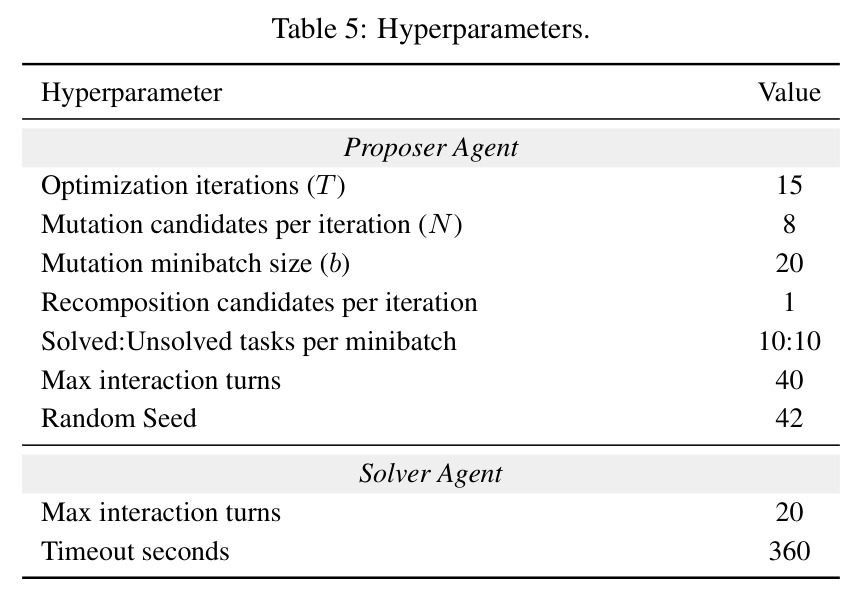
直觉上,与其每轮推倒重写整座房子,不如把好用的预制构件存入仓库:每次只实测改进一个构件,再定期用全部存货重新组装房子。技术路线上,harness 被表示为 $H = H(W, P)$:$P$ 是选用的插件集合(每个插件含 YAML 规格与 Python 实现,覆盖角色、工具、技能、记忆四类),$W$ 是协调插件调用与信息流的 workflow,$H$ 是把它们编译为可执行 harness 的确定性程序。优化从初始 harness $H_0 = H(W_0, P_0)$($P_0 \subseteq L$,$L$ 为 75 个插件的种子库)出发,每轮迭代两个阶段:(1) 插件变异——并行生成 $N=8$ 个候选,各自在独立采样的 $b=20$ 任务平衡 minibatch 上做受控对比,有增益的变异版入库;(2) harness 重组——提议者从更新后的库中挑选插件子集并修订 workflow,在全量 400 个 held-in 任务上评估,胜过 incumbent 则接管。共 $T=15$ 轮迭代,返回 held-in 最优 harness。
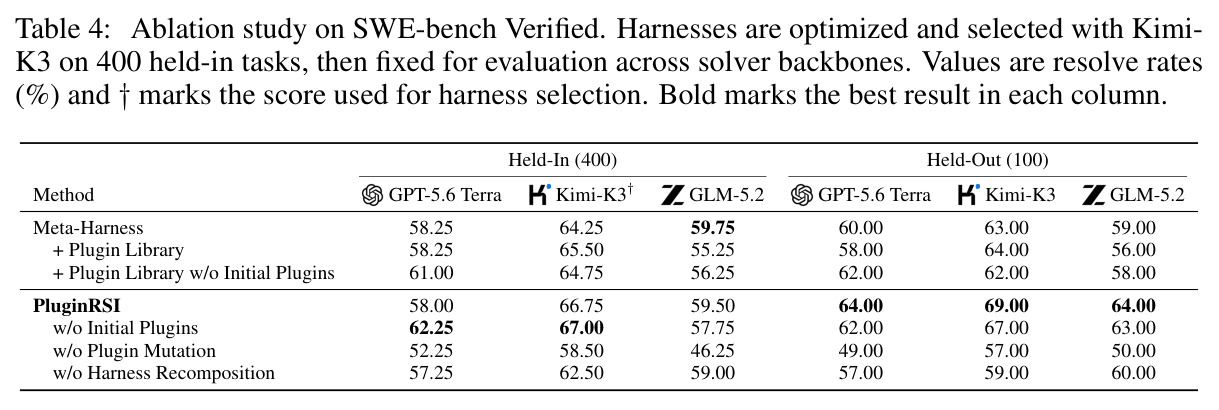
核心创新是把「机制级归因 + 经验累积」引入 harness 搜索,这是与整程序重写的本质区别。变异阶段保持 workflow 与其余插件完全不变,只替换单个插件,得到 $H_i = H(W, (P\setminus\{p_i\})\cup\{p_i'\})$,于是 minibatch 分数差可以干净地归因到这一个机制;每个 minibatch 由 10 个解出与 10 个未解出任务组成,迫使提议者同时审视「哪里失败」与「哪里可能退化」,各分支独立采样也带来多样探索信号。有实证增益($S_{\mathcal{M}}[H_i] > S_{\mathcal{M}}[H]$)的插件版本被写入按 kind/name/version 版本化管理的共享库,供后续所有候选复用;重组阶段负责全局组合,挑选插件并重写 $W \to W'$。消融证明闭环缺一不可:去掉变异 Kimi-K3 held-out 从 69.00% 跌至 57.00%,去掉重组跌至 59.00%;而只给 Meta-Harness 挂插件库几乎无增益(63.00% 到 64.00%),说明增益来自完整闭环而非库本身。
方法步骤详情
完整流程(Algorithm 1):初始化时种子库 $L$ 含 75 个插件(角色 20、工具 16、技能 31、记忆 8),从论文与开源系统抽取并经人工校验;初始 harness 只装 coder 角色、terminal 工具、debugging 技能、experience-bank 记忆 4 个插件和简短 ReAct 式 workflow。每轮分两步:插件变异——为 $N=8$ 个分支各采样 10 解出 + 10 未解出的 minibatch,提议者读代码与轨迹后选一个插件产出修改版,重编译对比,若 $S_{\mathcal{M}}[H_i] > S_{\mathcal{M}}[H]$ 则入库;harness 重组——综合变异结果与历史反馈,选 $P' \subseteq L$ 并修订 $W \to W'$,新候选 $H' = H(W', P')$ 在 400 个 held-in 任务上评估,更优则替换。每轮成本 $400 + 8 \times 20 = 560$ 次 solver rollout,共 15 轮;插件按 kind/name/version 版本化存储。
技术新颖性
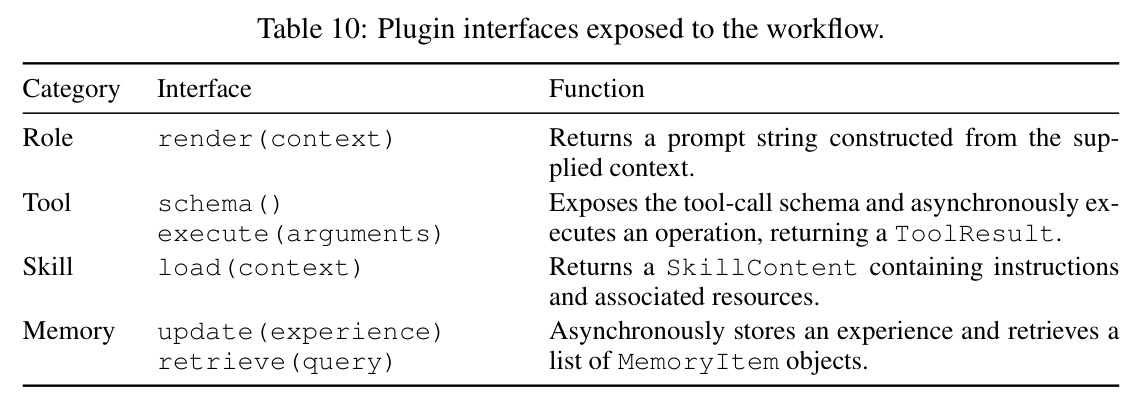
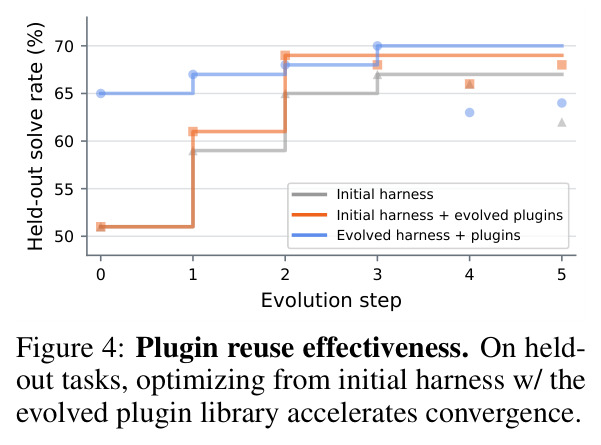
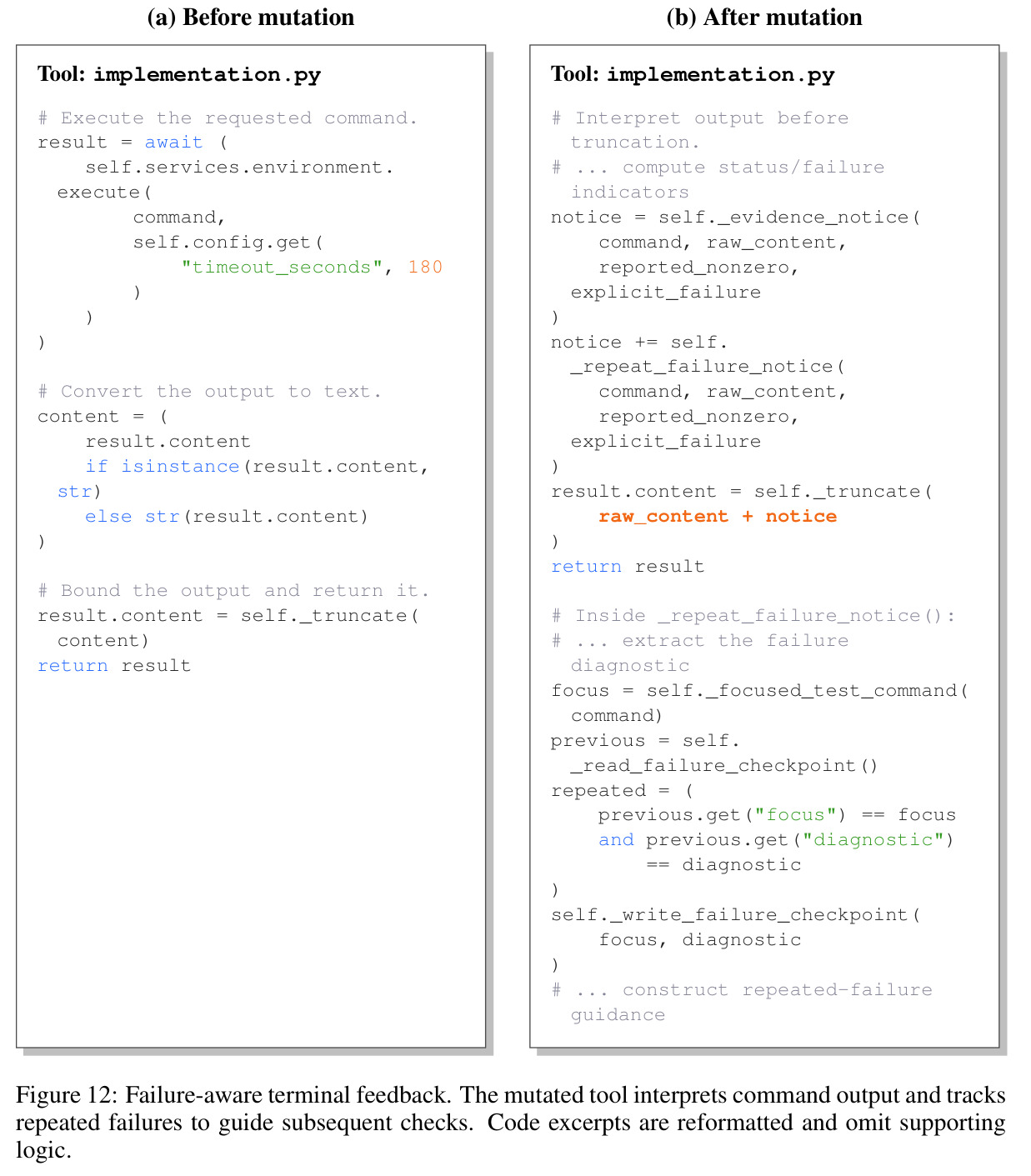
新颖性体现在三层。表示层:首次把递归 harness 优化的搜索对象定义为「插件参数化的 harness」,用版本化包、JSON Schema 配置与统一类别接口(Role.render、Tool.schema/execute、Skill.load、Memory.update/retrieve)实现机制与工作流彻底解耦,比 AgentSquare 等模块化 workflow 搜索粒度更细——覆盖可执行工具与记忆机制而非仅提示词编排。搜索层:把进化计算的「局部变异 + 全局重组」两算子显式分配到两个阶段,并用平衡 minibatch 配对比较做机制级筛选,相当于给黑盒程序搜索加上组件级信用分配,这是 GEPA(提示词级)与 DGM/Meta-Harness(整程序级)都不具备的。系统层:插件库成为跨迭代、跨 harness、跨任务甚至跨模型的可迁移资产——复用进化库使后续从初始 harness 出发的优化 2 步达 69%(不复用 65%),这是改进锁死在单一血统里的整程序重写结构上做不到的;发现的机制本身也可解释,如失败感知终端反馈在筛选批把 10/20 提到 14/20。
实验结果
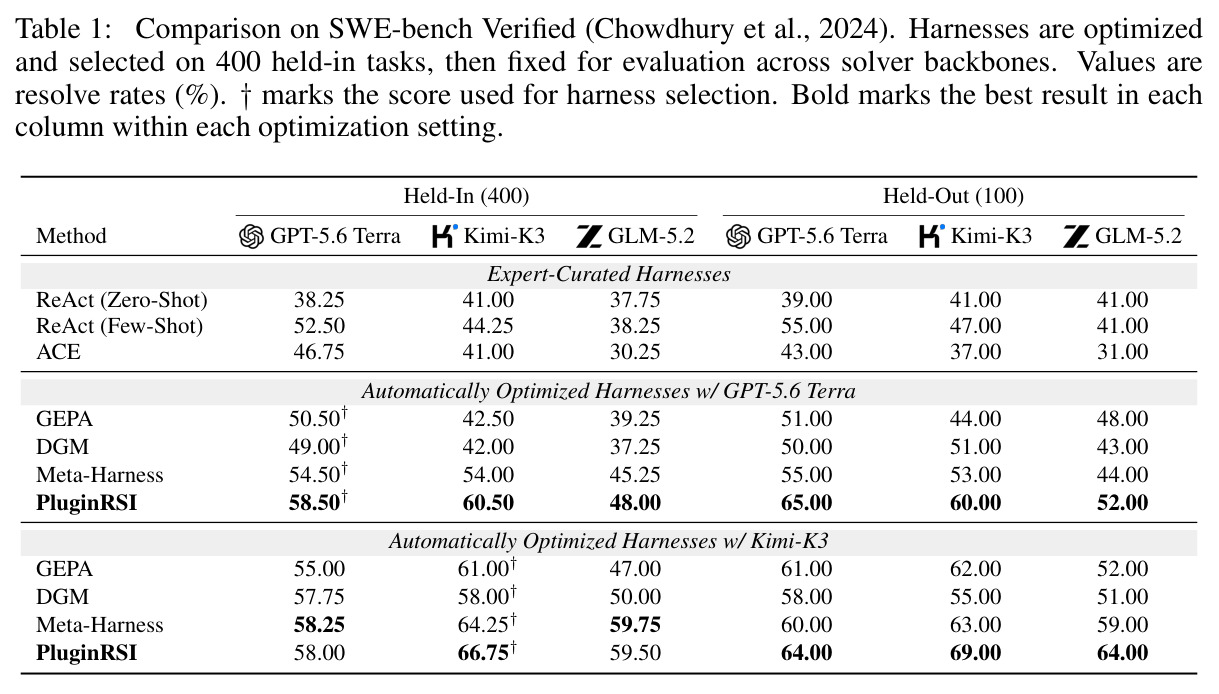
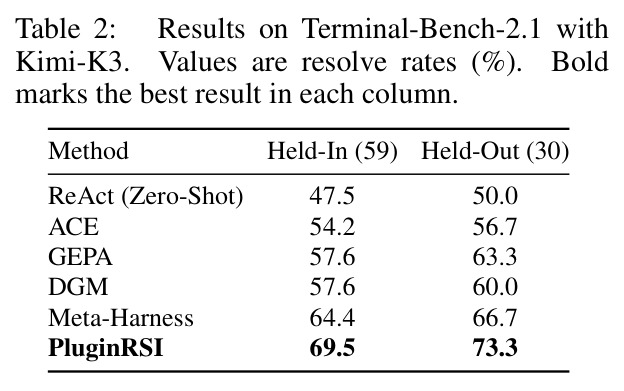
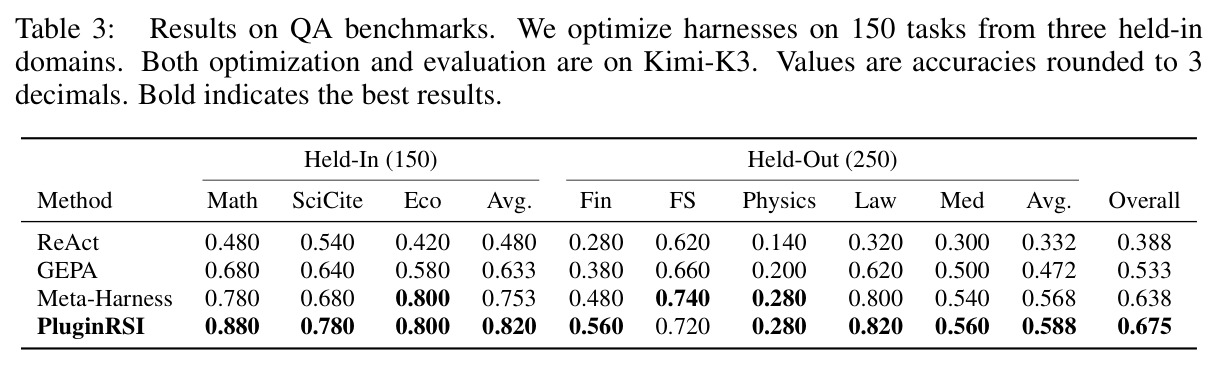
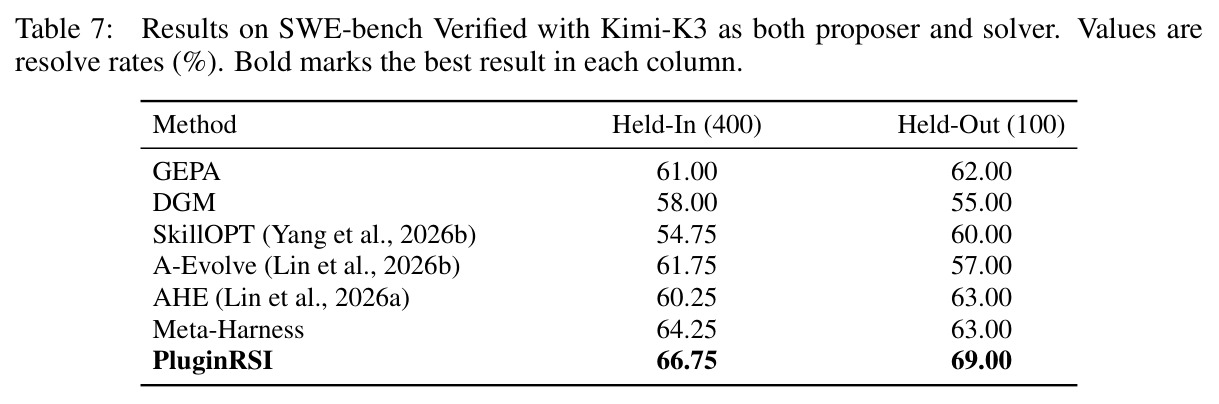
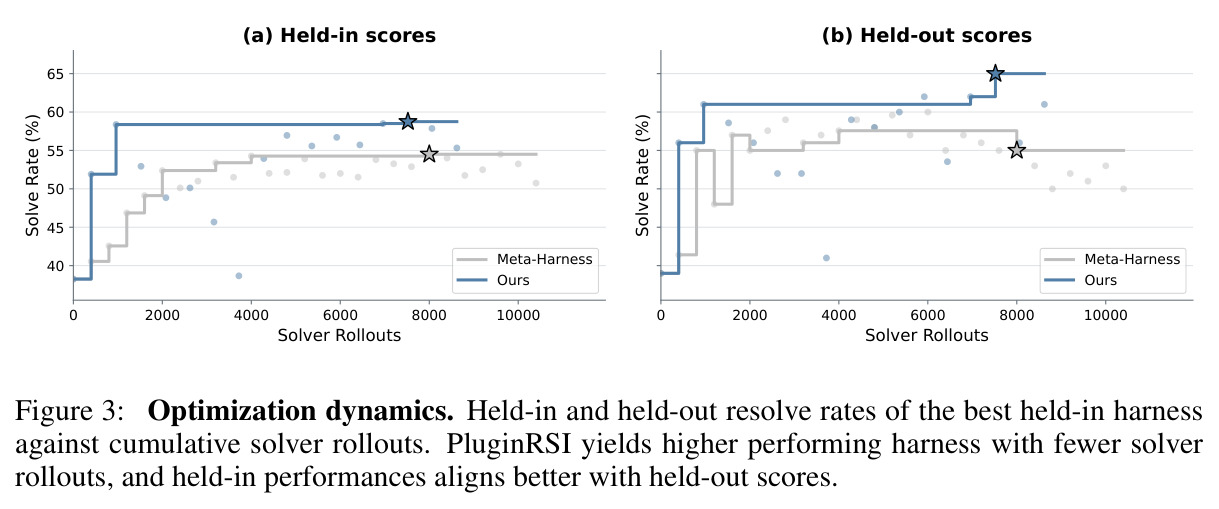
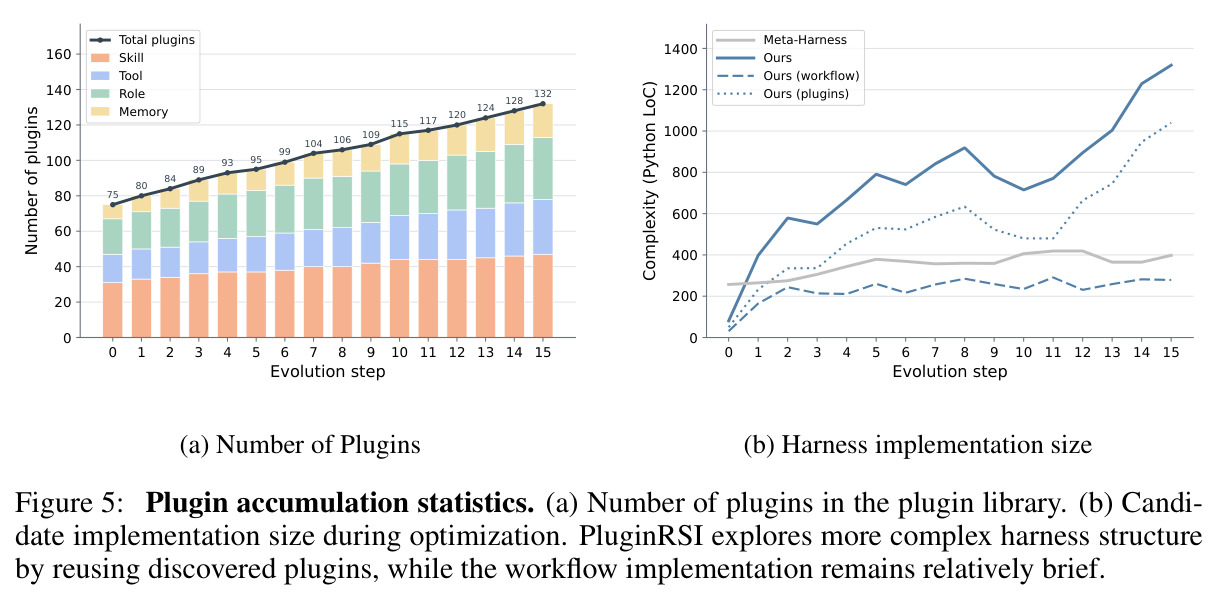
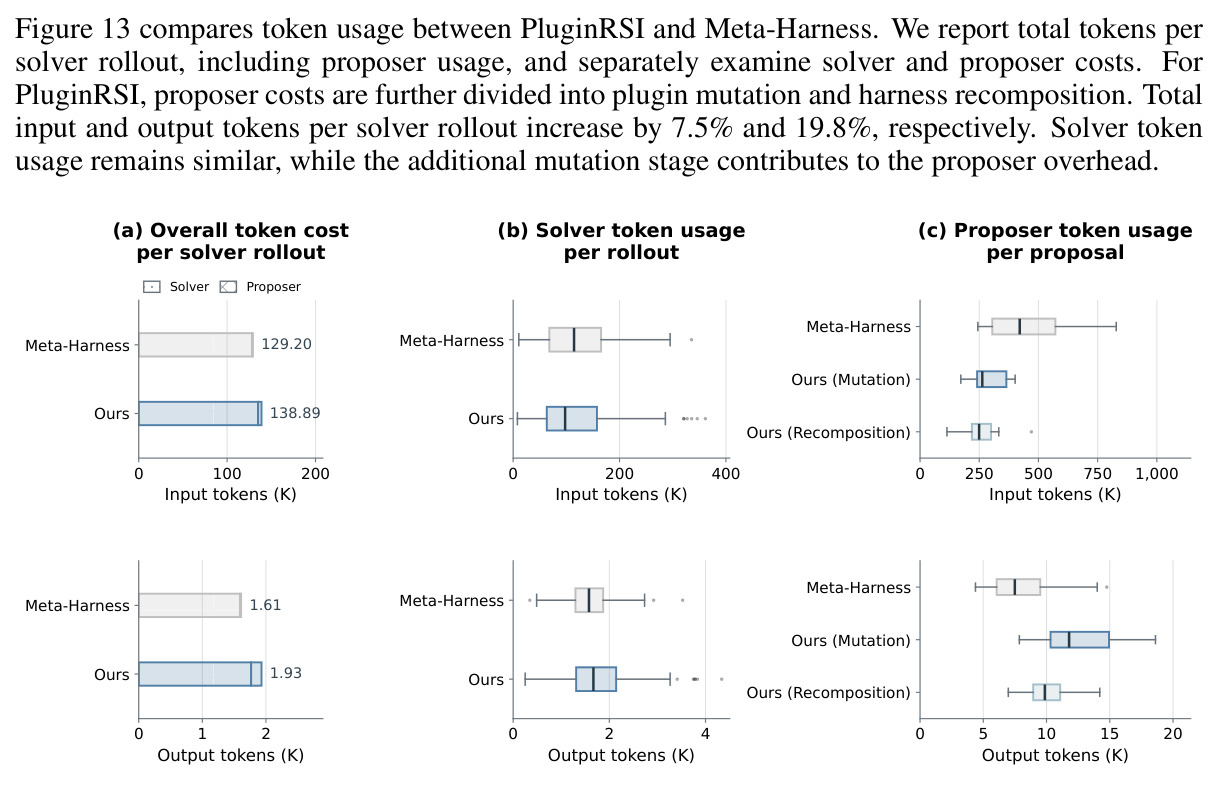
SWE-bench(Table 1):GPT-5.6 优化 held-out 65.00%,最强基线 Meta-Harness 55.00%;Kimi-K3 优化 69.00% 对 63.00%,held-out 增益大于 held-in(6-10 对 2.5-4pp),非过拟合。迁移:GPT 版换 Kimi/GLM-5.2 得 60.00%/52.00%,Kimi 版换 GPT/GLM 均 64.00%。终端任务(Table 2):69.5%/73.3% 对 Meta-Harness 64.4%/66.7%。问答(Table 3):总体 0.675 对 0.638。附加对比(Table 7):held-out 超其余方法 6-14pp。效率(Figure 3/13):更少 rollout 超基线全预算,token 输入/输出 +7.5%/+19.8%。消融(Table 4):去变异/去重组/去初始插件 = 57.00/59.00/67.00%。库演化(Figure 4/5):75→132 个插件、候选约 1300 LoC(基线 400);复用进化库 2 步达 69% 对 65%。
查看结构化数据
| 任务 | 指标 | 本文 | 基线 | 提升 |
|---|---|---|---|---|
| SWE-bench Verified held-out(GPT-5.6 Terra 优化) | resolve rate (%) | 65.00 | Meta-Harness 55.00 | +10.00pp |
| SWE-bench Verified held-out(Kimi-K3 优化) | resolve rate (%) | 69.00 | Meta-Harness 63.00 | +6.00pp |
| SWE-bench Verified held-out(Kimi 优化迁移到 GLM-5.2) | resolve rate (%) | 64.00 | Meta-Harness 59.00 | +5.00pp |
| Terminal-Bench-2.1 held-out(Kimi-K3) | resolve rate (%) | 73.3 | Meta-Harness 66.7 | +6.6pp |
| QA 五域 held-out(250 题,Kimi-K3) | accuracy | 0.588 | Meta-Harness 0.568 | +0.020 |
| QA 总体(held-in + held-out 平均) | accuracy | 0.675 | Meta-Harness 0.638 | +0.037 |
| SWE-bench Verified held-out(Kimi-K3,附加基线) | resolve rate (%) | 69.00 | AHE 63.00 / SkillOPT 60.00 / A-Evolve 57.00 / DGM 55.00 | +6.00 至 +14.00pp |
| 消融:SWE-bench held-out(Kimi-K3) | resolve rate (%) | 69.00(完整方法) | 去插件变异 57.00 / 去 harness 重组 59.00 | 两个阶段各贡献约 10-12pp |
局限与改进
作者承认三点局限:(1) 评估在固定任务集上只跑 15 轮迭代,动态任务分布下的长期演化与不断增长的库管理尚未探索;(2) 机制迁移强依赖任务域与求解模型,QA 各域几乎不重叠,held-out 增益仅从 0.568 到 0.588(数学策略搬不到法律题上);(3) 插件变异在「其余固定」前提下评估,发现不了需与其他插件或 workflow 协同变化才生效的机制。我的补充观察:其一,minibatch 仅 20 题,配对比较统计功效有限,1-2 题波动即可决定入库,噪声增益可能混入库中(作者也强调 local gains 只是证据而非保证);其二,SWE-bench 的 held-out 与 held-in 同属 12 个源仓库,100 题每题值 1 个百分点,且 Seaborn、Flask 在 held-out 无覆盖,跨仓库泛化未经验证;其三,种子库构建含大量人工(论文清单人工挑选、75 个插件人工校验),方法下限与初始质量强耦合;其四,全部结果基于 2026 年 9 月闭源 API 快照,作者发现 8 月底 GPT 系模型退化后被迫重跑全部实验,复现对 API 版本敏感。
独立分析的弱点
独立分析五点弱点。第一,单插件变异的表达力边界:协同性机制(如「更换记忆条目格式 + 相应调整 workflow 检索时机」)在单变量实验中永远不会被同时发现,每轮仅 8 个单点变异,搜索呈局部性;可引入成对或小集合联合变异,或允许变异阶段低概率微调 workflow。第二,筛选信号噪声大:$b=20$ 且 solved/unsolved 各半使分数差只能取 0-10 的整数,建议每候选多次重采样配对或做序列概率比检验再决定入库。第三,库无界增长:75 到 132 已让提议者需查阅大量插件文档,达数百时上下文与检索都成瓶颈,可引入功能聚类、语义检索与基于近期贡献的淘汰机制。第四,评估协议偏乐观:held-out 仅 100 题且与 held-in 共享仓库分布,跨仓库跨语言泛化未经验证,应在全新仓库的外部集上做迁移测试。第五,成本结构:变异使每 rollout 输出 token 增 19.8%,提议者还用 xhigh 推理档位,对预算敏感团队不友好,可研究级联筛选——先用极小 minibatch 粗筛再全量确认。
未来方向
作者提出的方向包括:长程任务(long-horizon tasks)上的 harness 优化、跨域与跨模型更显著的机制迁移、插件与 workflow 的联合优化、以及增长中插件库的管理策略。基于本文成果还可以自然延伸:一是把插件变异与强化学习结合,用任务回报直接微调插件参数而非仅靠 LLM 重写文本(作者团队此前的 Skill1 已在技能层面做过类似尝试,两个思路可以合并);二是在开放任务流上做在线持续演化,让库随任务分布漂移自动增删,与 Continual Harness 一脉相承;三是对插件库做版本谱系与机制去重分析,量化「哪些机制普遍有效」,逐步沉淀跨领域通用的机制库;四是把进化出的插件库作为组织级资产直接接入生产级模块化 harness(如 DeepSeek Harness 形态),把论文结论——积累可复用机制是持续改进的基础——落到工程实践;五是从理论上刻画机制级信用分配的统计性质与「变异-重组」组合搜索的收敛条件。
复现评估
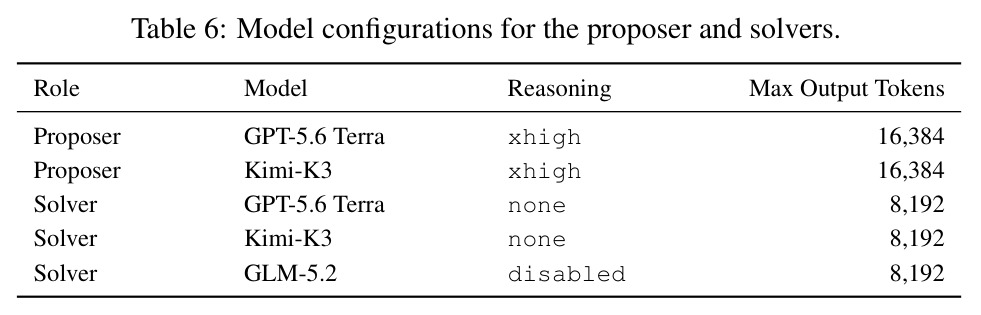
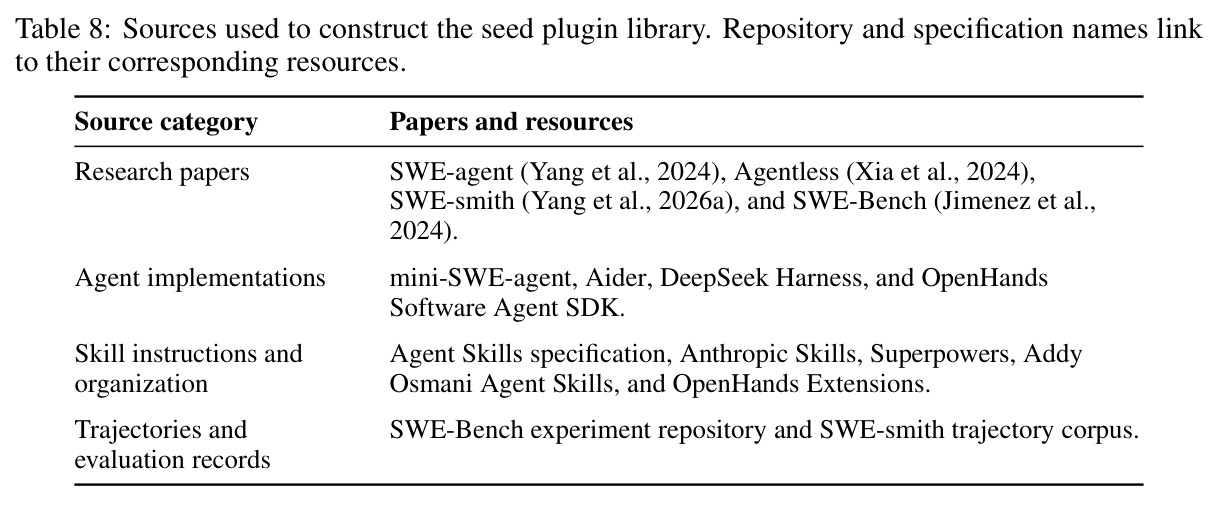
复现难度中上。有利面:代码已在 GitHub 开源(github.com/syr-cn/PluginRSI);基准全部公开,held-in/held-out 由固定 task-ID 列表定义(附录 I),QA 用种子 50 采样;超参数完整(Table 5:$T=15$、$N=8$、$b=20$、10:10 平衡、seed 42;Table 6:各模型推理档位与 token 上限);种子库来源(Table 8/9)与提议者提示词(附录 H)均公开。不利面:依赖三个闭源 API(GPT-5.6 Terra、Kimi-K3、GLM-5.2,2026 年 9 月快照),作者因 8 月底 GPT 系性能退化重跑全部实验,对 API 版本高度敏感;无需训练 GPU,成本在 API 费用——每轮 $400 + 8 \times 20 = 560$ 次 SWE-bench rollout(每次真实仓库跑测试),15 轮合计 8400 次以上,叠加 xhigh 提议者开销,总费用未披露但显然不低。总体:工程能力足够者 1-2 周内可复现主表量级,精确对齐数字较难。
论文图表
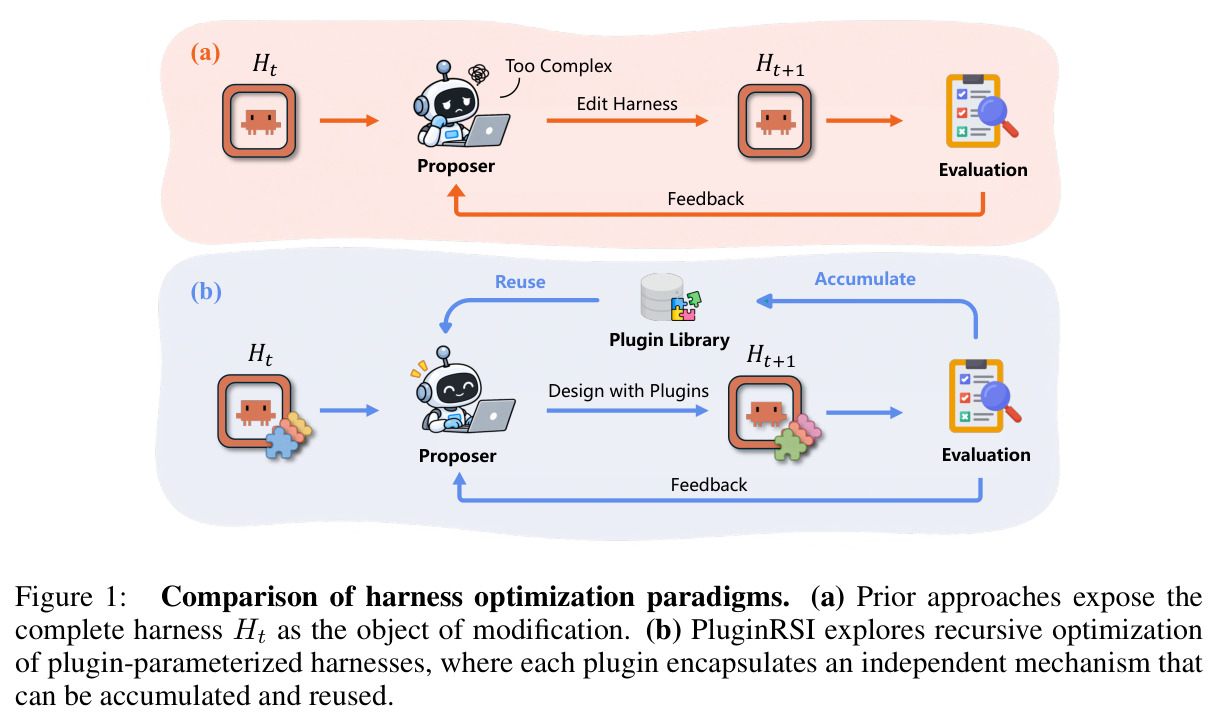
对比两种优化范式:(a) 以往方法把完整 harness $H_t$ 作为修改对象,执行反馈直接驱动整程序重写,机制彼此耦合、难以隔离复用,还容易因「过于复杂」而收敛到相似设计;(b) PluginRSI 把 harness 表示为插件组合,单个插件被独立改进并累积进共享插件库,再被复用于组装新 harness。
一张图看懂本文的问题定位与解法差异,是理解全文动机与研究范式转变的入口。
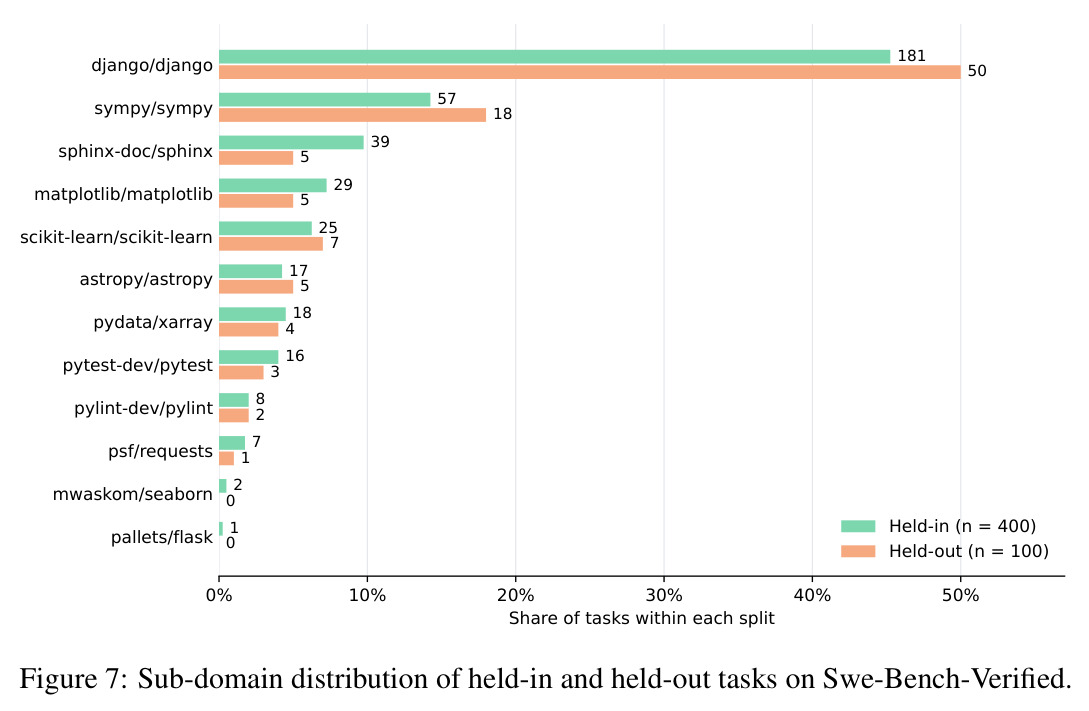
按 12 个源仓库展示两个 split 的任务占比:Django 占 held-in 45.25% / held-out 50%,SymPy 占 14.25% / 18%,Sphinx 占 9.75% / 5%;held-in 覆盖全部 12 个仓库,而 held-out 只有 10 个(Seaborn 的 2 题与 Flask 的 1 题仅出现在 held-in)。
揭示 held-out 只是同一批仓库内的任务级划分而非未见仓库的泛化测试,明确了论文结论的适用边界,读结果表时必须心中有数。
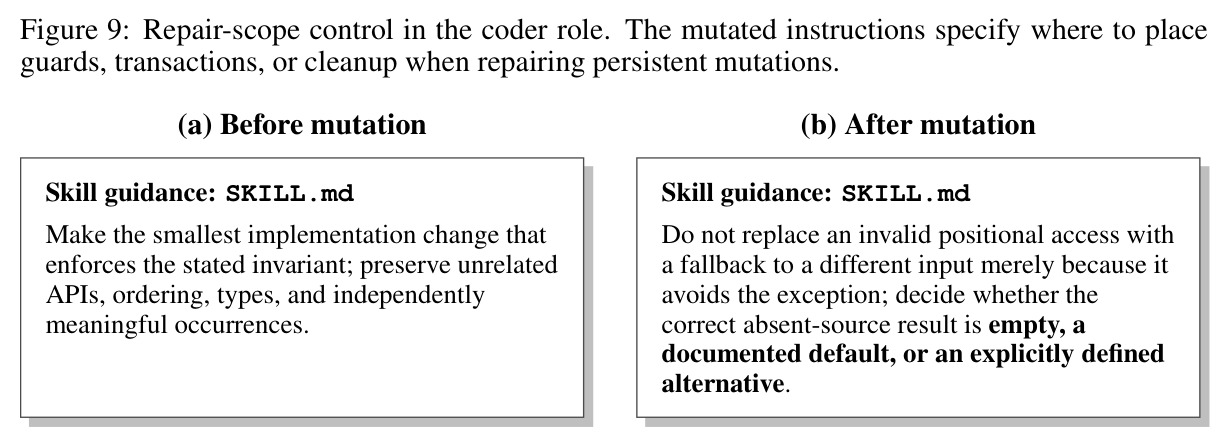
调试技能插件变异前后对比:原版要求「做最小实现改动、保持无关 API 不变」,变异版新增规则「不要为了让异常消失而用另一输入回退替换非法访问,应显式决定缺源时的正确行为是空结果、文档默认值还是明确定义的替代」;在 pydata xarray-6461 上变异后 solver 返回空 attributes 并解出任务。
第二个机制发现案例,与 Figure 9 共同证明插件变异学到的是可迁移的语义规则,支撑方法发现通用机制的核心主张。
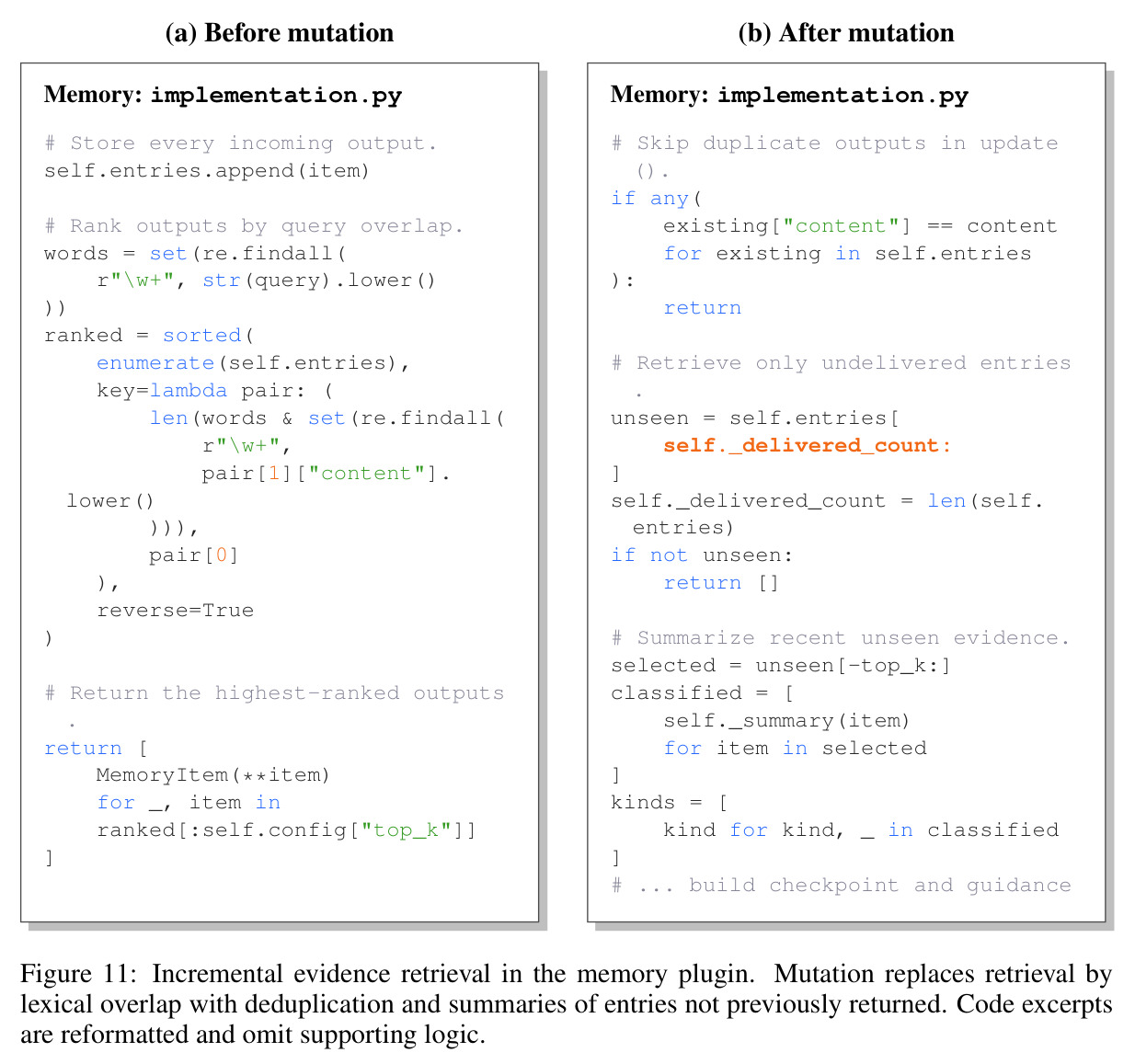
八个代表性变异的筛选结果:角色类的修复范围控制与判别性检查均为 10/20 提升到 13/20;技能类的语义来源保持 13/20、显式优先级与表示检查 13/20、带可达性控制的公共路径检查 14/20;记忆类的增量证据检索 10/19 提升到 14/19、测试结果分类 12/20;工具类的失败感知终端反馈 14/20。
用配对数字展示「单机制受控实验」的实际产出与分布,把抽象的两阶段算法与具体的、可解释的机制发现连接起来。