HY-World 2.0:用于三维世界重建、生成与仿真的多模态世界模型 HY-World 2.0: A Multi-Modal World Model for Reconstructing, Generating, and Simulating 3D Worlds
腾讯混元开源的统一 3D 世界模型,将全景生成、轨迹规划、视频扩展、几何重建融合为单条流水线
前置知识
3D 高斯溅射 (3DGS)
一种基于可学习各向异性 3D 高斯椭球的实时神经场景表示,每条高斯由位置 μ、协方差 Σ(分解为缩放 S 和旋转 R)、不透明度 σ 与颜色 c 描述,通过可微 tile-based 光栅化合成新视角,相比 NeRF 训练更快、渲染可达实时。
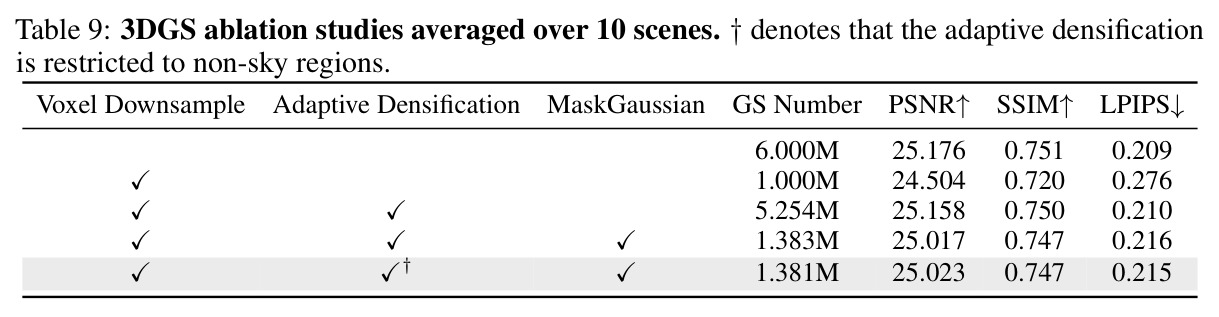
本文最终输出形式为 3DGS,全文围绕如何把生成的视频序列更好地重建为 3DGS 资产,包括点云初始化、MaskGaussian、专门针对生成数据的 densification 策略等。
扩散 Transformer / DiT (Diffusion Transformer)
用 Transformer 替代 UNet 实现扩散过程去噪的架构,本文采用 MMDiT 处理多模态 token、用 Video DiT 配合相机引导生成视频。本质上 DiT 在潜空间内通过自回归式 attention 学习 p(x_{t-1} | x_t),其 patch token 与 RoPE 位置编码是核心设计点。
HY-Pano 2.0 与 WorldStereo 2.0 都基于预训练 Video DiT 微调,理解 patch token、RoPE 与潜空间是理解本文「Keyframe-VAE 替代 Video-VAE」「归一化位置编码」的关键。
Plücker 射线编码 (Plücker Ray Embedding)
把每条相机光线的方向 d 与力矩 moment=o×d 拼接,作为 6D 嵌入向量输入网络。这种显式光线表达让扩散模型能直接从像素级几何条件生成与相机姿态一致的内容,在 Uni3C、ReCamMaster 等可控视频扩散中被广泛使用。
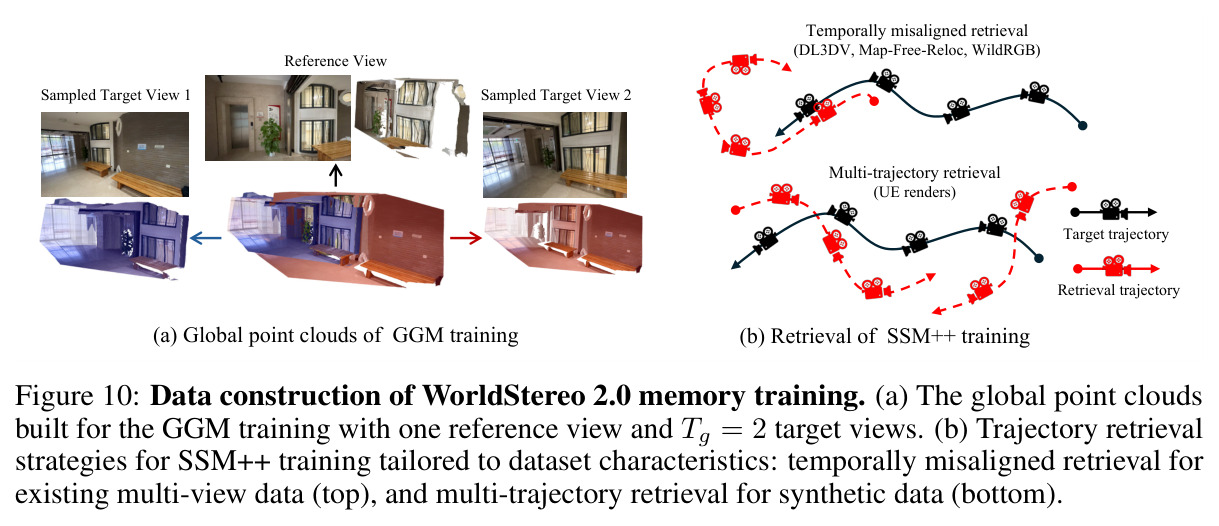
WorldStereo 2.0 的相机控制分支通过 Plücker ray 把全局点云渲染到目标视角,作为强几何先验(GGM)注入主 DiT,是「精确相机控制」一节的基础。
等距柱状全景投影 (ERP) 与无缝边界处理
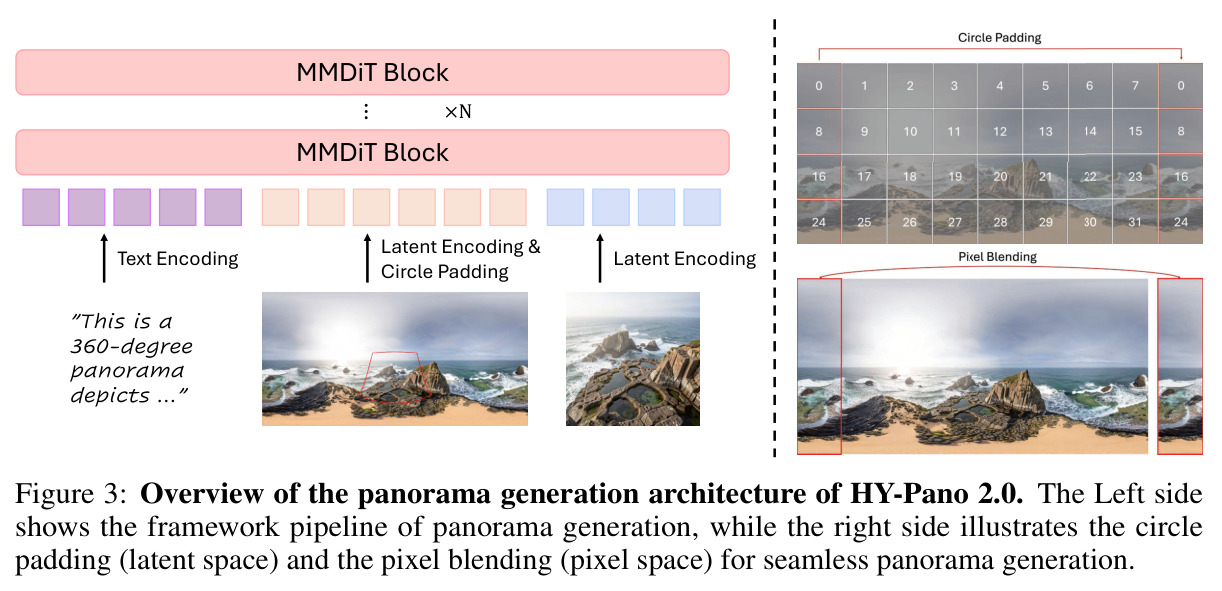
ERP 把 360°×180° 球面展开为 2:1 长方形图像,左右边缘本质上是同一列像素。在潜空间对潜码做 circular padding 强制周期性,并在像素级加一段线性混合过渡,可消除接缝带来的伪影与不连续。
HY-Pano 2.0 解决 ERP 边界接缝的核心思路,若理解 ERP 几何才能明白为什么结合 circular padding + pixel blending 是必要的。
研究动机
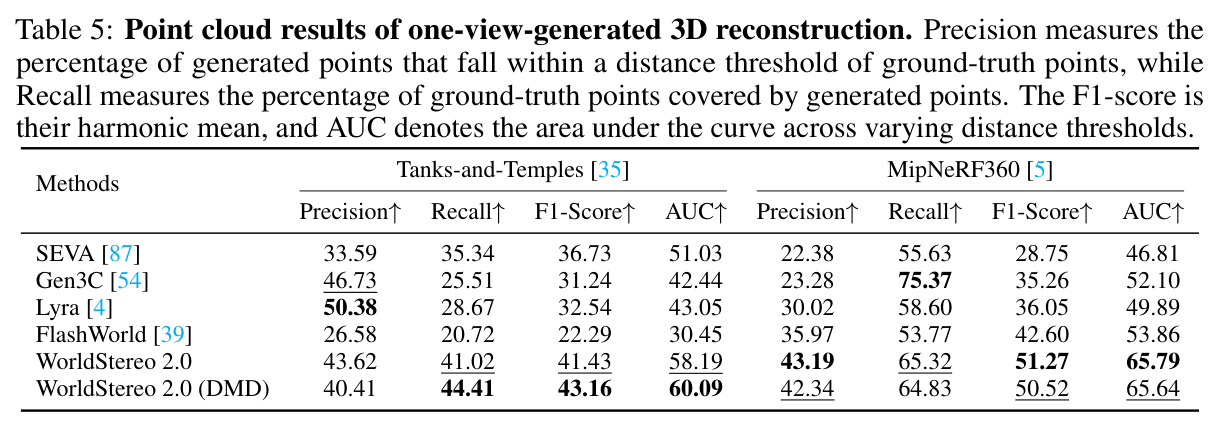
当前 3D 世界建模呈现明显的「生成 vs 重建」两极分化。基于视频扩散的生成方法(如 Gen3C、SEVA、WorldStereo 1.0)虽然能根据文本/单图合成大体可探索的 3D 场景,但在多视角一致性、相机控制精度和细粒度几何上仍有显著瑕疵,例如 SEVA 在 WorldStereo 2.0 的单视角重建测试里点云 F1 仅 36.73。而像 π3、VGGT、CUT3R 这类前馈重建模型虽能在密集多视图输入下恢复度量级三维结构,但缺乏把空白区域「想出来」的生成先验,难以完成从稀疏条件到完整世界的跃迁。更深层的痛点是:开源生态中缺少一个能在「在线视频世界模型」(WorldLab、WorldPlay 等实时交互范式)与「离线 3D 世界模型」(HY-World 1.0、Marble 范式)之间统一两端的系统,导致研究者需要为生成和重建分别训练两套组件,浪费算力也制造了不一致的中间表达。
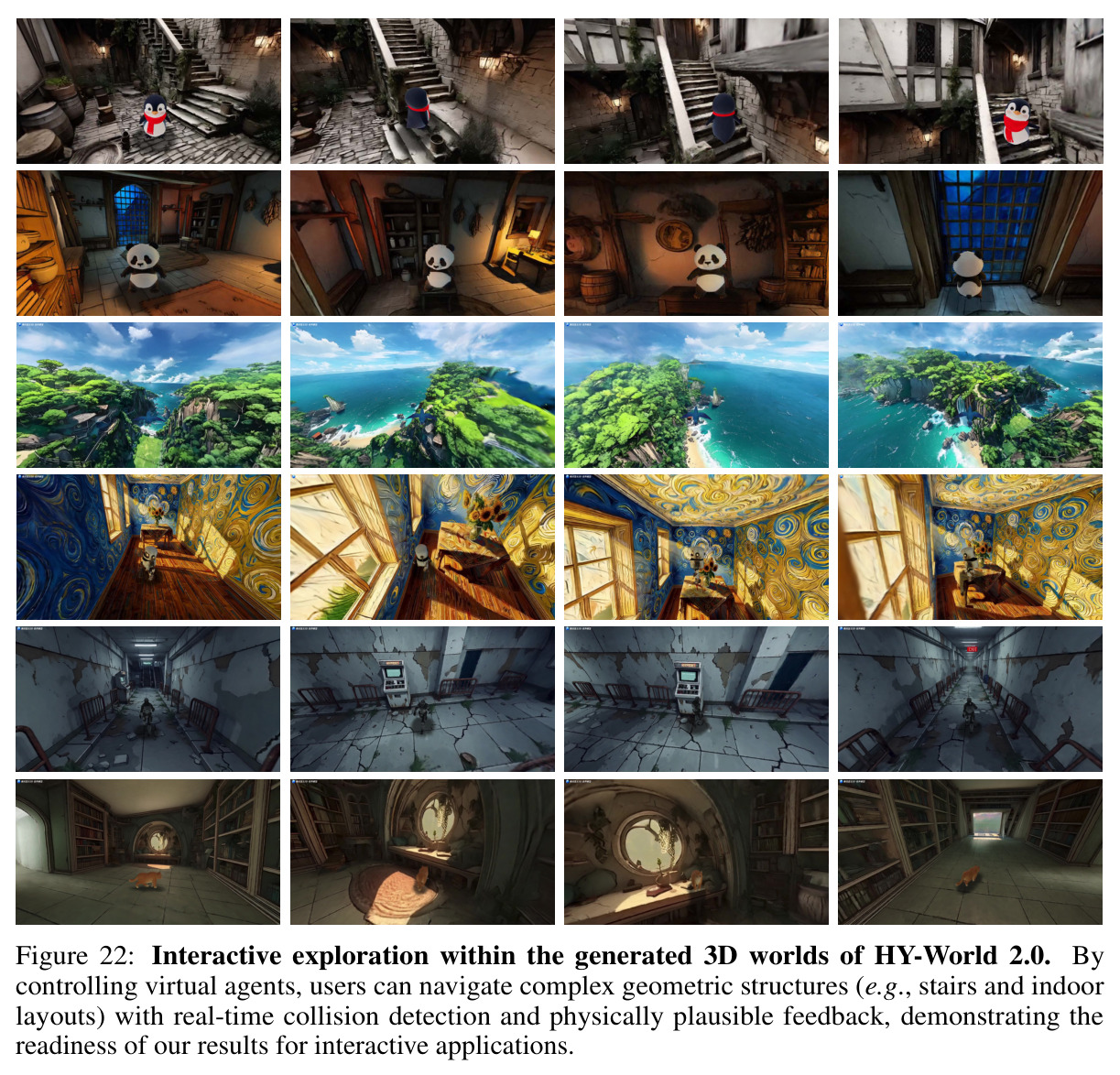
本文的目标是本文目标是发布 HY-World 2.0——首个开源、多模态、系统的世界模型框架,把「生成」与「重建」统一在同一套离线 3D 范式里。具体而言,输入侧支持文本、单图、多视图、视频四种模态,输出侧统一为可交互、可漫游的 3DGS 资产以及可碰撞的网格。从工程层面,作者希望整个端到端流水线在 H20 上约 10 分钟生成一个完整世界,并在所有子任务上达到开源 SoTA、与商业闭源模型 Marble 同台竞技。
与已有工作不同的是,HY-World 2.0 的独特切入角度是「以重建驱动的生成」:不再把世界生成当作视频扩散问题来孤立解决,而是在生成链路的最后一环(World Composition)显式复用重建模型 WorldMirror 2.0,使得扩散生成的 keyframe 拥有强几何一致性与可度量尺度。同时,作者把之前的多个工作(HY-World 1.0 的全景+离线 3D 路线、HY-World 1.5 的在线视频路线、WorldStereo 的视频扩散路线、WorldMirror 的前馈重建路线)打散重组,提出 Keyframe-VAE、GGM+SSM++ 双记忆、归一化 RoPE、点云引导深度对齐等若干个跨界技巧。这是与既有方法的最大区别:不是单纯改进某一阶段,而是把四个阶段的梯度与隐空间统一到一个连贯表达里。
核心方法
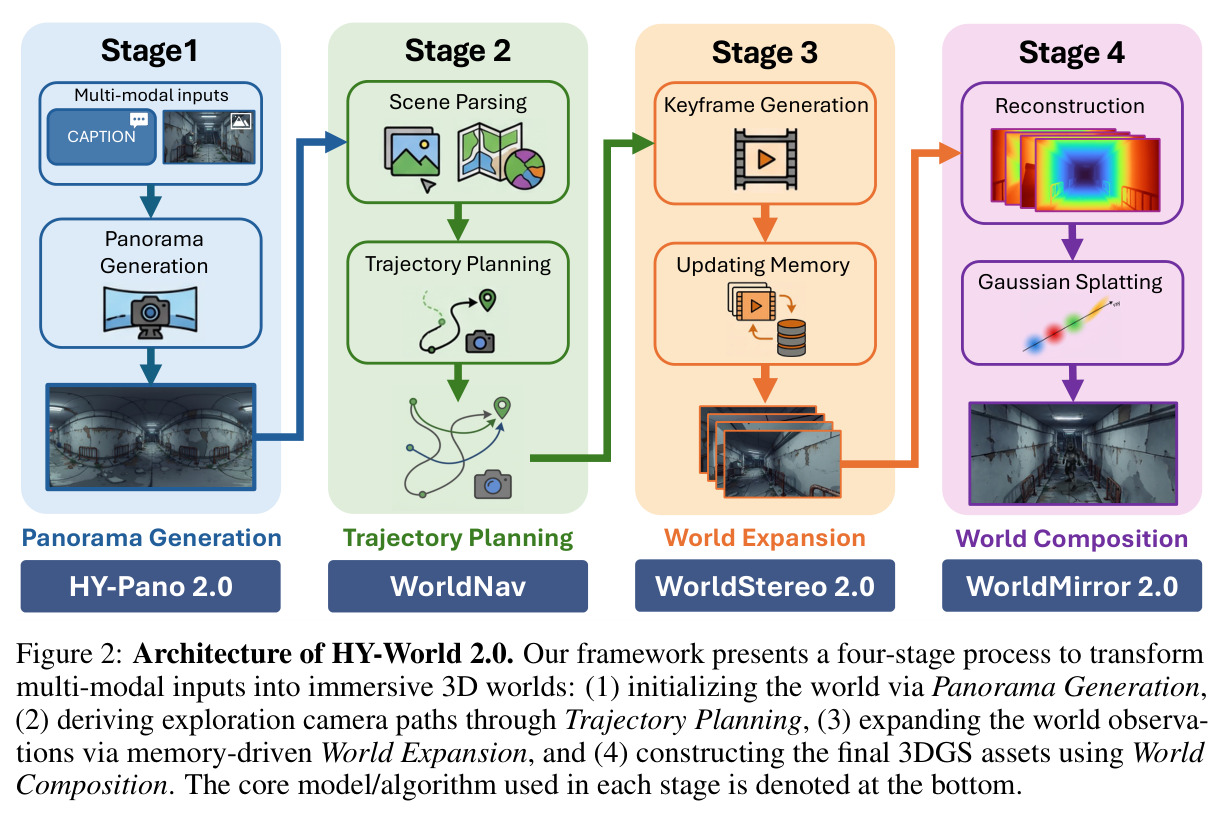
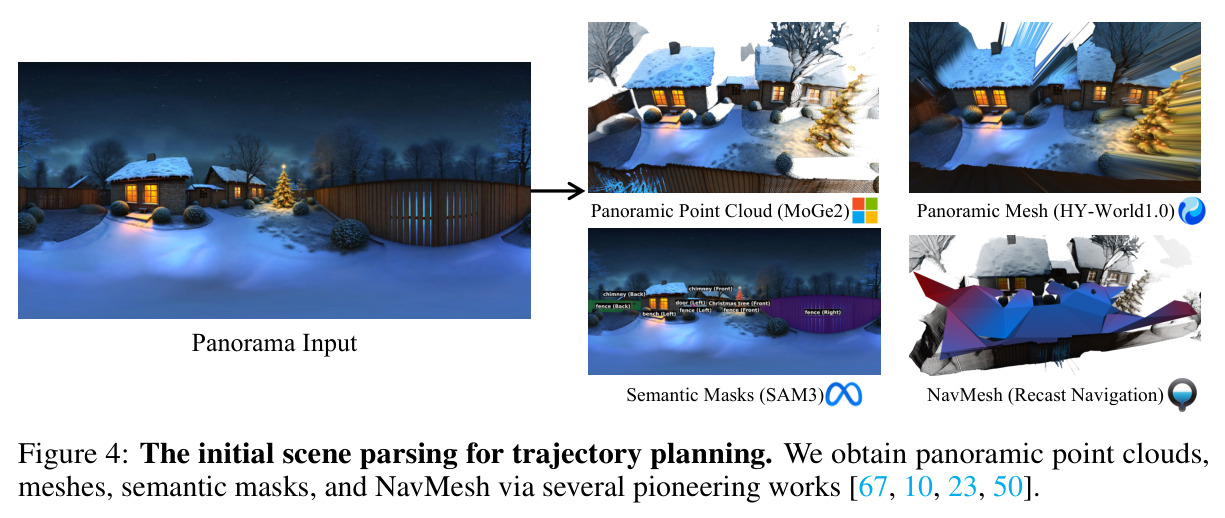
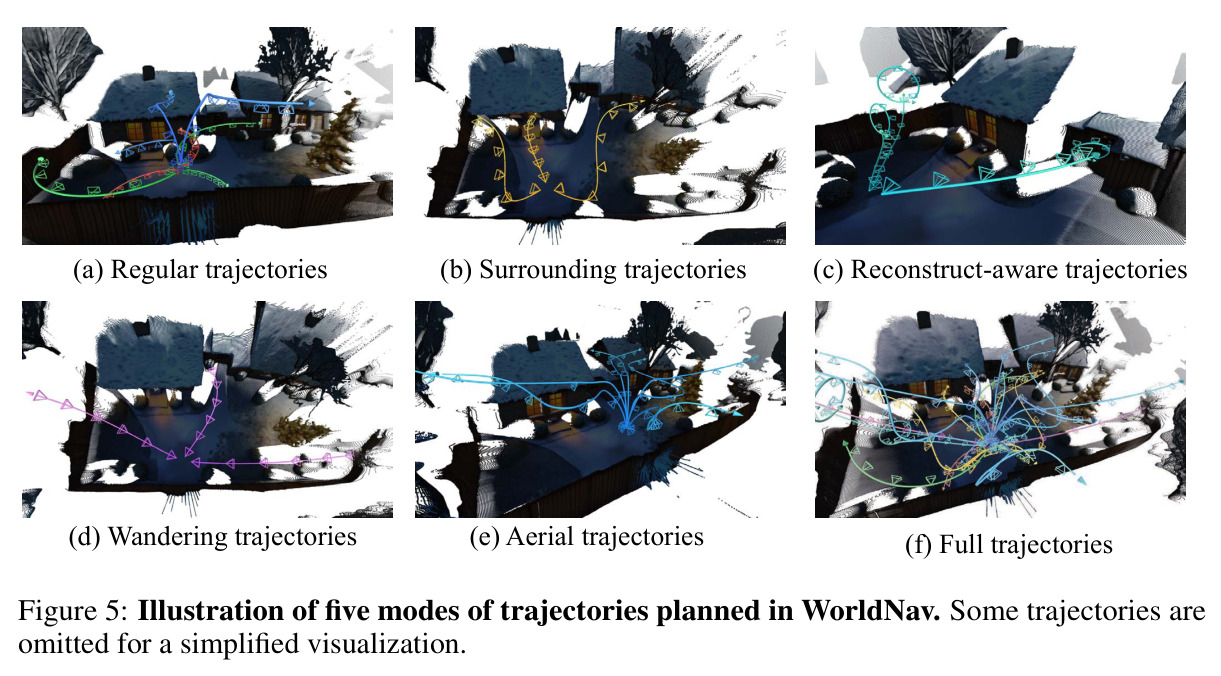
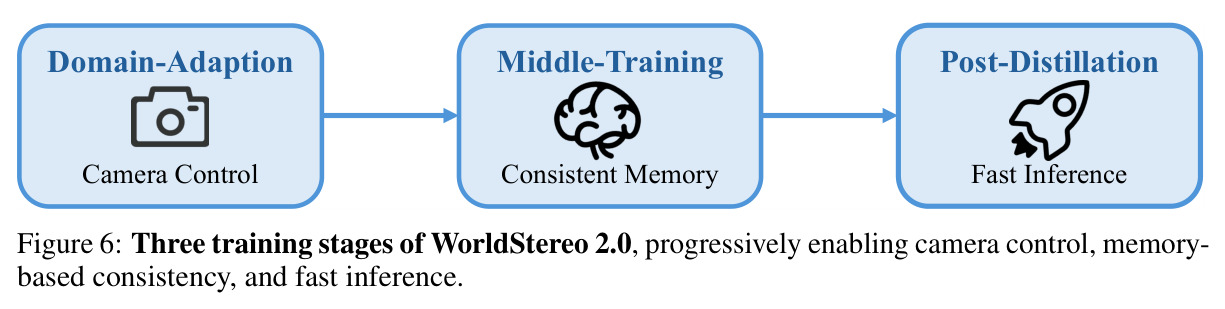
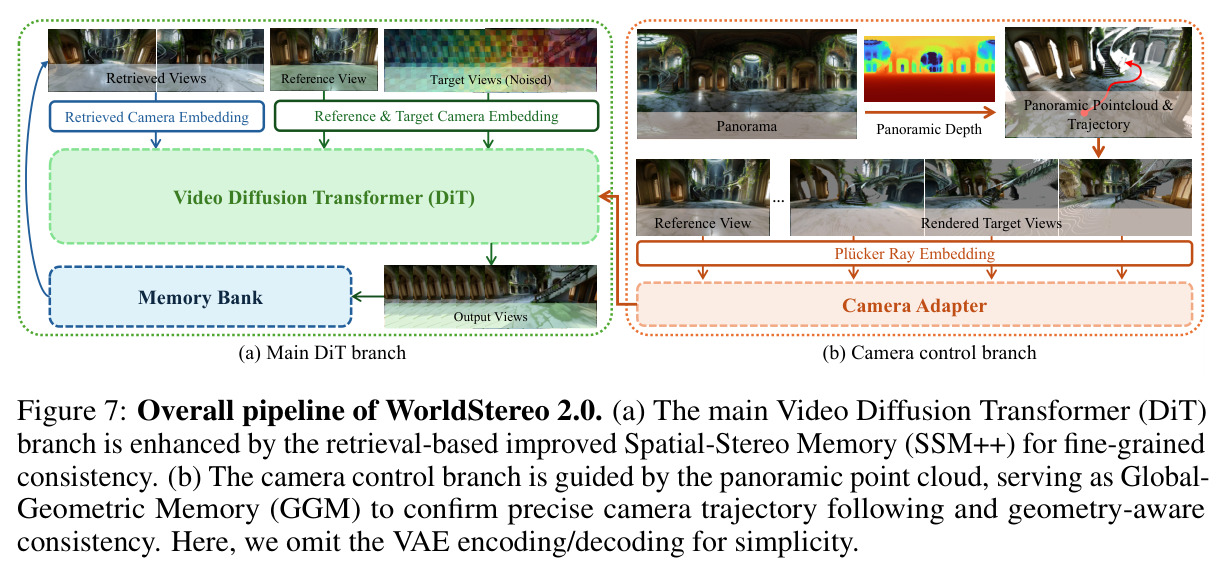
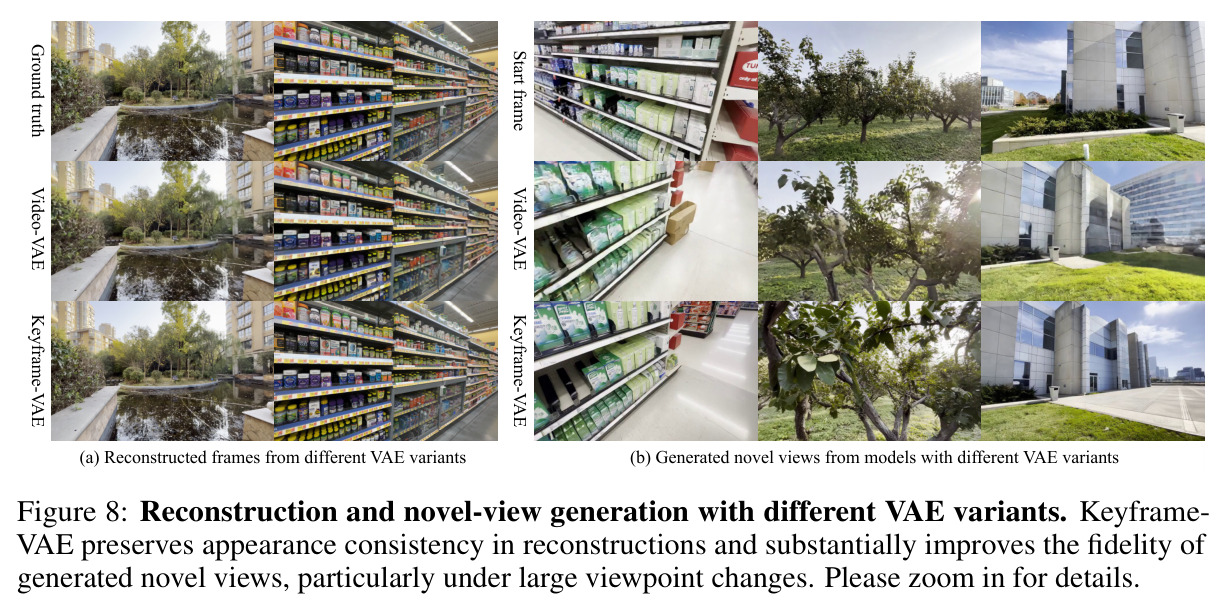
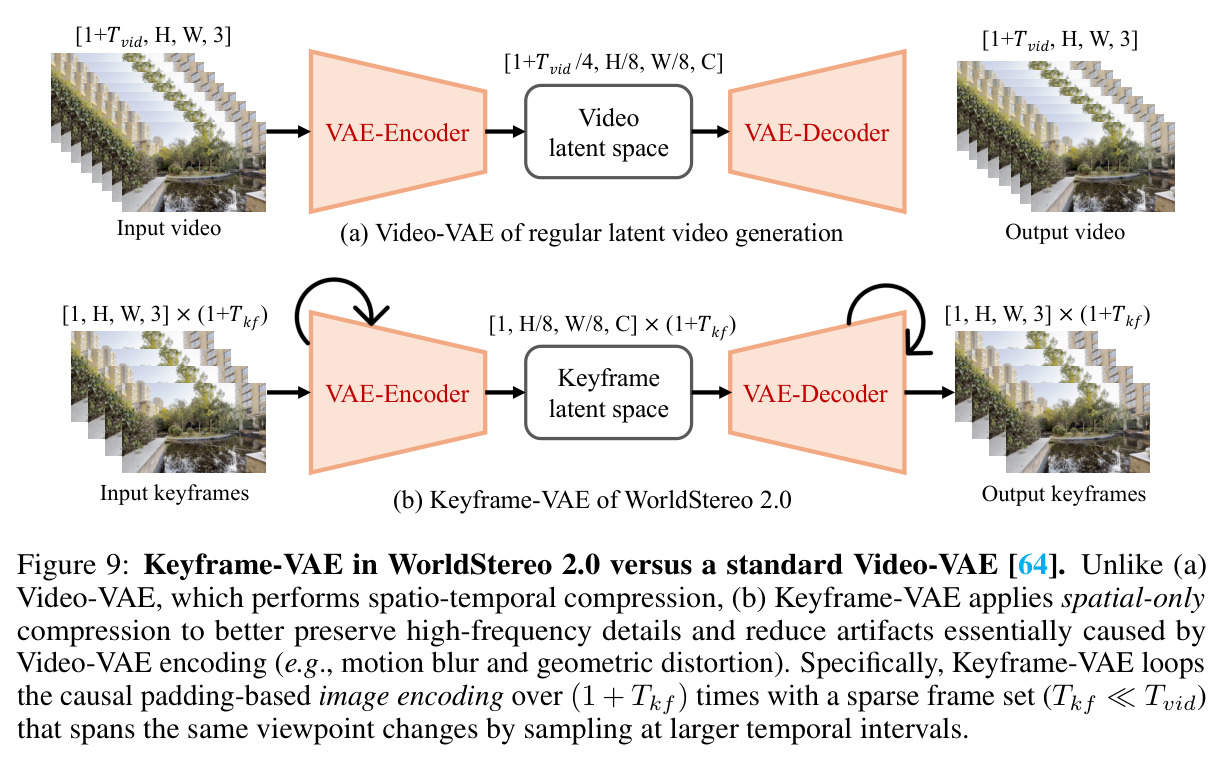
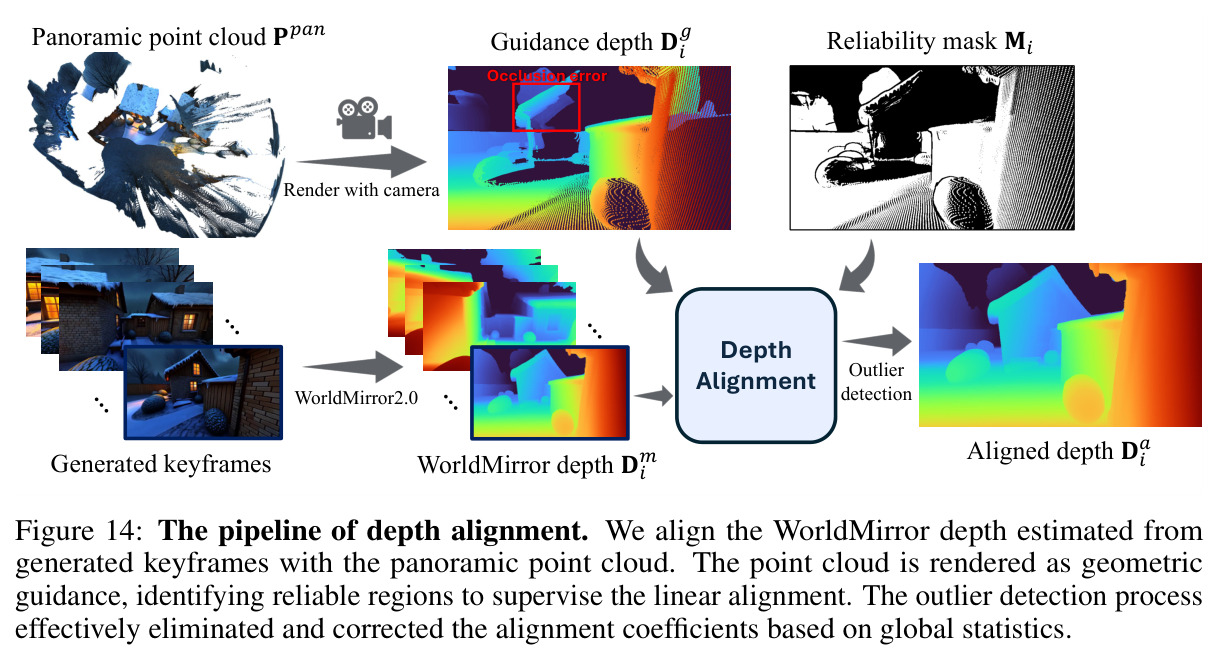
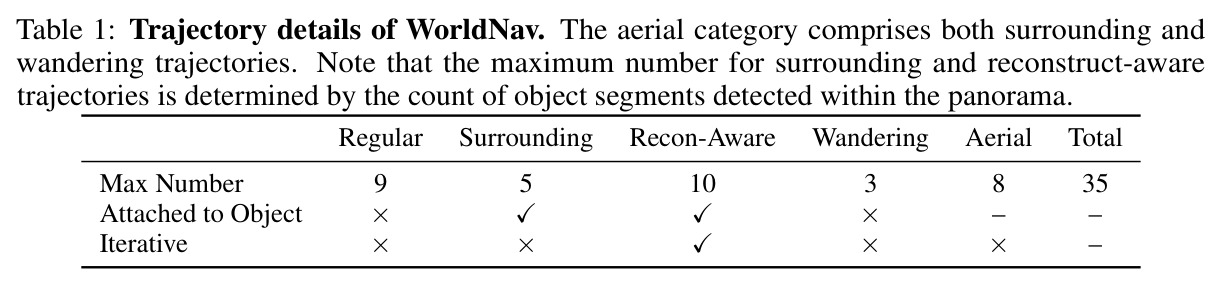
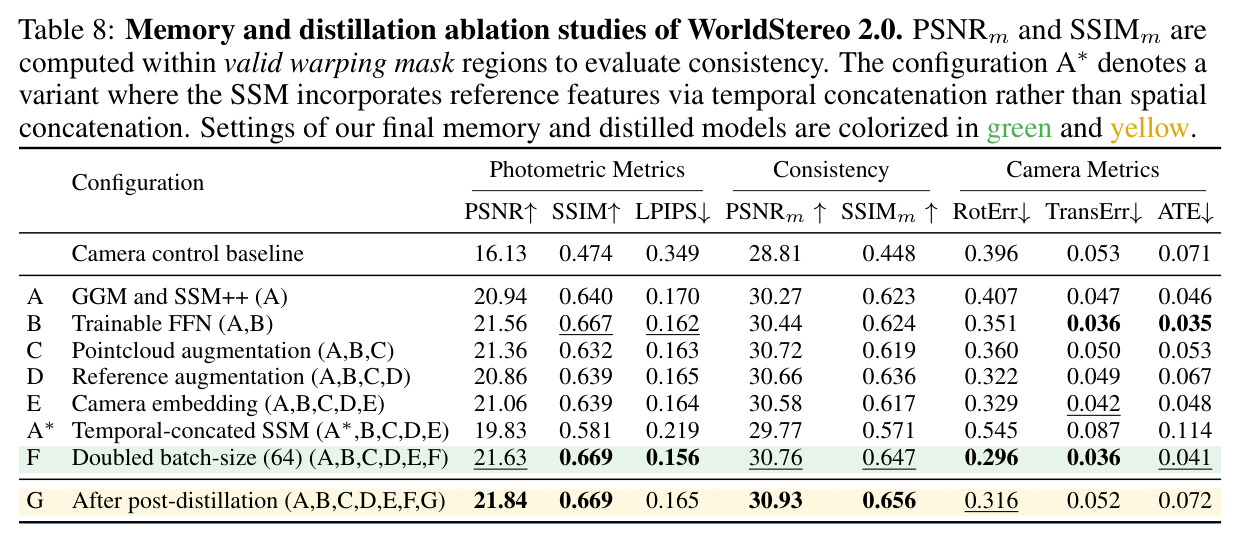
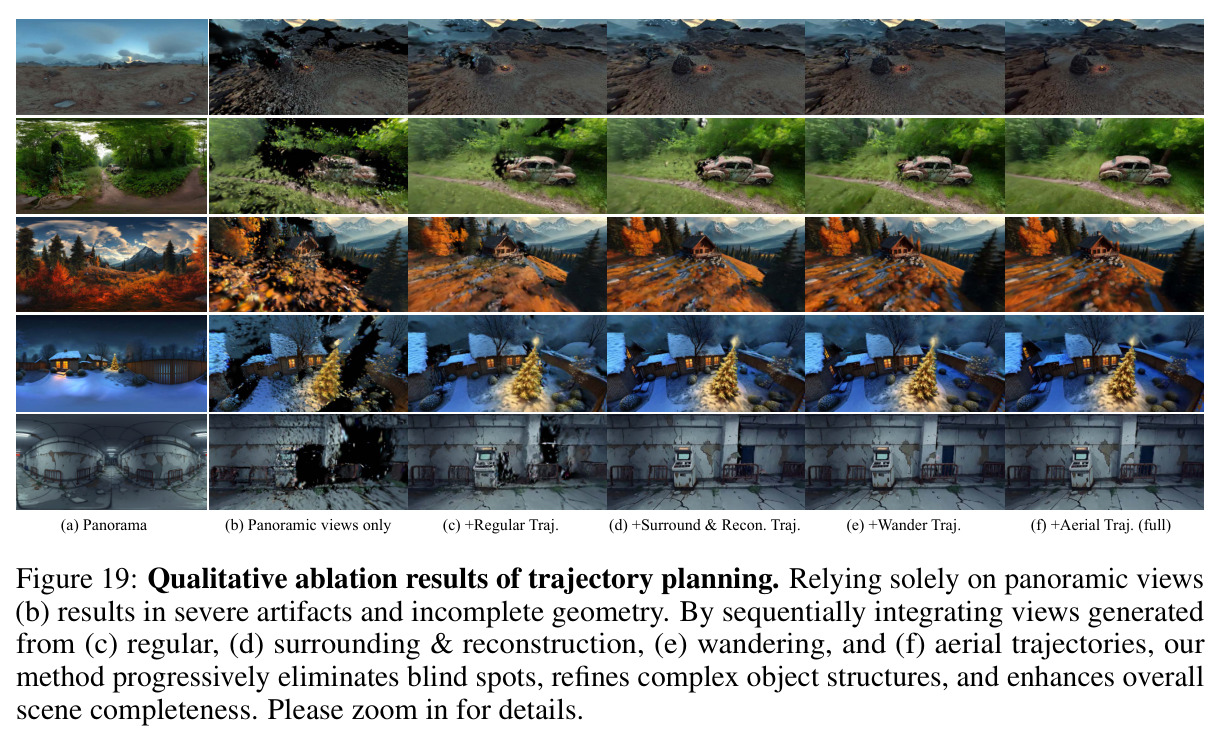
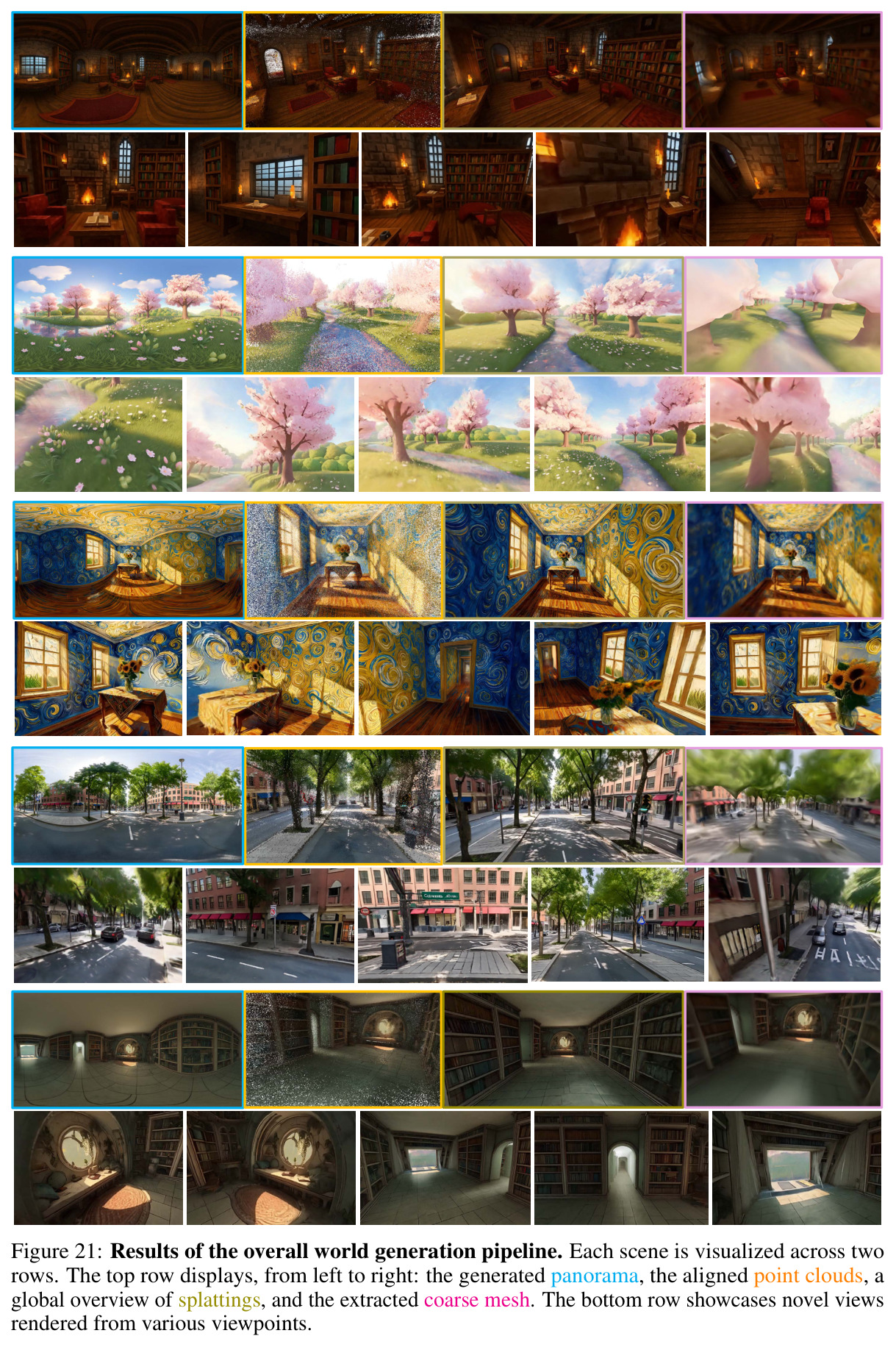
HY-World 2.0 把稀疏条件到可探索 3D 世界拆为四个串行阶段。Stage I HY-Pano 2.0 用 MMDiT 从文本/单图生成 360° ERP 全景,结合 circular padding + 像素混合消接缝。Stage II WorldNav 用 MoGe2、SAM3、Recast Navigation 解析几何与语义,启发式生成 Regular、Surrounding、Recon-Aware、Wandering、Aerial 五种轨迹,上限 35 条。Stage III WorldStereo 2.0 用 Keyframe-VAE 替代 Video-VAE,结合 GGM(点云渲染提供粗几何)与 SSM++(检索视图横向拼接的细粒度记忆)保证多轨迹一致性;DMD 蒸馏为 4 步 DiT。Stage IV 用 WorldMirror 2.0 对关键帧前馈几何预测,经掩码交集 + RANSAC 线性对齐到全局点云,MaskGaussian + 天空限制 densification 的 3DGS 优化得到约 1.38 M 高斯资产。整条流水线共享相机坐标系与点云表征。
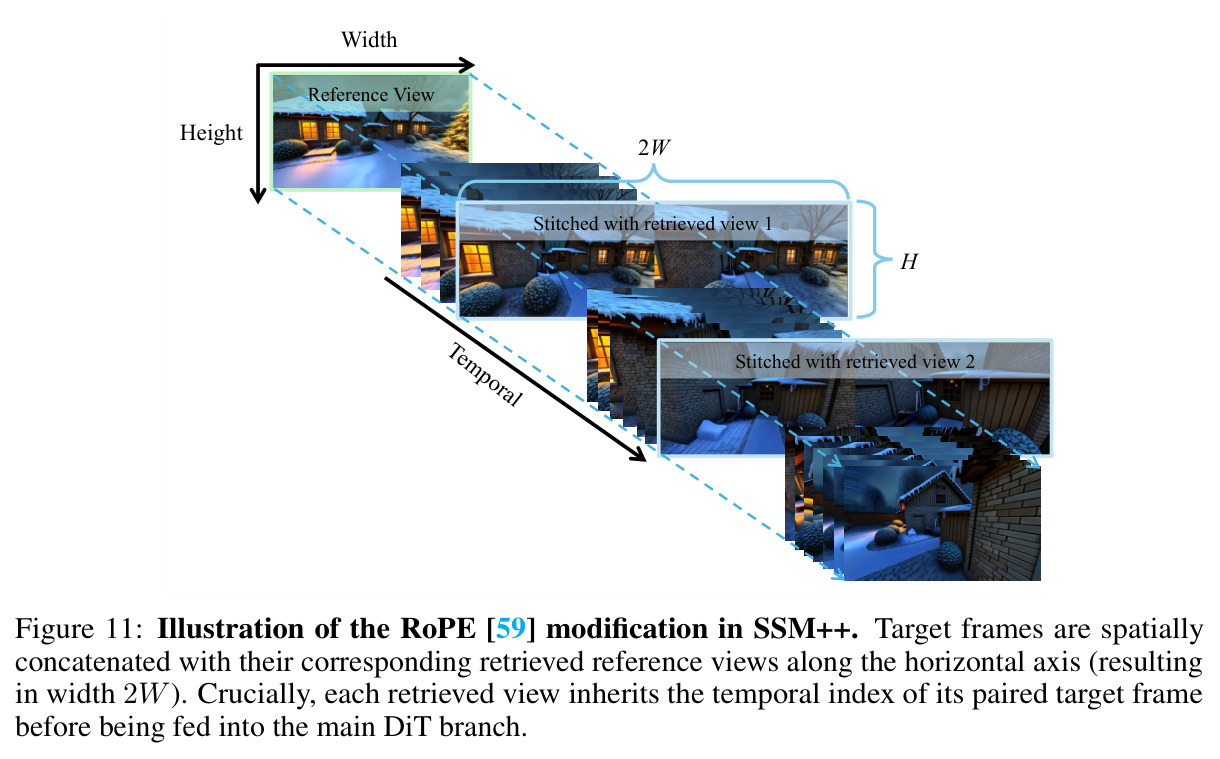
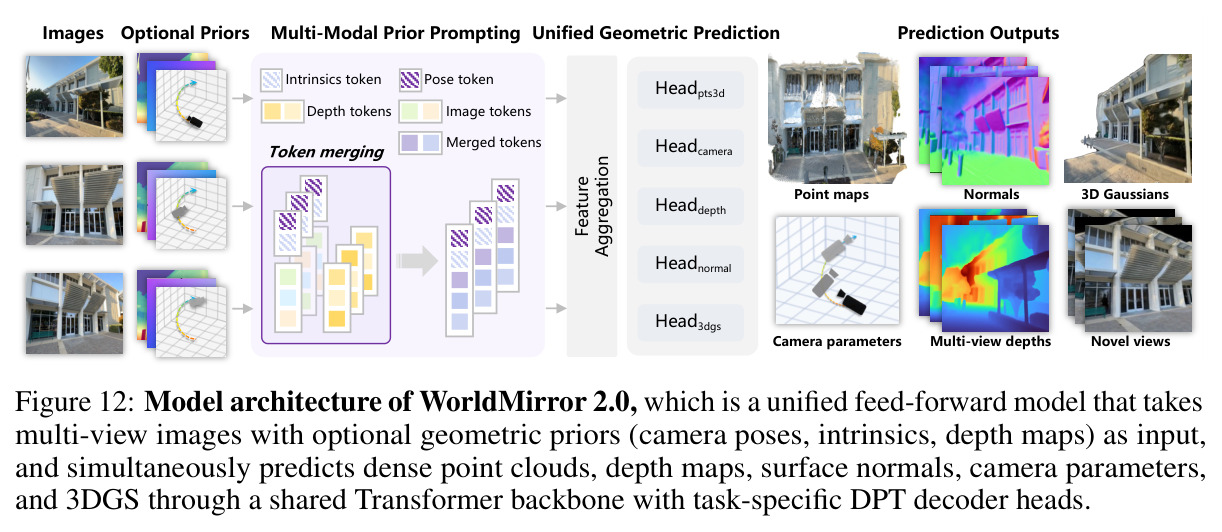
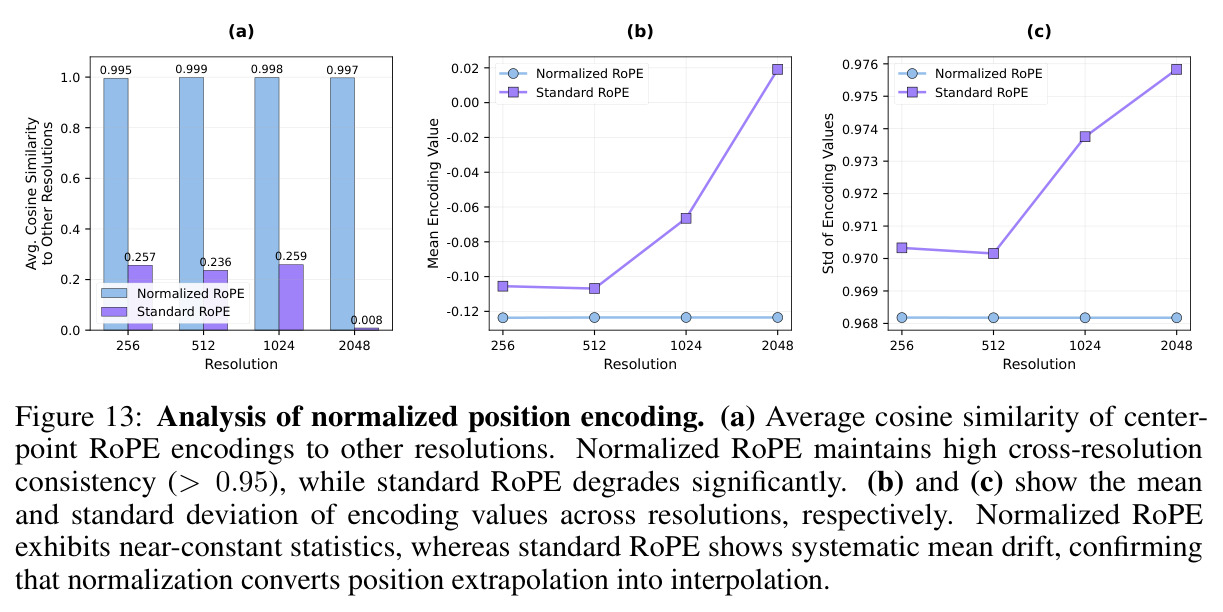
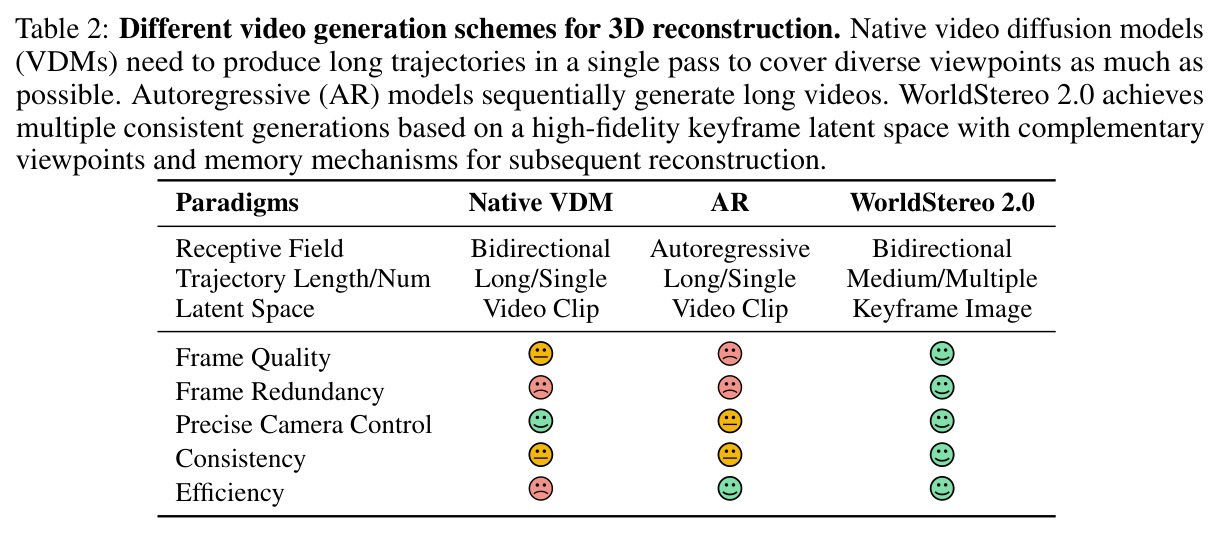
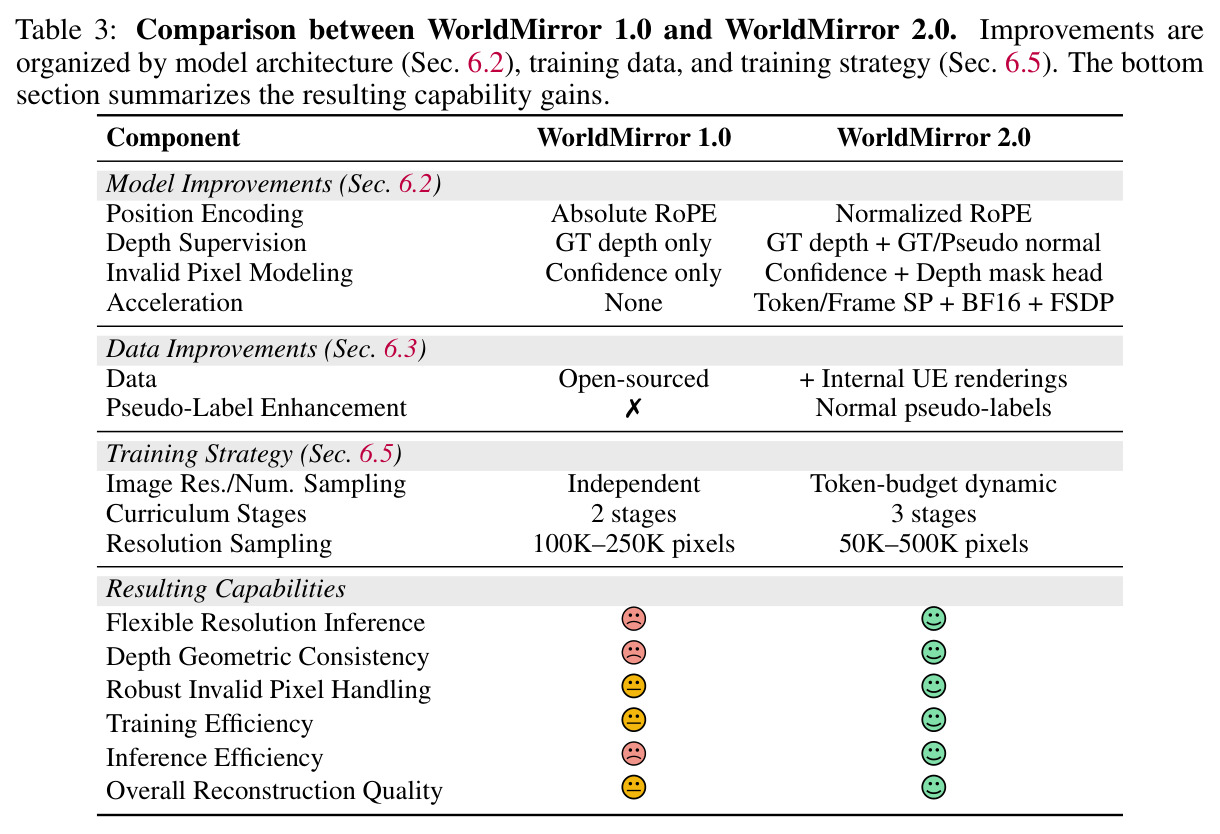
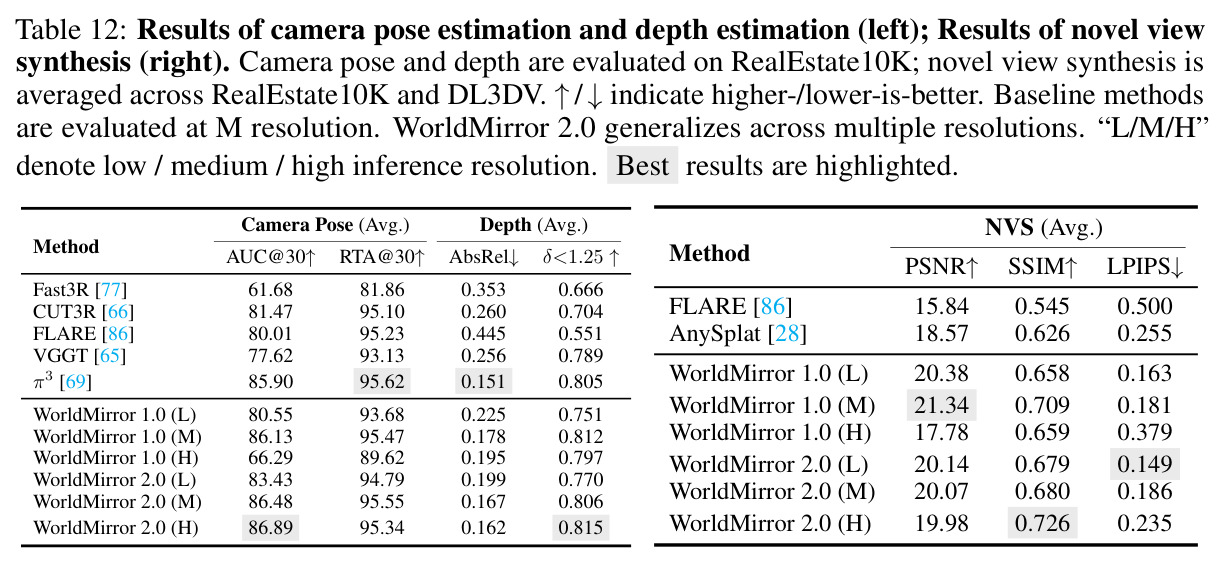
最核心的创新是「扩散先验 + 前馈几何」的紧耦合:让 WorldMirror 2.0 同时充当独立重建器与世界生成的几何提取器。三个最具区分度的设计:(1) WorldStereo 2.0 用 Keyframe-VAE 替换 Video-VAE,配合 RoPE 改造的 SSM++ 把「跨视角检索」变成「同 token 时序索引 + 横向拼接」,从结构上消除运动模糊与几何失真;(2) WorldMirror 2.0 用归一化 RoPE 把分辨率外推转化为插值,并引入 depth-to-normal loss 让深度与法线几何耦合,使 756×1036 高分辨率下保持稳定(AUC@30 从 66.29 跃升到 86.89);(3) 3DGS 训练中用 MaskGaussian 概率掩码与「天空禁止 densification」,让生成场景在 -0.14 dB PSNR 代价内把高斯数从 5.254 M 压到 1.383 M(-73.7%)。这三个改进把「生成看外观、重建看几何」的分工打破为「共用同一几何监督信号」,是 HY-World 2.0 与既有 3D 世界模型最大的本质区别。
方法步骤详情
流程分四步。(1) HY-Pano 2.0:文本/单图编码与噪声全景潜码 concat,MMDiT 潜空间学 perspective→ERP,circular padding+像素混合消 360° 接缝,输出 1024×512 ERP。(2) WorldNav:MoGe2 在 42 视点对齐深度构建 P_pan+网格;SAM3 输出语义掩码投 3D;Recast 得 NavMesh;按上限 35 条生成 5 类轨迹并 attach prompt。(3) WorldStereo 2.0:参考图+目标位姿输入 Keyframe-VAE 得 F_i;主 DiT 通过 SSM++ 拼接检索视图;相机分支用 Plücker ray+点云 Pglo 渲染作 GGM;推理增量写回 memory;DMD 蒸馏为 4 步。(4) World Composition:WorldMirror 2.0 前馈关键帧 {D_m, N_m},5 路掩码交集 M_i,RANSAC 对齐 D_a=γD_m+β(9 锚点+90 分位剔除校正),反投影 P_ex 入 P_pan 得 P̃;用 P̃ 初始化 3DGS,仅非天空 densification,MaskGaussian+多损失优化至约 1.38 M 高斯,marching-cubes 出 mesh。
技术新颖性
技术新颖性体现在四个层面的「跨范式融合」。第一,全景生成上从 HY-World 1.0 的「显式几何 warp + 已知相机内参」变为基于 MMDiT 的「隐式 perspective→ERP 自适应映射」,无需输入相机信息即可处理任意视点图片。第二,WorldStereo 2.0 首次系统化 Keyframe-VAE 设计:把「同一视点变化范围由更多视频帧覆盖」转化为「同一范围由更稀疏关键帧 + 更大时间间隔采样覆盖」,保留高分辨率细节又减少冗余。第三,SSM++ 移除独立 memory 分支,通过 RoPE + GGM 在主 DiT 共享 transformer 主干,显著降低显存。第四,WorldMirror 2.0 用 Normalized RoPE 把外推变插值(高分辨率 AUC@30 +20.6),并首次系统引入 depth→normal 几何耦合损失与显式 invalid 像素掩码头。最具系统论意义的是它把「扩散的想象力」与「前馈重建的几何精度」通过统一相机坐标系与点云表征桥接起来,这在前作 HY-World 1.0/1.5 是缺失的。
实验结果
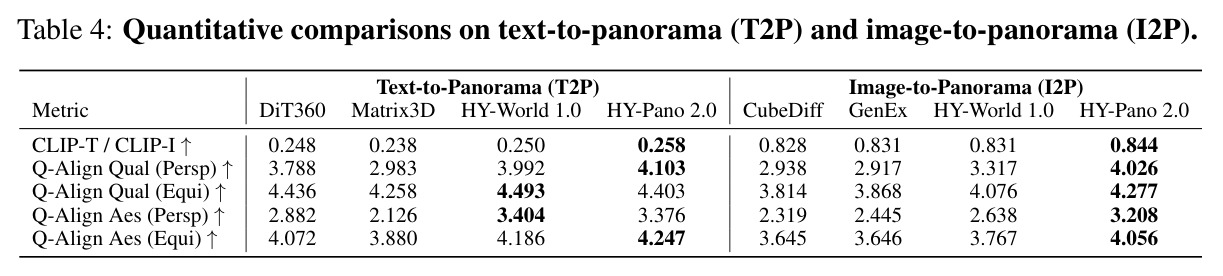
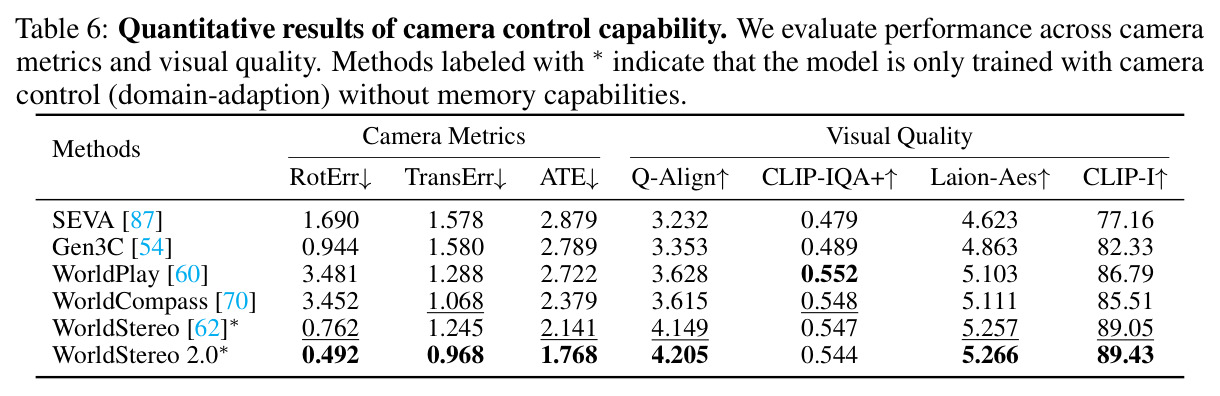
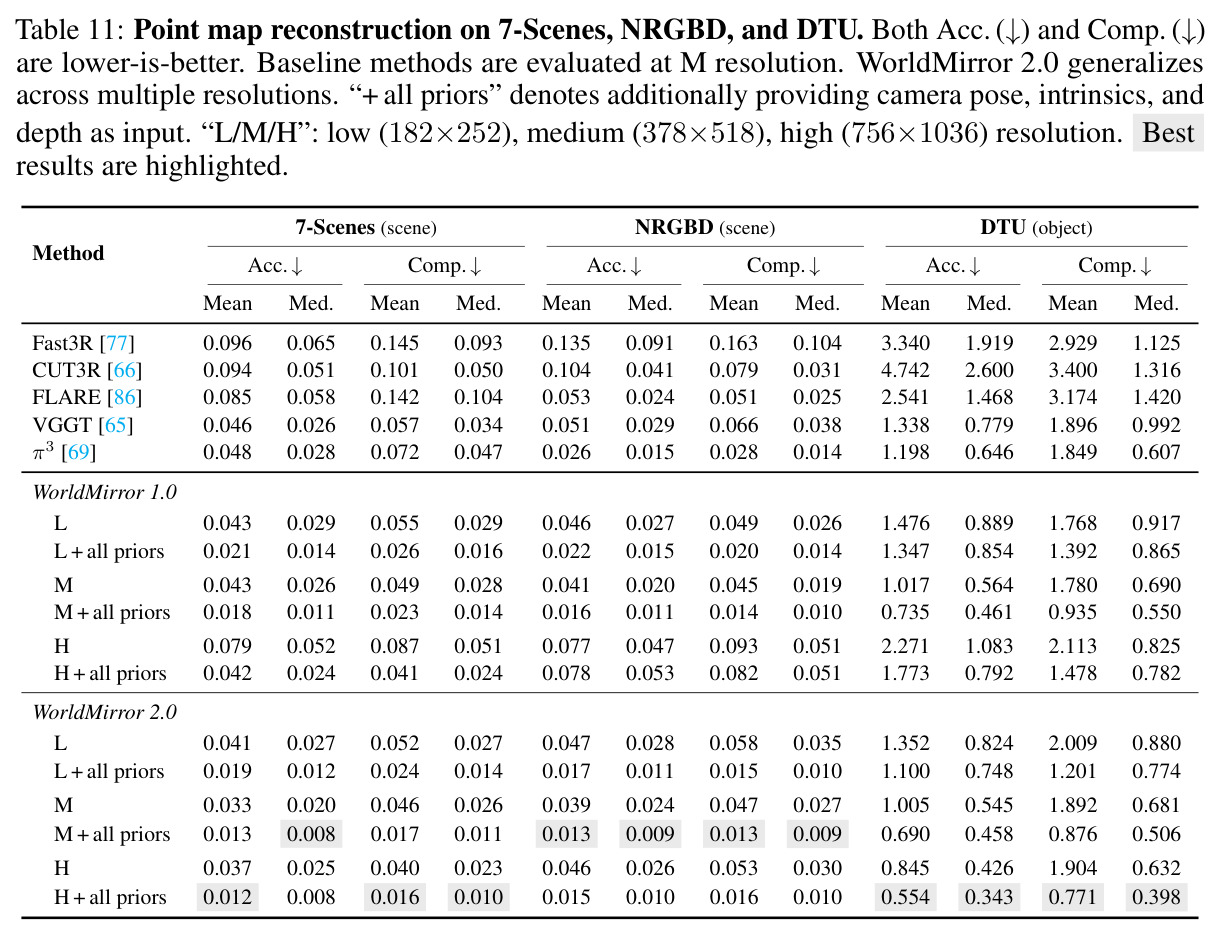
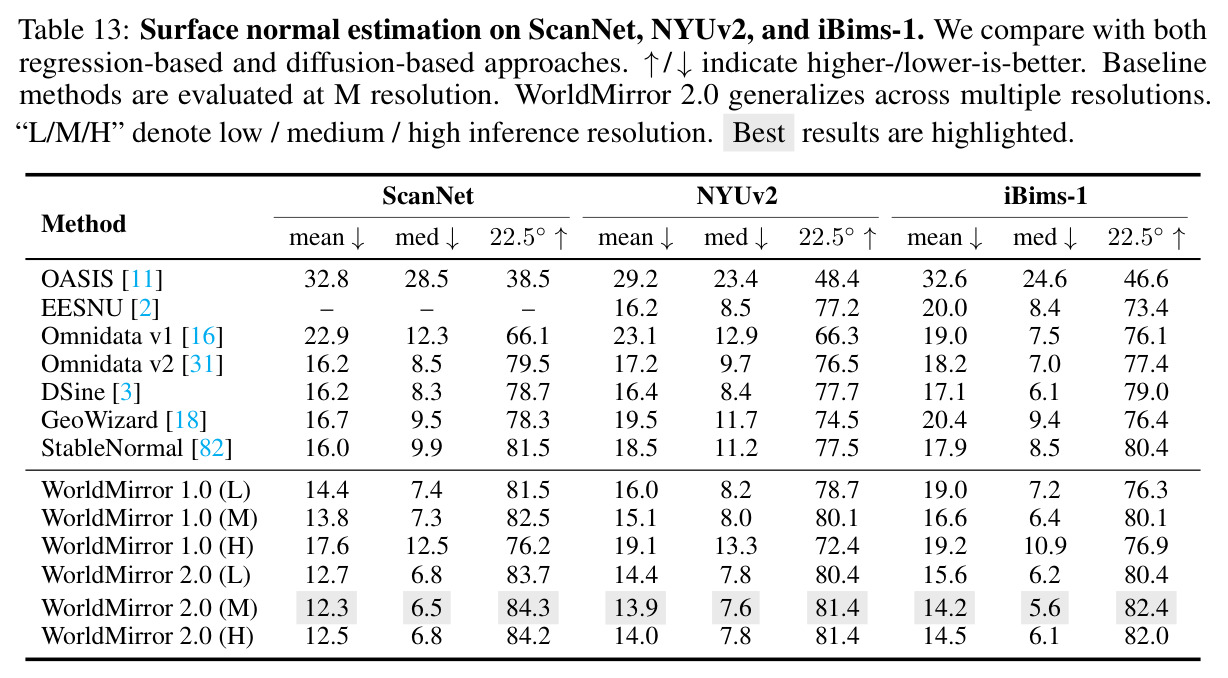
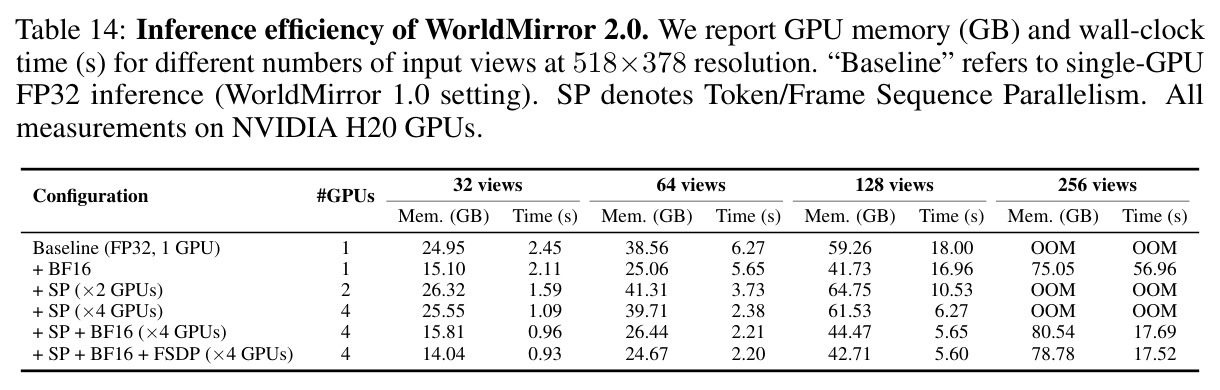
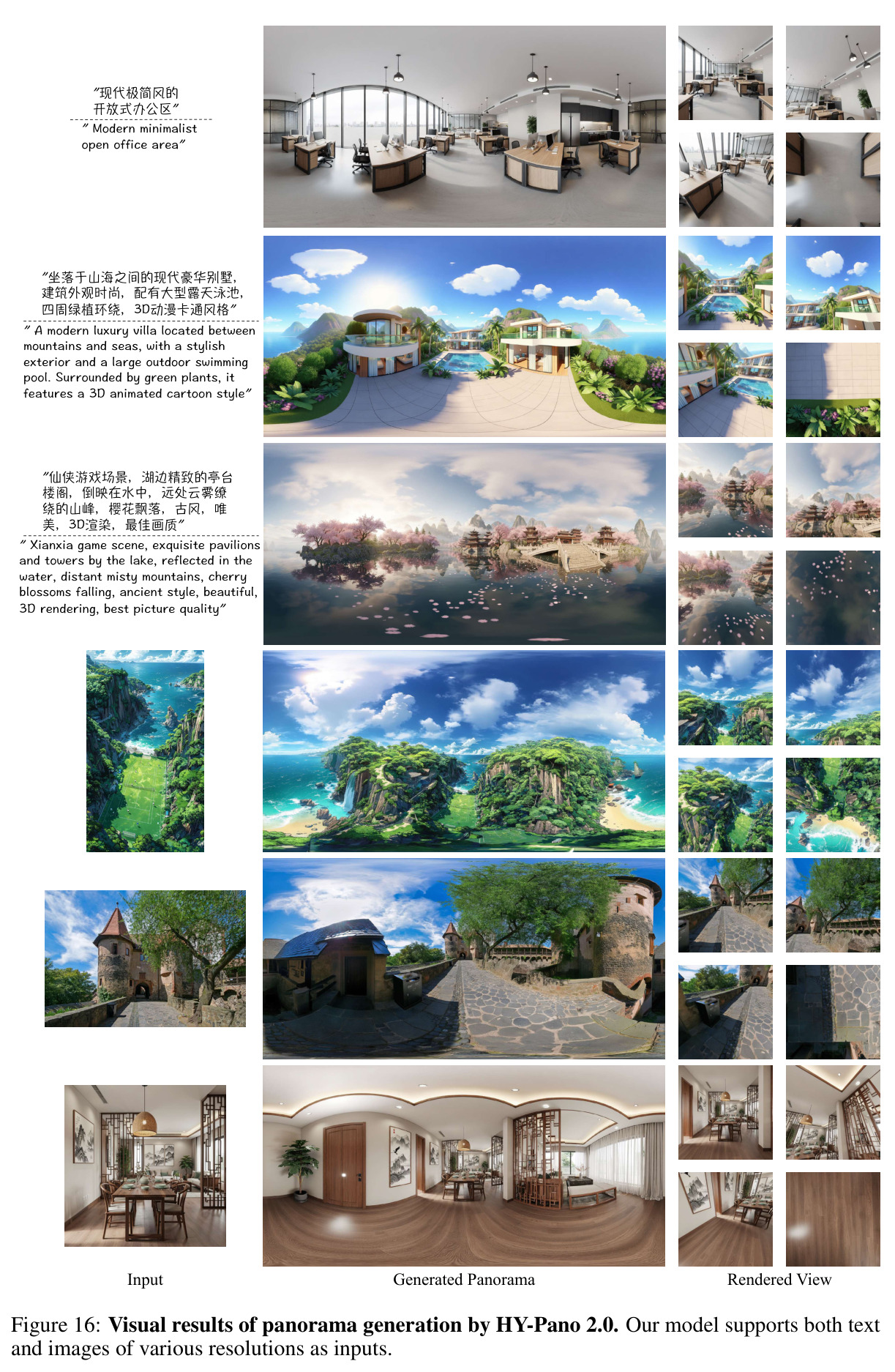
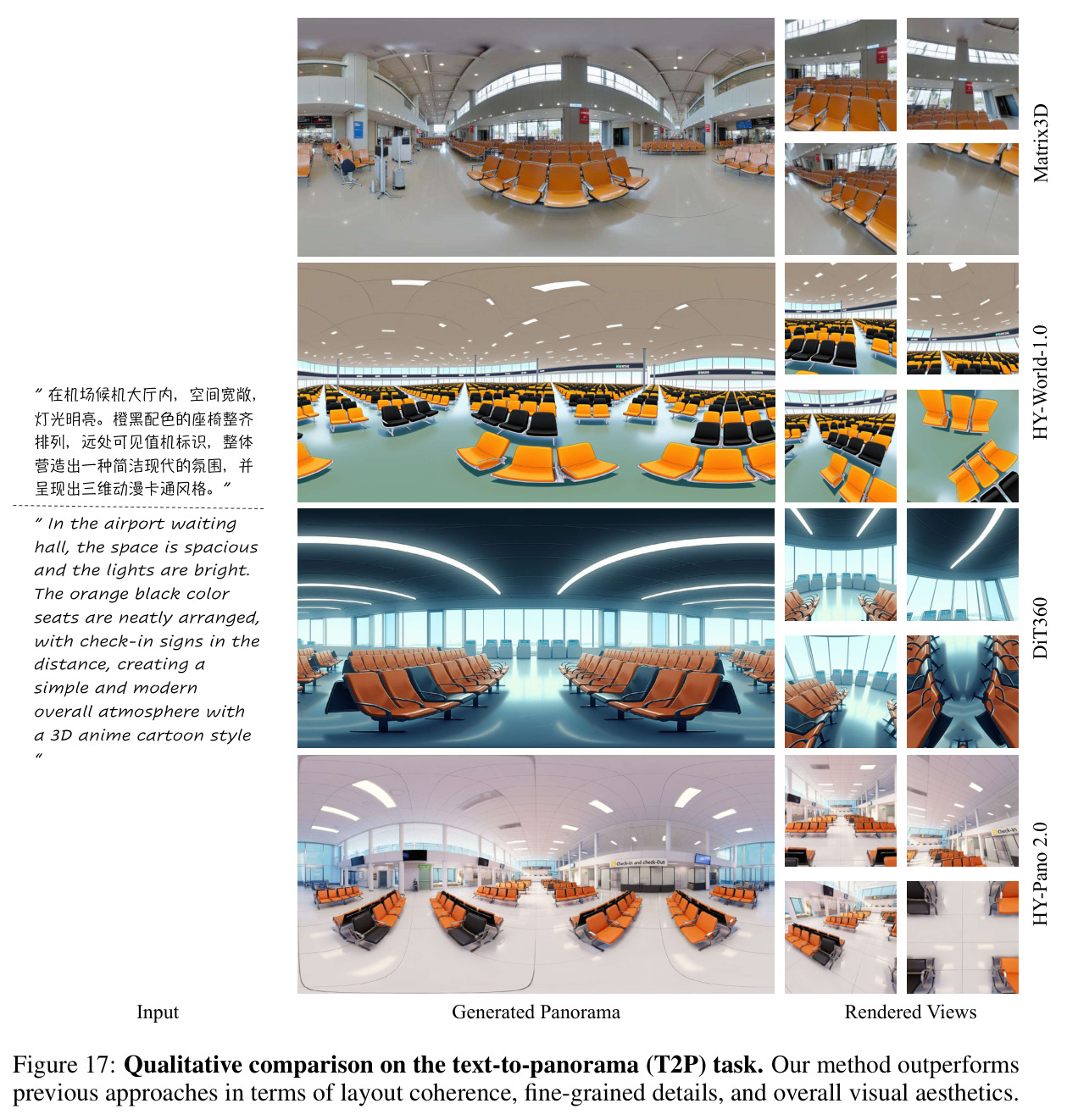
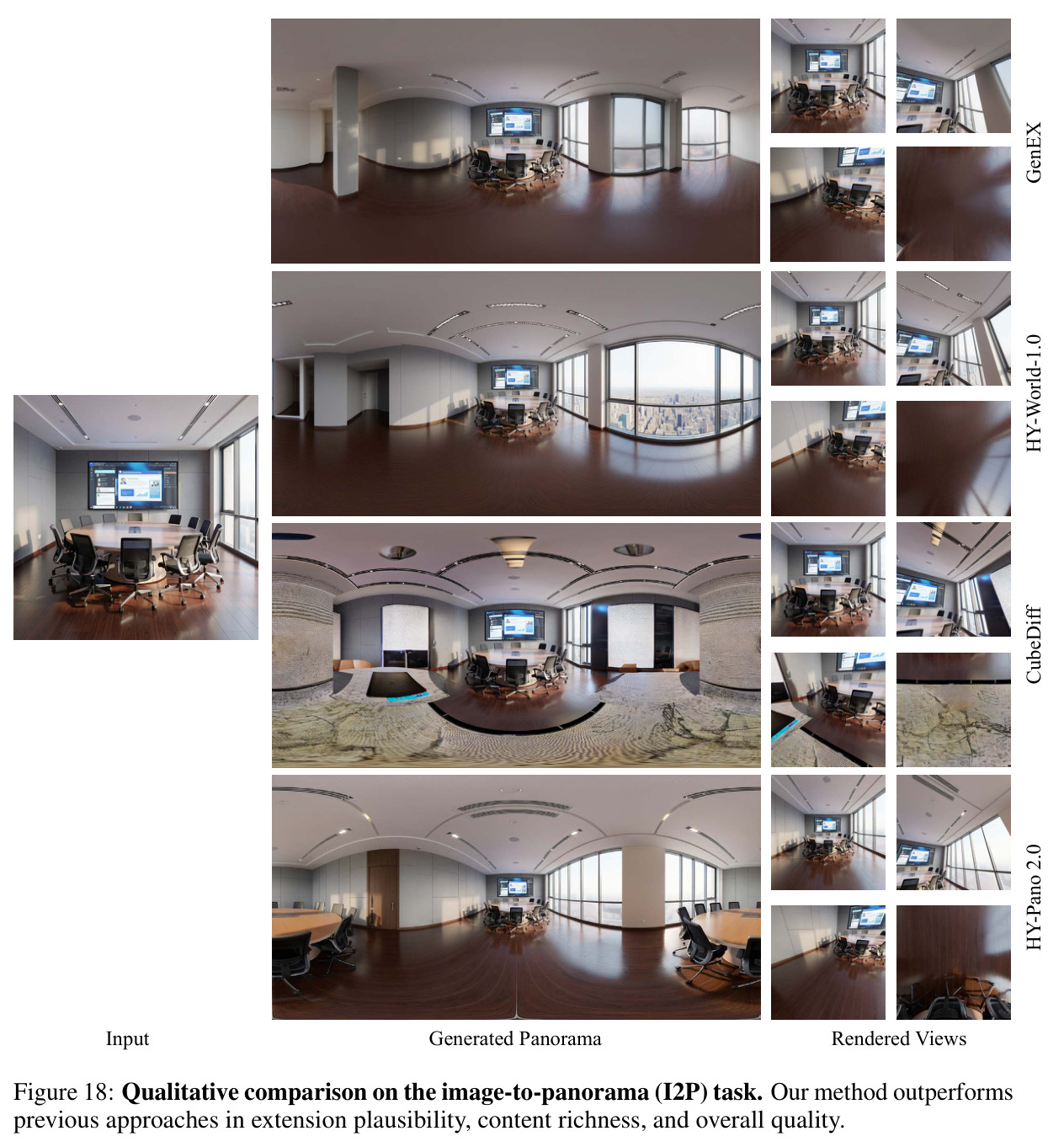
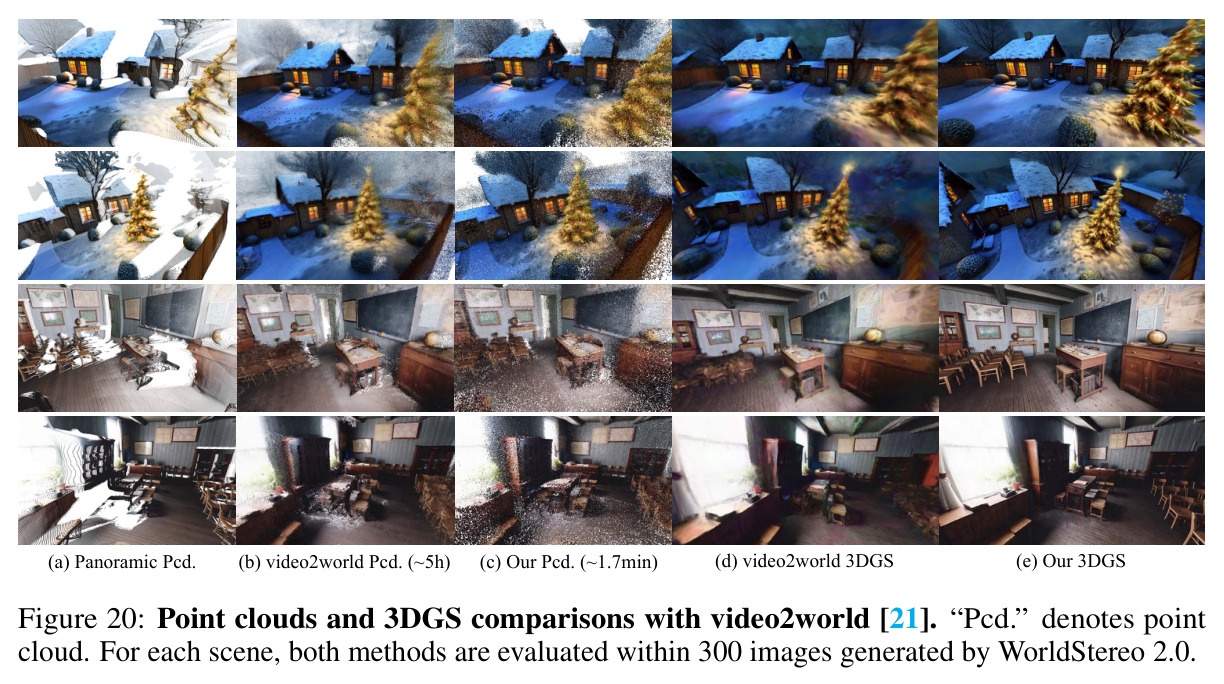
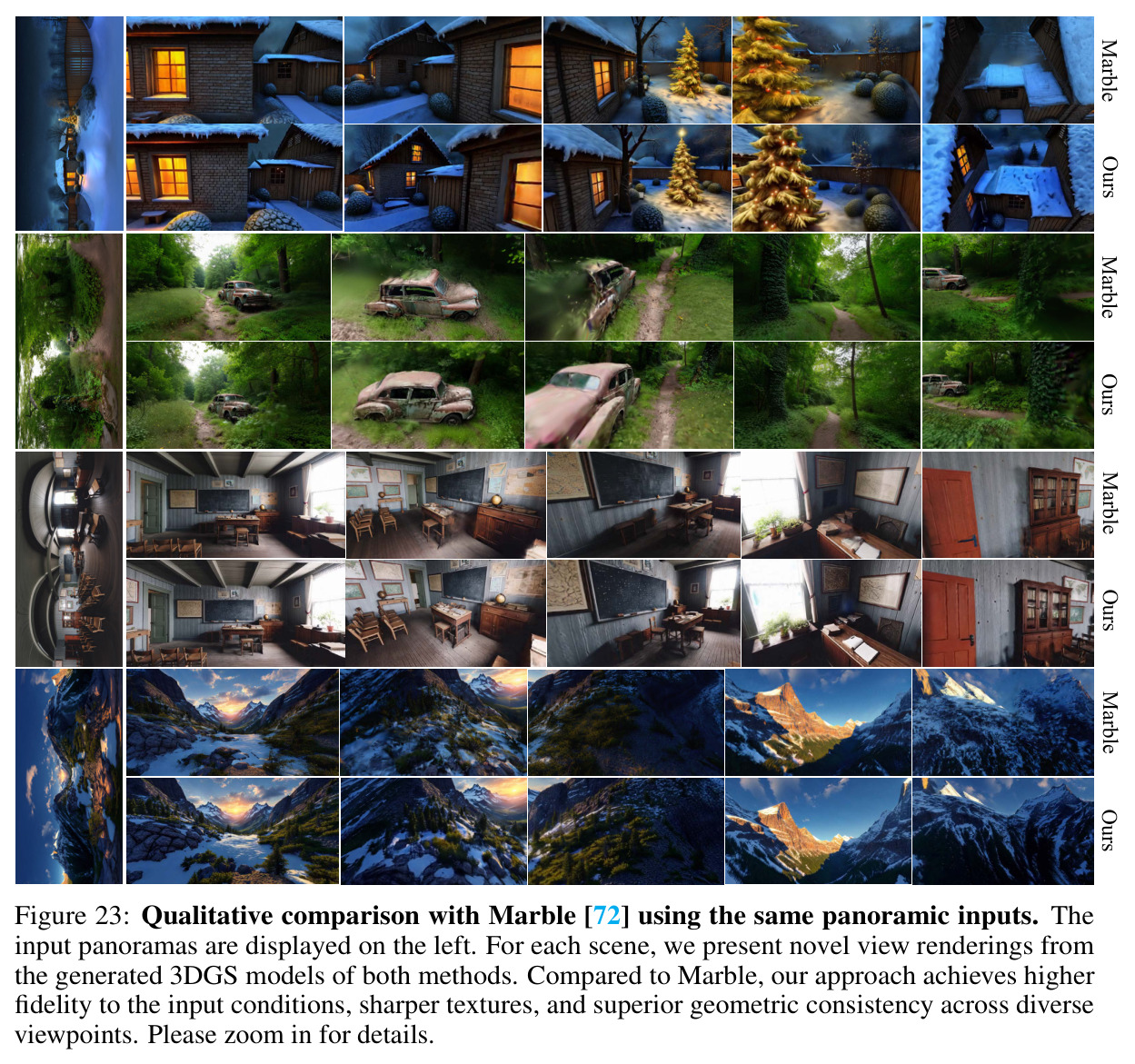
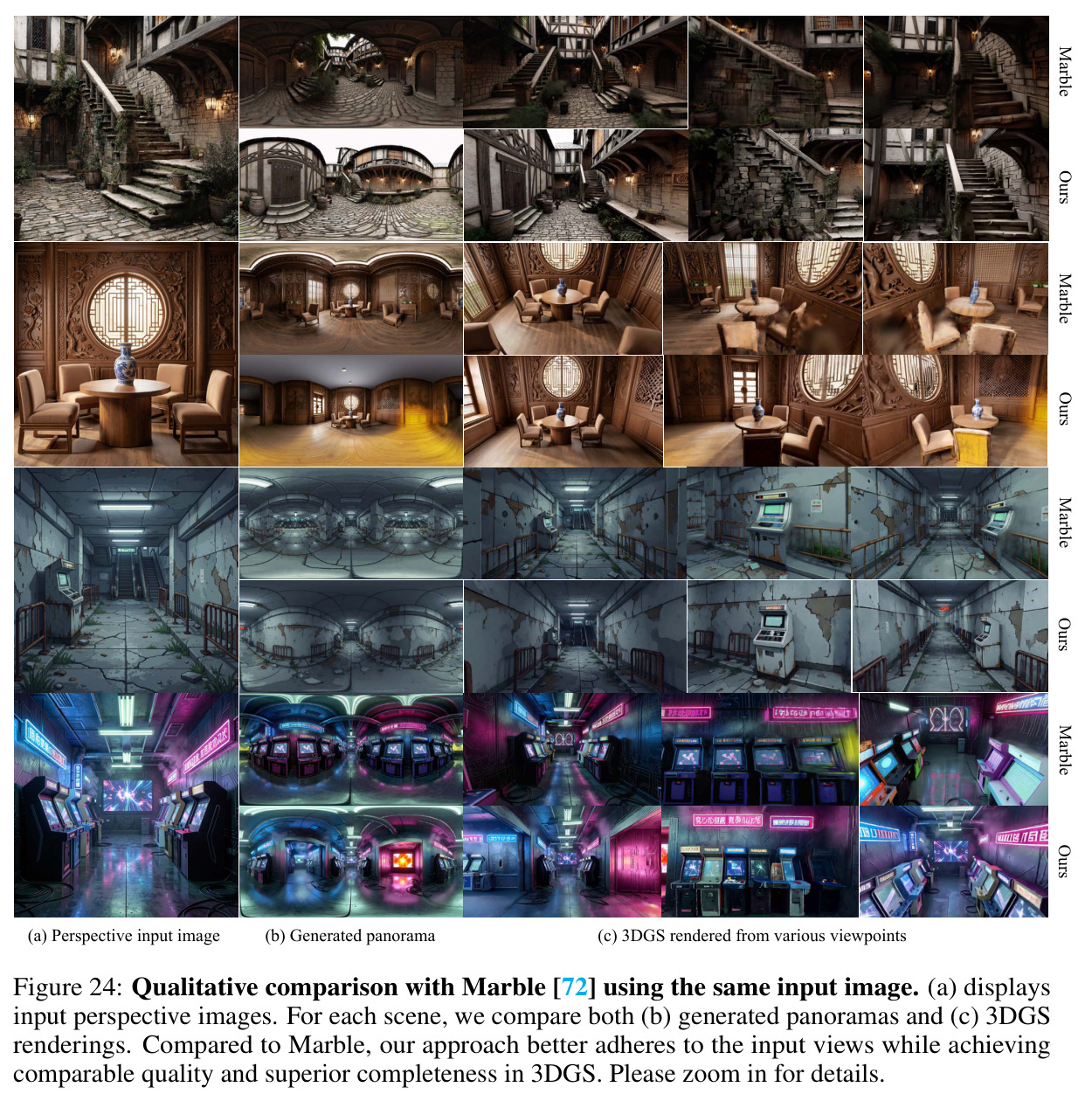
实验显示 HY-World 2.0 在所有子任务显著优于开源方法并逼近闭源 Marble。HY-Pano 2.0 全景生成(Table 4)T2P 上 CLIP-T 0.258、Qual(Persp)4.103;I2P 五项全面领先,Qual(Persp)从 3.317 升至 4.026。WorldStereo 2.0 相机控制(Table 6)以 RotErr 0.492、TransErr 0.968、ATE 1.768 最低,比前作 RotErr 提升 35.4%;单视角重建(Table 5)MipNeRF360 F1 跃至 51.27(vs FlashWorld +8.67)。WorldMirror 2.0 多尺度稳定性最惊艳(Table 11-13):高分辨率 AUC@30 从 66.29 跃至 86.89,7-Scenes 点云精度从 0.079 降至 0.037,ScanNet 法线 mean 从 17.6 降至 12.5。3DGS 消融(Table 9)显示 MaskGaussian 把高斯数从 5.254 M 压至 1.383 M(-73.7%)而 PSNR 仅 -0.14 dB。系统相对 video2world 从 5 小时降至 <2 分钟(Fig 20),Table 10 给出端到端 712 秒。

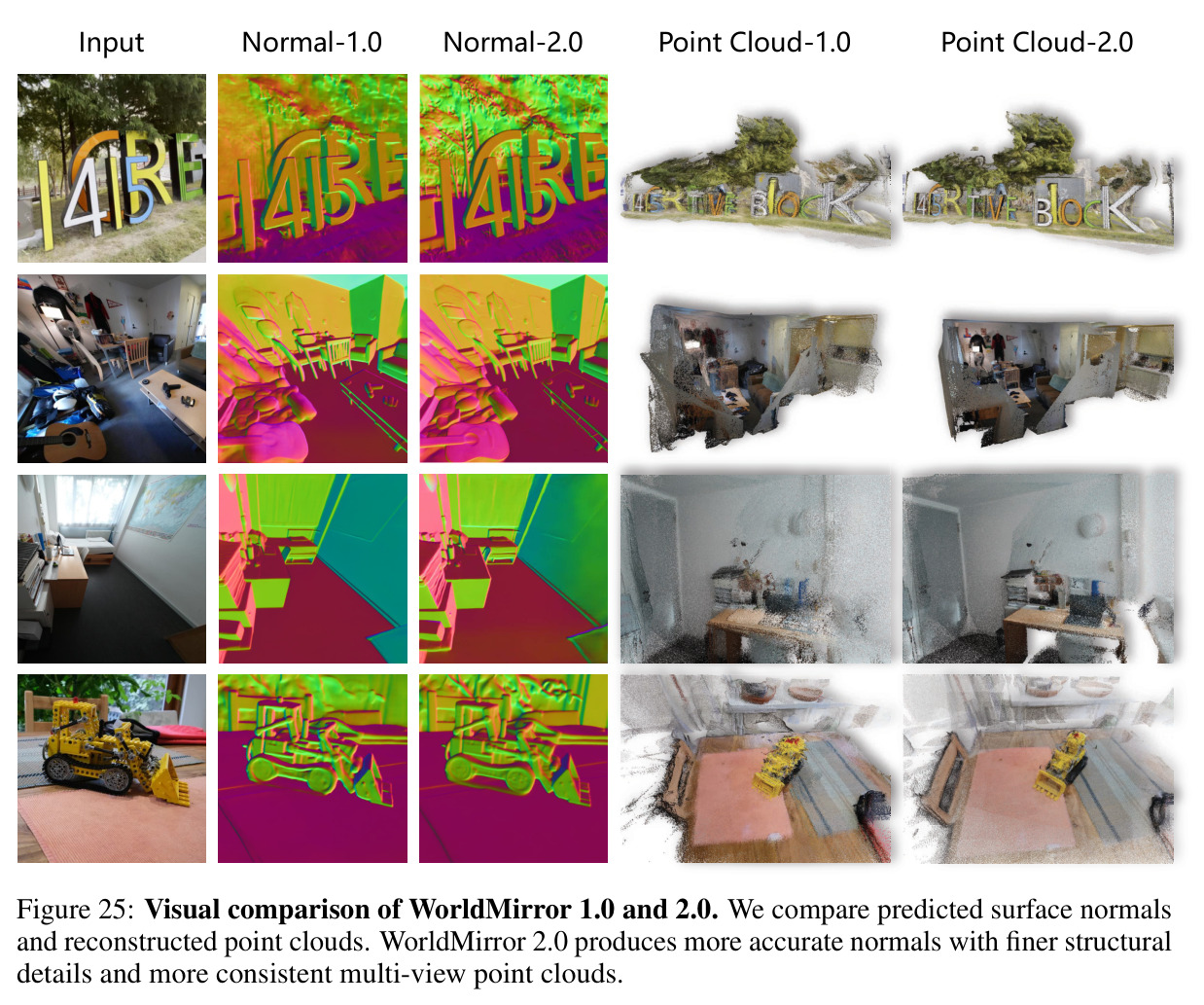
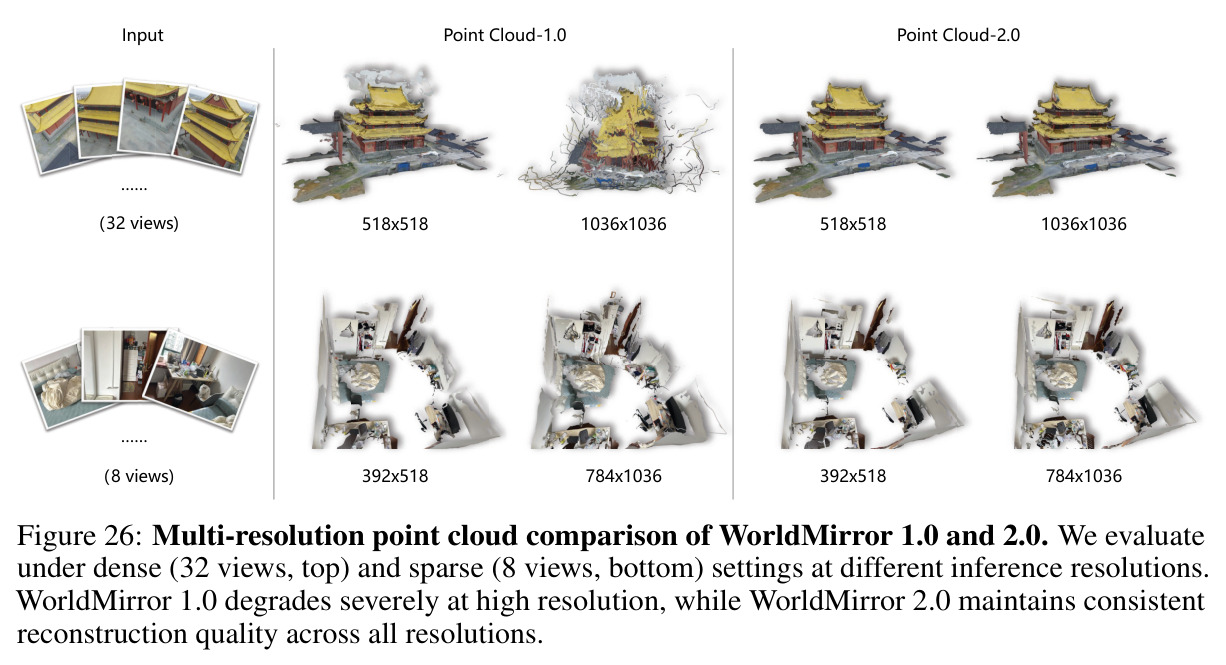
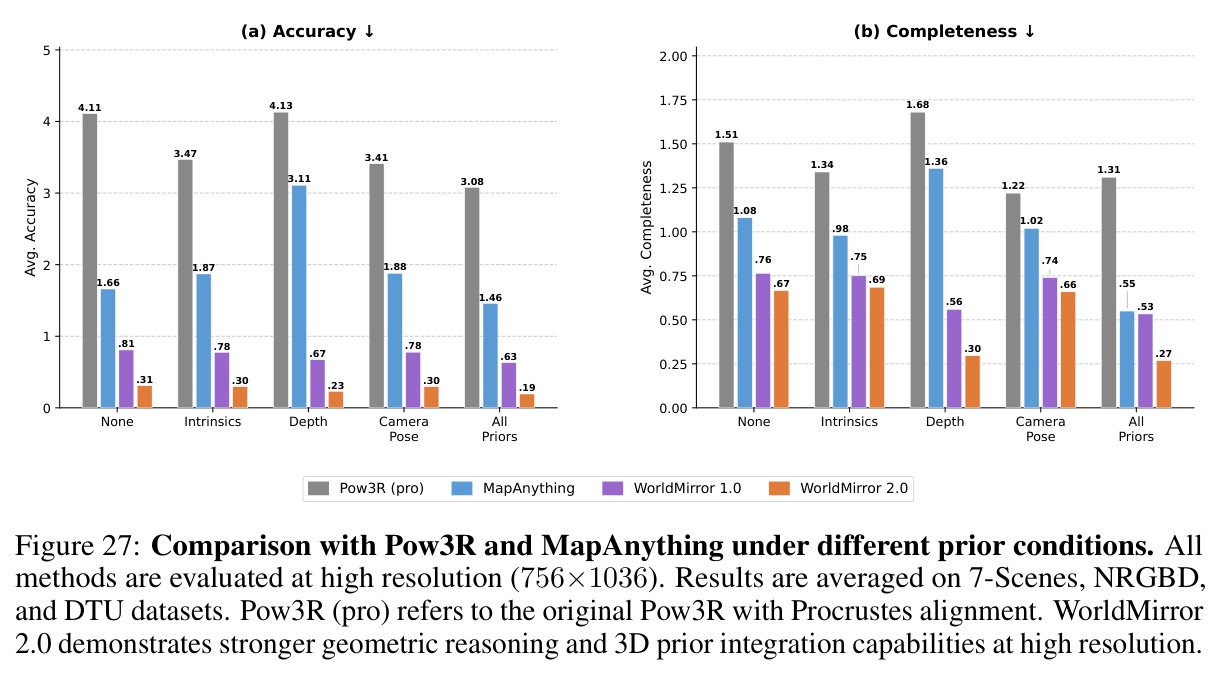
查看结构化数据
| 任务 | 指标 | 本文 | 基线 | 提升 |
|---|---|---|---|---|
| 文本到全景 CLIP-T 评分 (Text-to-Panorama) | CLIP-T (越高越好) | 0.258 (HY-Pano 2.0) | 0.248 (DiT360), 0.238 (Matrix3D), 0.250 (HY-World 1.0) | +0.010 vs 最佳前作,相对提升约 4.0% |
| 图到全景 CLIP-I 评分 (Image-to-Panorama) | CLIP-I (越高越好) | 0.844 (HY-Pano 2.0) | 0.831 (GenEx), 0.828 (CubeDiff), 0.831 (HY-World 1.0) | +0.013 vs 最佳前作,相对提升约 1.6% |
| 相机控制 RotErr (Tanks-and-Temples) | 旋转误差 (度,越低越好) | 0.492 (WorldStereo 2.0) | 1.690 (SEVA), 0.944 (Gen3C), 3.481 (WorldPlay) | 下降约 70.9% vs SEVA,且优于 Gen3C 约 47.9% |
| 单视角重建 MipNeRF360 F1 | F1 分数 (越高越好) | 51.27 (WorldStereo 2.0) | 28.75 (SEVA), 35.26 (Gen3C), 42.60 (FlashWorld) | +8.67 vs FlashWorld,相对提升约 20.3% |
| 高分辨率相机位姿 AUC@30 (RealEstate10K) | AUC@30 (越高越好) | 86.89 (WorldMirror 2.0, 高分辨率) | 66.29 (WorldMirror 1.0, 高分辨率), 86.13 (WorldMirror 1.0, 中等分辨率) | +20.6 绝对值提升,差距主要来自归一化 RoPE 解决的位置外推问题 |
| ScanNet 表面法线 mean error | 平均角度误差 (越低越好) | 12.3 (WorldMirror 2.0, 中等分辨率) | 16.2 (DSine), 16.0 (StableNormal), 13.8 (WorldMirror 1.0) | -3.7 vs DSine,相对提升约 22.8% |
| 3DGS 高斯数压缩 | 高斯数量 (M) | 1.383 M (MaskGaussian + 限制 densification) | 5.254 M (全量 densification) | 高斯数减少 73.7%,PSNR 仅下降 0.14 dB |
局限与改进
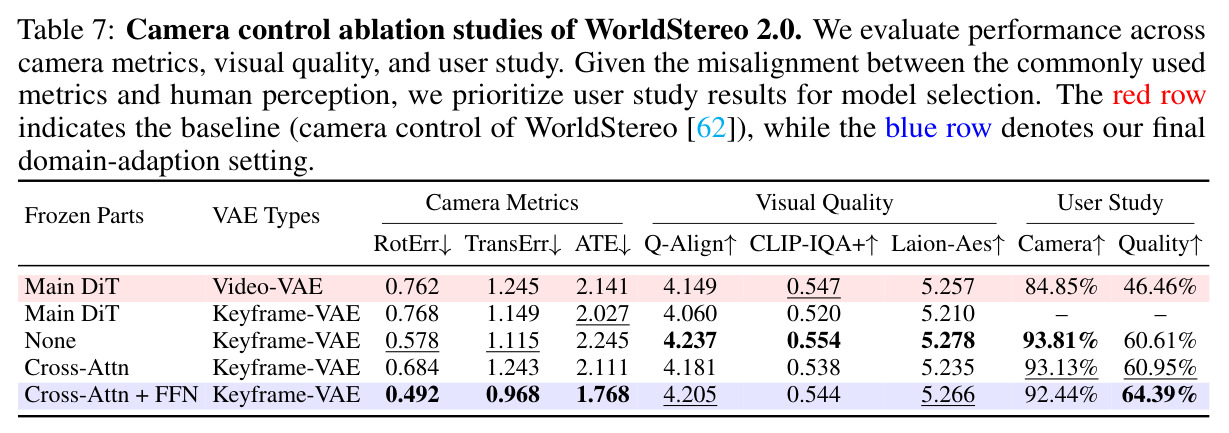
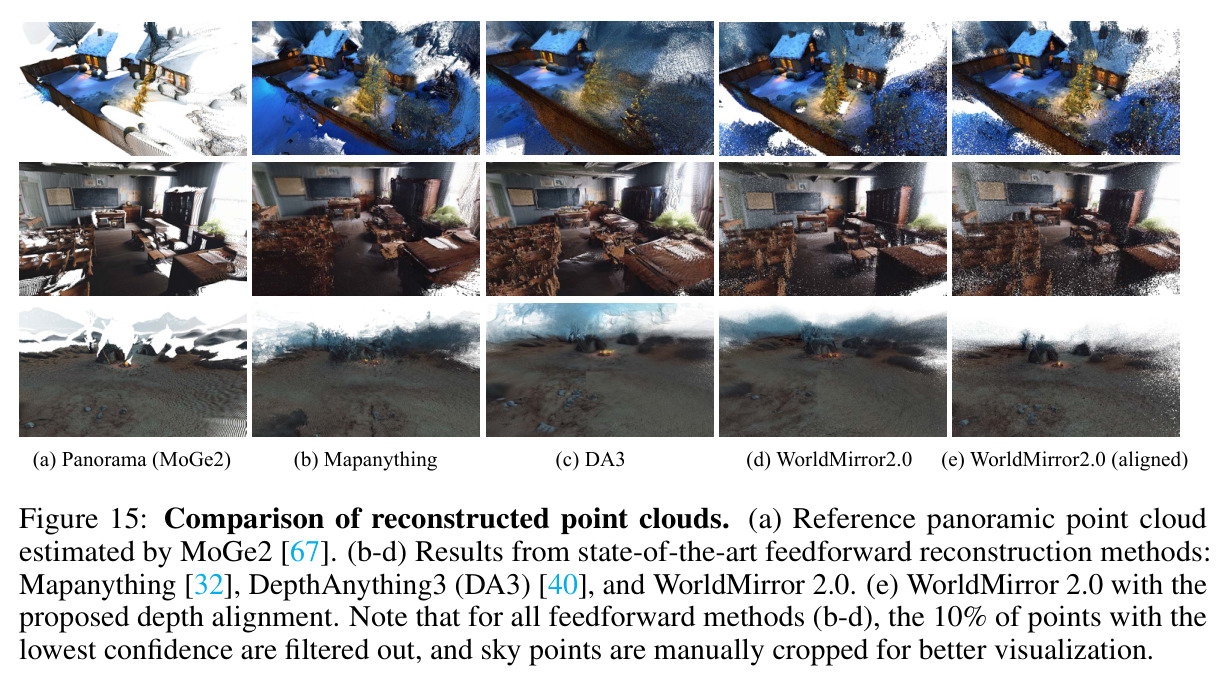
论文自我承认与读者可进一步观察的限制包括:(1) WorldStereo 2.0 的相机精度与视觉质量存在 trade-off,Table 7 显示完全解冻主 DiT 拿到最佳 PSNR/SSIM 但会引发轻微风格漂移,作者通过冻结 cross-attention+FFN 折中,说明该曲线尚未达到 Pareto 前沿;(2) 端到端耗时仍为 712 秒(≈ 12 分钟),其中轨迹规划 182s、世界扩展 286s、3DGS 127s 是主要瓶颈,对实时交互或大规模生成仍有量级差距;(3) 极富挑战的户外场景中 WorldMirror 2.0 深度估计仍有缺陷(Fig 15 第三行),必须配合 RANSAC 对齐才能稳定;(4) Keyframe-VAE 提升了画质,但视觉覆盖仍受限于最多 35 条轨迹,对于拐角后看不到的事物可能仍存在一致空白;(5) 闭源对手只对比 Marble(2026 年 3 月 30 日),未与 Genie 3、World Labs 等直接对比,外部有效性不完全;(6) 仅在 H20 上测效率,缺少 A100/RTX 4090 数据,给社区复现带来一定不确定性。
独立分析的弱点
从独立分析视角看,仍有六处可改进的弱点。第一,HY-Pano 2.0 输出分辨率固定 1024×512,对更宽视角/更高分辨率应用缺乏扩展能力,可加层级 VAE 与窗口 attention。第二,WorldNav 的 5 种轨迹上限硬编码(9/5/10/3/8),对不规则布局(如多楼层夹层)会出现 NavMesh 不可达而静默失败;可借鉴强化学习让相机路径自适应终止。第三,WorldStereo 2.0 在快速剧烈相机运动下仍可能撕裂,文中未给失败案例统计;可在推理阶段引入 temporal smoothing 或 rejection sampling。第四,WorldMirror 2.0 的 depth-to-normal loss 在伪标签 teacher 给出错误预测时会引入累积误差,可加伪标签置信度自适应的课程学习。第五,3DGS 训练 RANSAC 单次线性对齐对尺度不一致的大场景不够稳,建议 DMD 蒸馏阶段也加 joint optimization。第六,整套流水线在 inference 时没有错误回退机制,可加 confidence-driven fallback。
未来方向
作者未给出具体未来方向,但综合各组件的张力可延伸出数条路径。其一,把 Keyframe-VAE 与 SSM++ 成功经验应用到「在线」世界模型(HY-World 1.5 范式),让交互式场景具备长程一致性。其二,把 Normalized RoPE 与 depth-to-normal loss 推广到其他前馈重建基础模型(VGGT、π3)作为插件,统一不同模型在多分辨率下的行为。其三,把 RANSAC 替换为基于学习的对齐模块(如可微 Procrustes 或 pose-conditioned scale head),使对齐本身可被端到端优化。其四,引入具身智能数据(机器人轨迹、自动驾驶)作为额外先验,让生成的 3D 世界具备物理可交互的动力学属性。其五,把 DMD 蒸馏进一步压缩到 1 步采样,并把全部 stage 串成一个统一的多任务扩散模型。其六,把 WorldLens 平台开放为 web 化 3DGS 渲染服务,让研究者无需本地 GPU 即可交互浏览。其七,把整套管线扩展到 4D(时序)世界生成,让 3DGS 资产承载几分钟长度的动态场景。
复现评估
复现方面作者做得相当彻底:HY-World 2.0 论文与项目主页承诺 release all model weights, code, technical details,GitHub(Tencent-Hunyuan/HY-World-2.0)与项目页均给链接。训练数据来自公开集合(DL3DV、Map-Free-Reloc、WildRGB)+ 内部 UE 渲染;WorldMirror 2.0 在 7-Scenes、NRGBD、DTU、ScanNet、NYUv2、iBims-1、RealEstate10K、DL3DV 纯公开基准评测。算力按 Tab 10/14 推断 WorldMirror 2.0 至少 1 张 H20/A100,4×H20 上 712 秒生成一世界。复现难度中等偏上:硬件门槛不高但需充足显存,需打通 HY-Pano + WorldStereo + WorldMirror 三模型与多次 3DGS 优化。5.2.3 节增强、7.1.2 节 9-anchor RANSAC、Tab 7「冻结 cross-attn+FFN」降低二次实现歧义性,但部分超参数未完全公开、内部 UE 数据未公开带来 domain gap。
论文图表
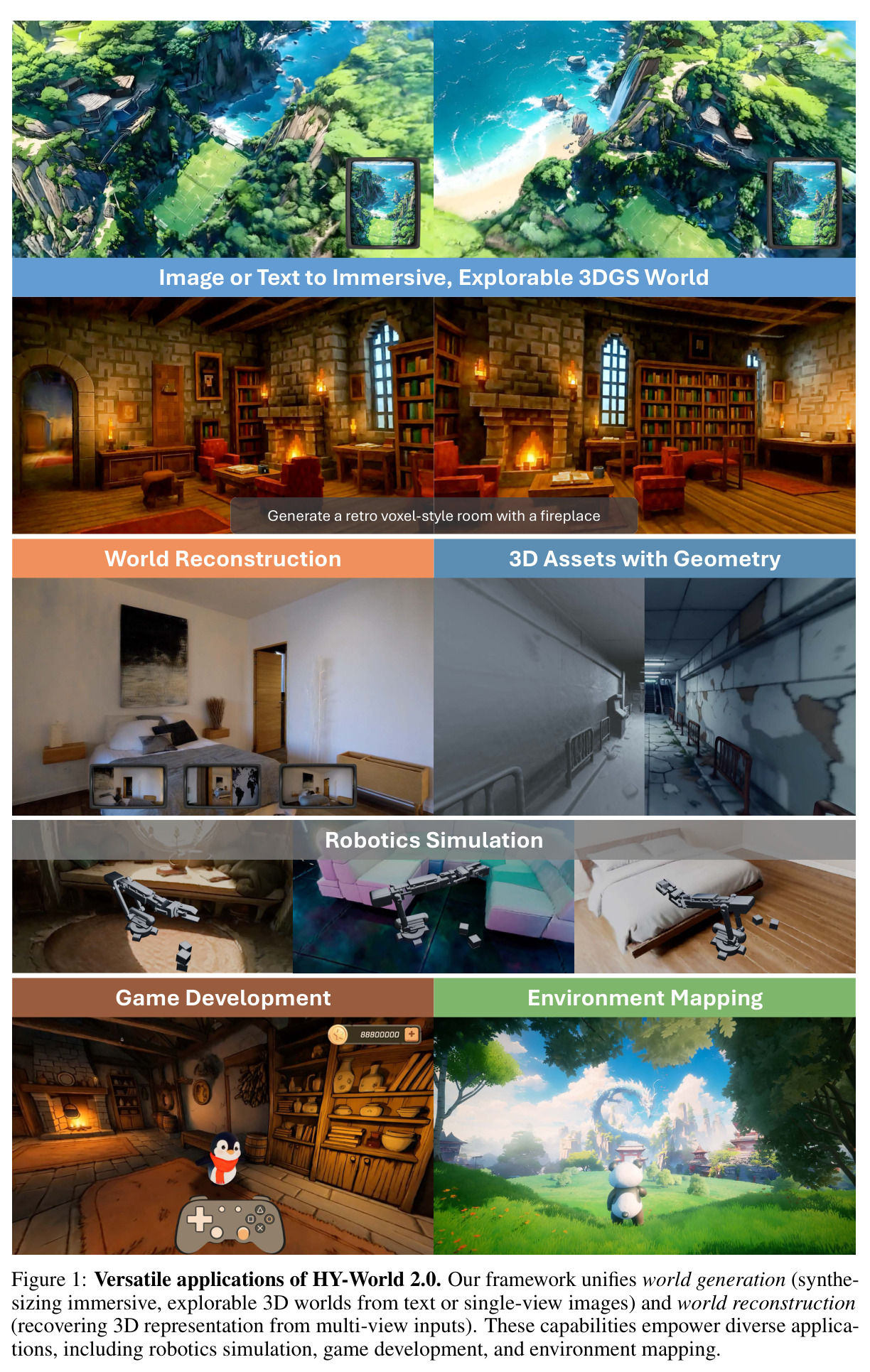
示意 HY-World 2.0 统一两类能力:左边是「世界生成」——由文本/单图合成可探索 3D 世界;右边是「世界重建」——由多视图/视频恢复 3D 表示。下游应用列举了机器人仿真、游戏开发、环境映射三类,并以 4 个展示网格(kitchen、mountain bedroom、China pavilion 等)覆盖室内外不同场景。
Figure 1 是整篇报告的「门面图」,把「生成 + 重建统一」这一核心立意用一张拼图讲清楚;理解本文之前先看这张图能最快建立心智模型。