Transformer 中的注意力汇聚现象:一项关于利用、解释与缓解的综述 Attention Sink in Transformers: A Survey on Utilization, Interpretation, and Mitigation
首篇系统综述 AS 在 Transformer 各家族中的机制、用法与抑制方法
前置知识
多头自注意力 (Multi-Head Self-Attention, MHSA)
Transformer 核心算子,对输入线性投影得 $Q,K,V$,通过 $\text{Attention}(Q,K,V) = \text{Softmax}(QK^\top / \sqrt{d_k}) V$ 建模两位置依赖。多头并行捕捉不同粒度。
Softmax 归一化是 AS 现象的数学根源,了解注意力分数如何被强制归一到 1,才能理解 AS 为何是 Transformer 的内禀行为。
Softmax 归一化与 sum-to-one 约束
Softmax 把实数 logits 指数化后除以总和,得到和为 1 的概率分布。当 query 与所有 key 都不相关时,仍必须分配正概率到某些 token 上,"无关性"就被压缩到这些无关 token 上。
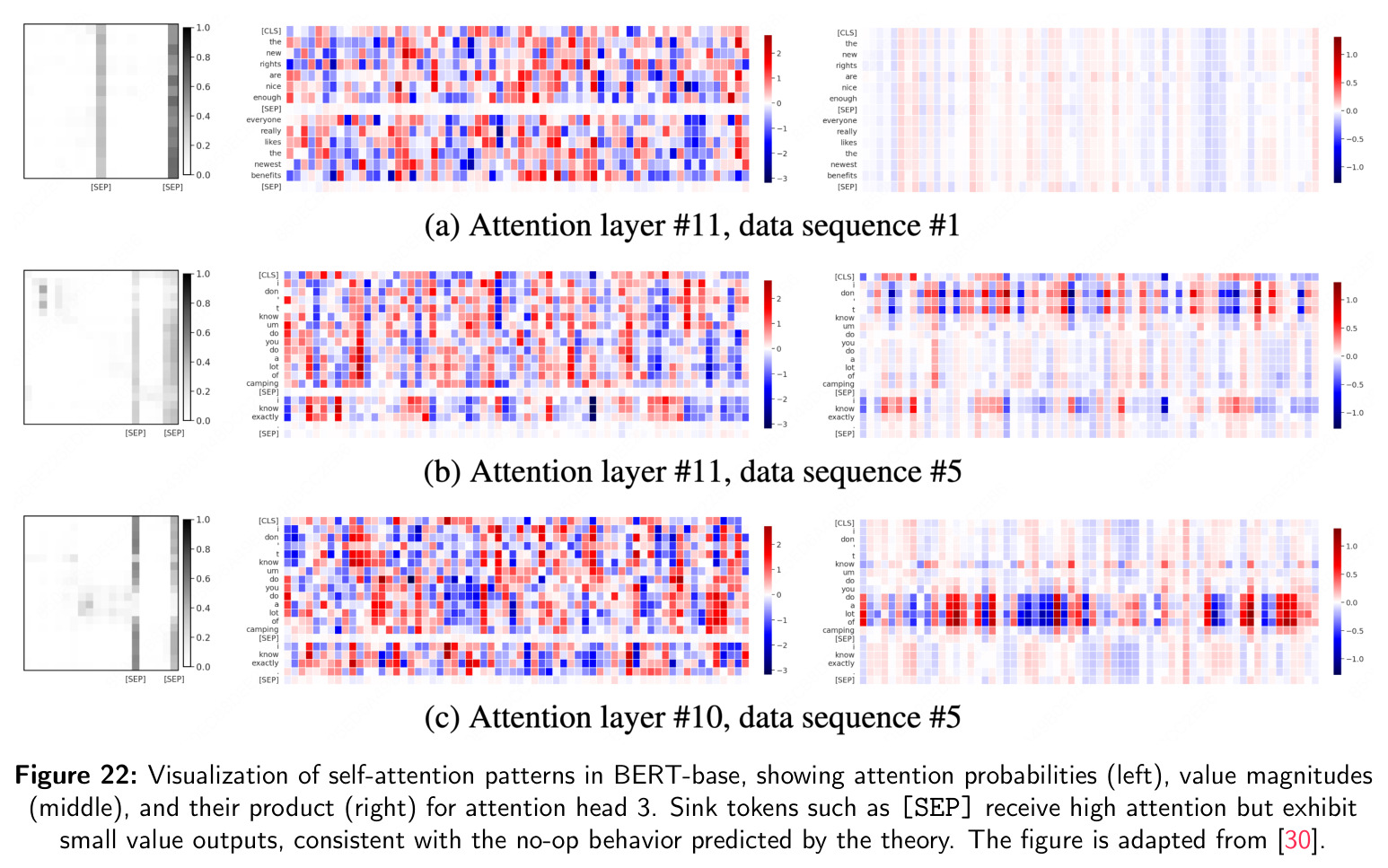
No-Op 理论的基础:当 head 想做"几乎不更新"时,被迫把全部概率质量集中到某个低信息 token 并让 value 接近 0,结果就是注意力汇聚。
KV Cache 与推理效率
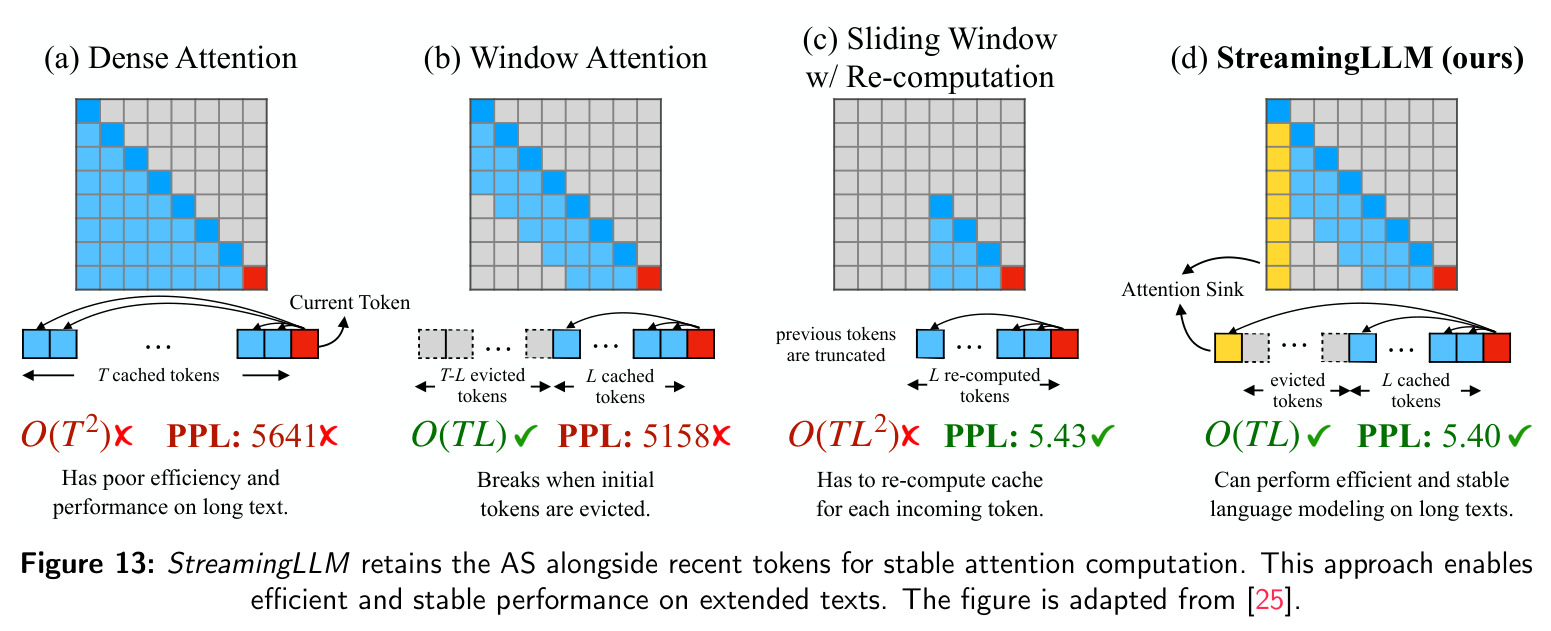
自回归生成每步都要把历史 token 的 K/V 重新读出来,显存和带宽是长上下文的主要瓶颈。StreamingLLM、H2O、KVQuant 等方法通过剪枝/量化压缩历史 KV。
Sink Token Preservation 的整个体系都建立在这之上:保留首部几个 token 的 KV 几乎不增加显存,却能保留模型长文本建模的稳定性。
激活异常值 (Massive Activations / Outliers)
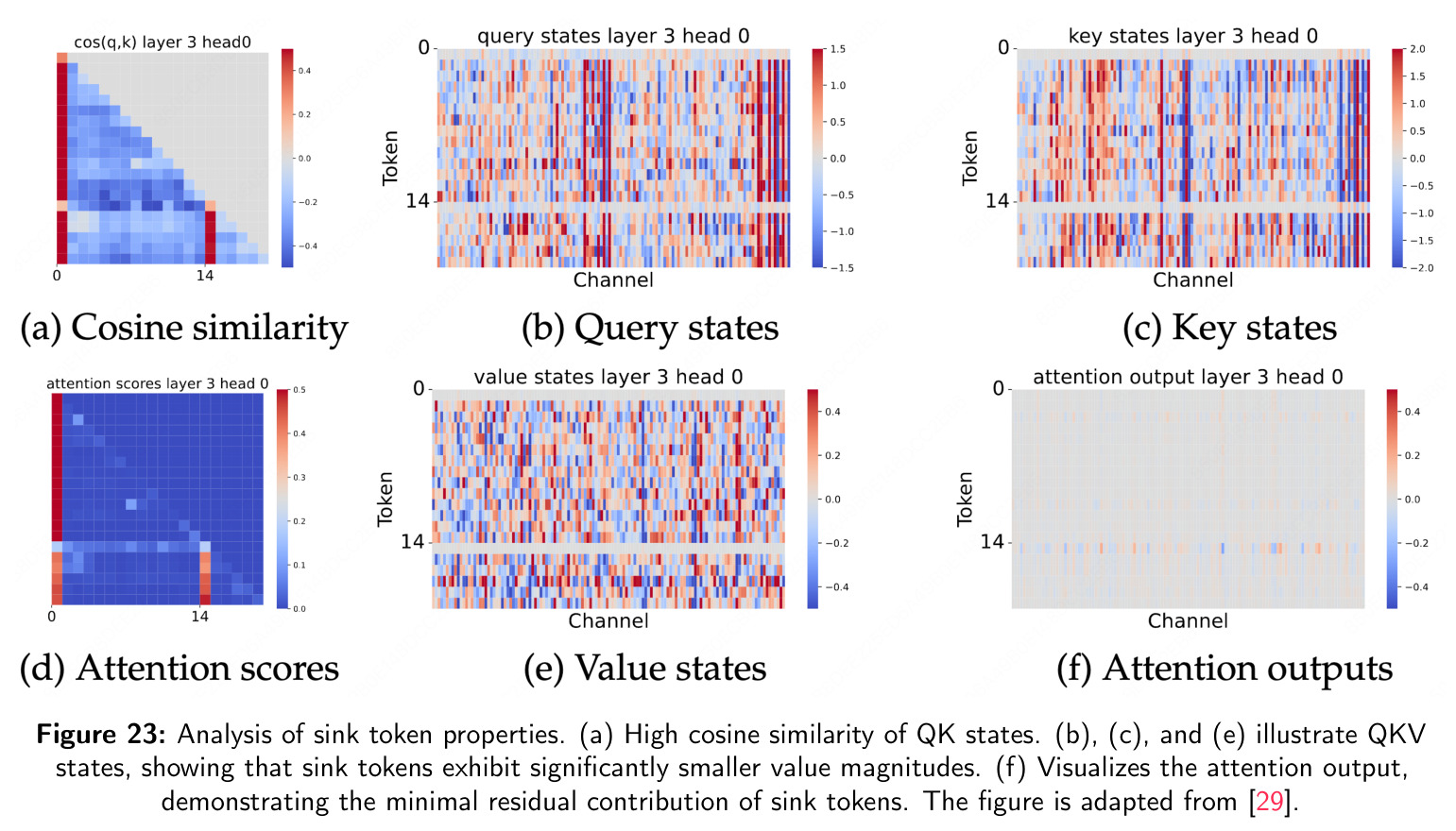
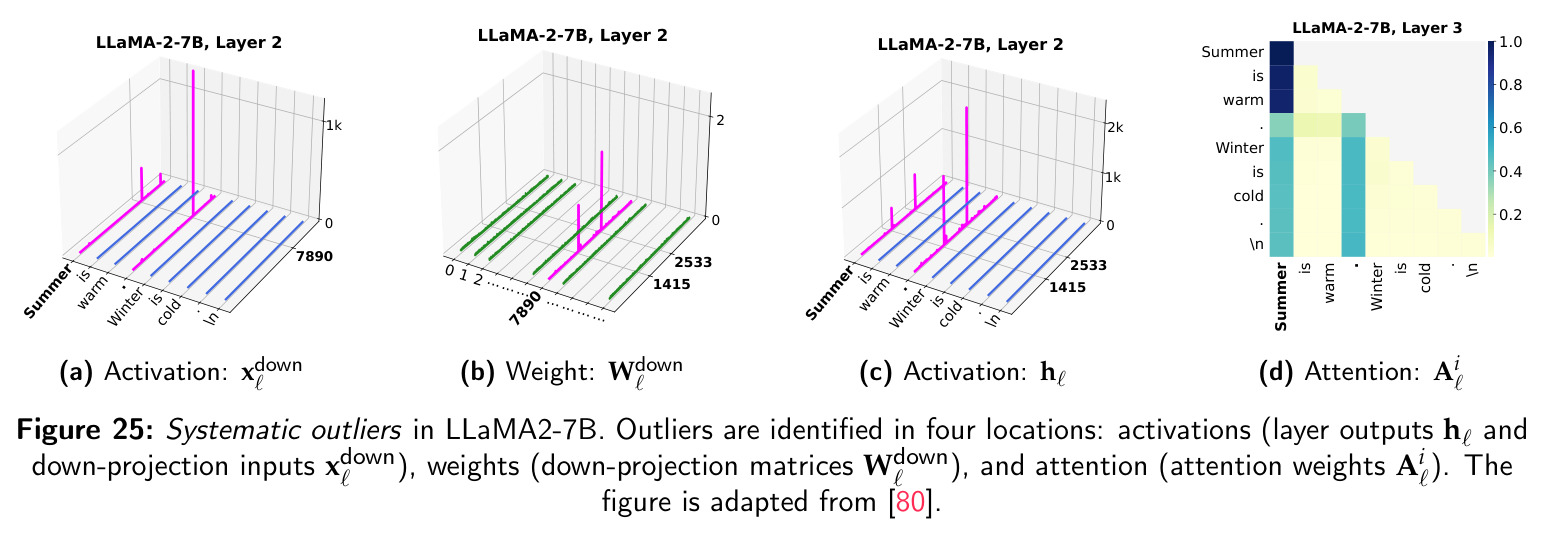
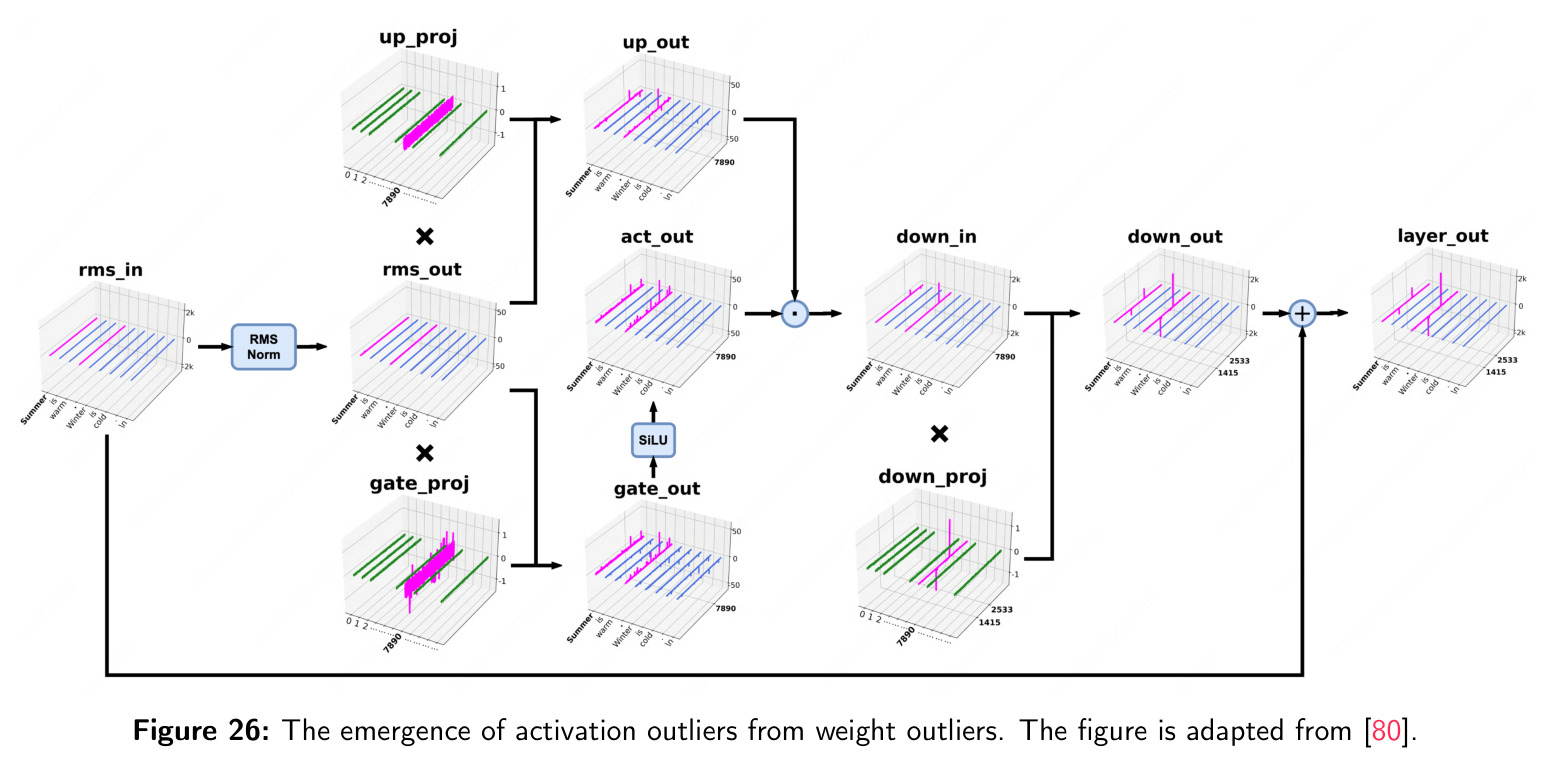
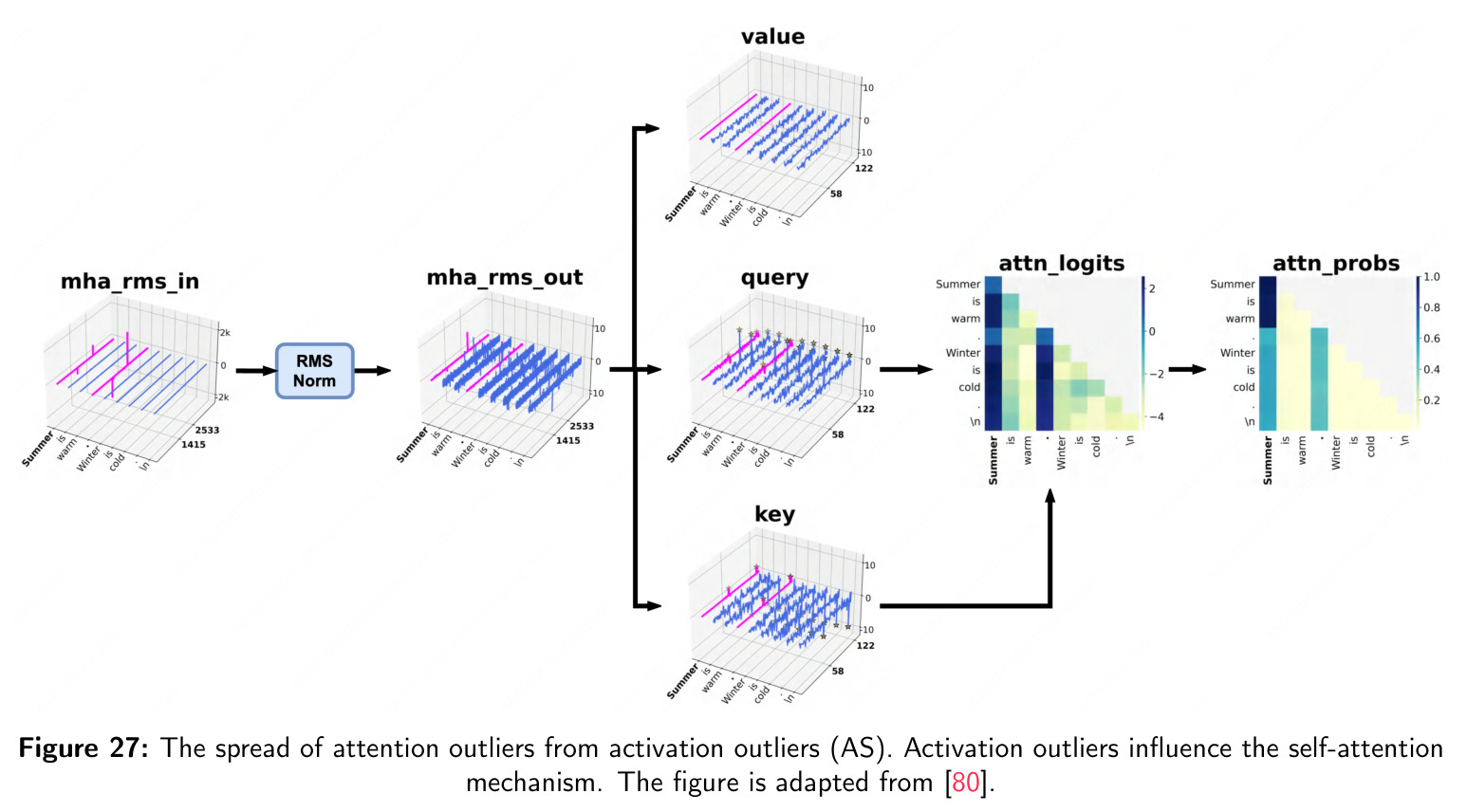
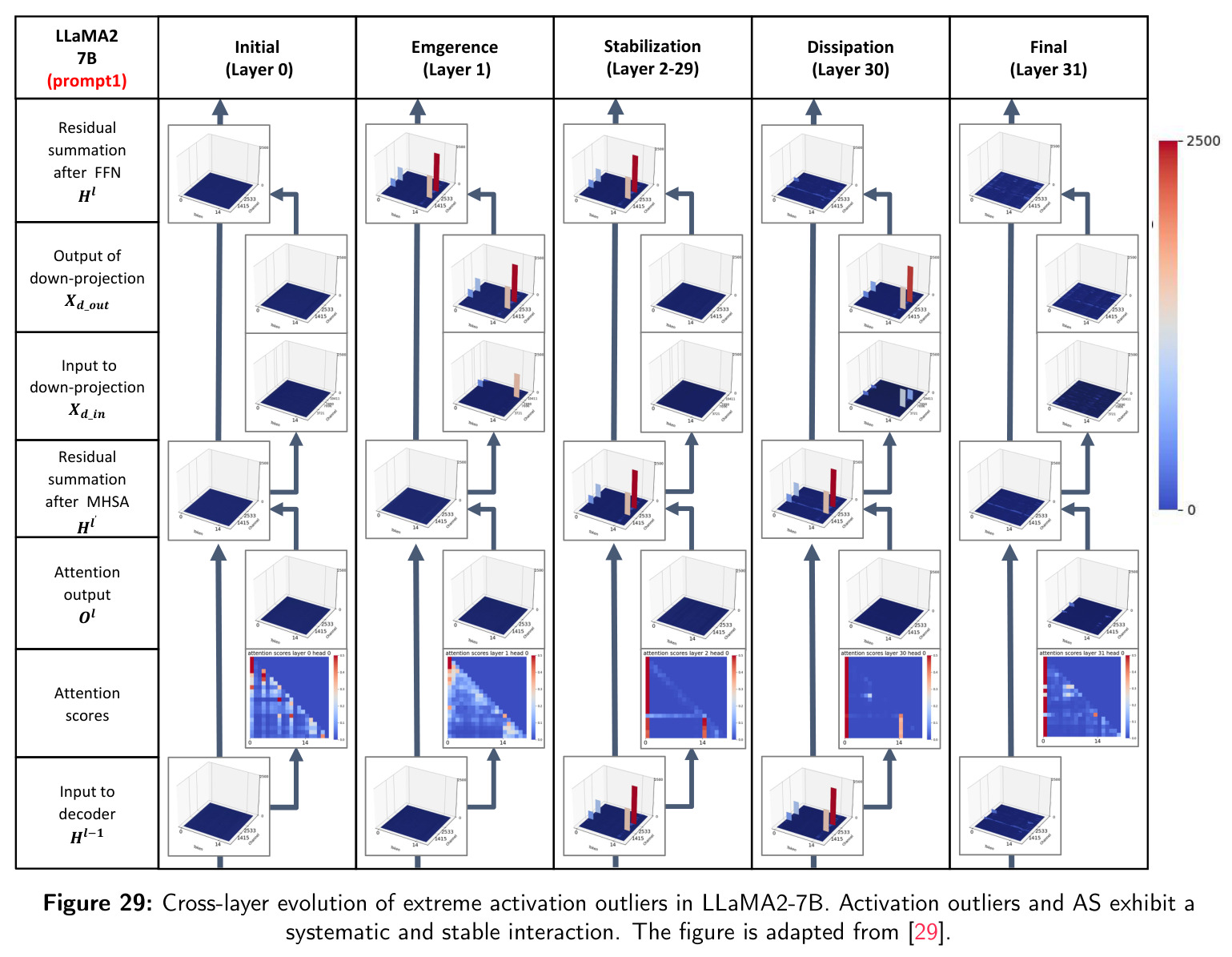
训练好的 Transformer 中,特定 token 在特定隐藏维度上出现比其他维度大几个数量级的激活值(如 >10000),这些值跨层、跨输入都很稳定。
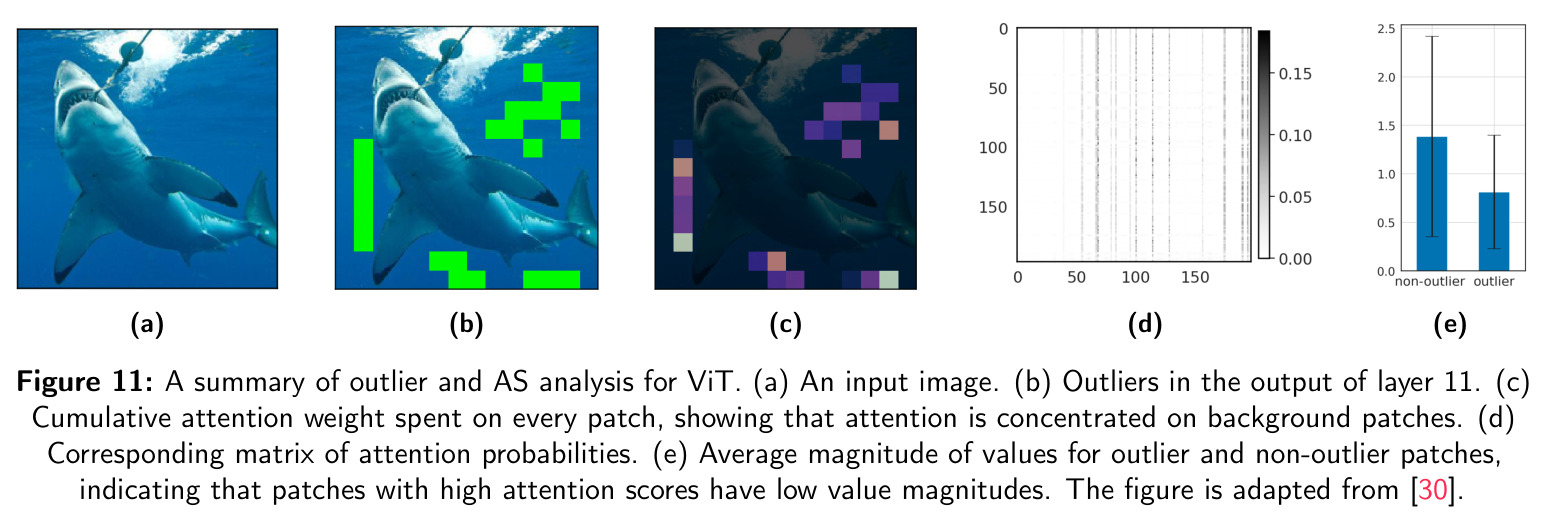
Outlier Circuits 视角认为 AS 是权重/激活/注意力异常值构成的"异常电路"的注意力端表现,是 AS 的数值基础。
Mixture-of-Experts (MoE) 与 Super Expert
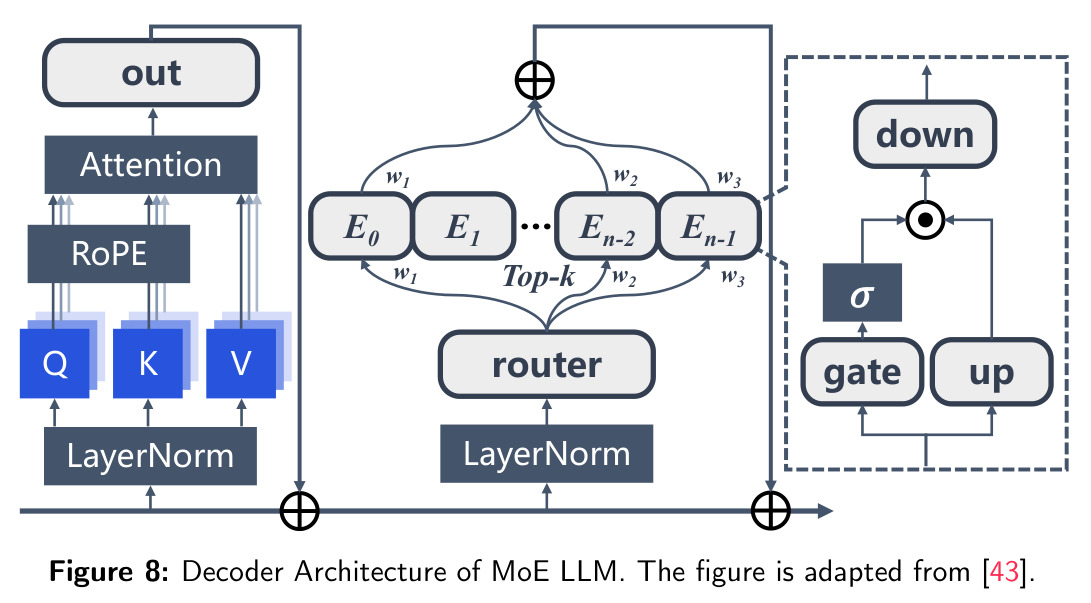
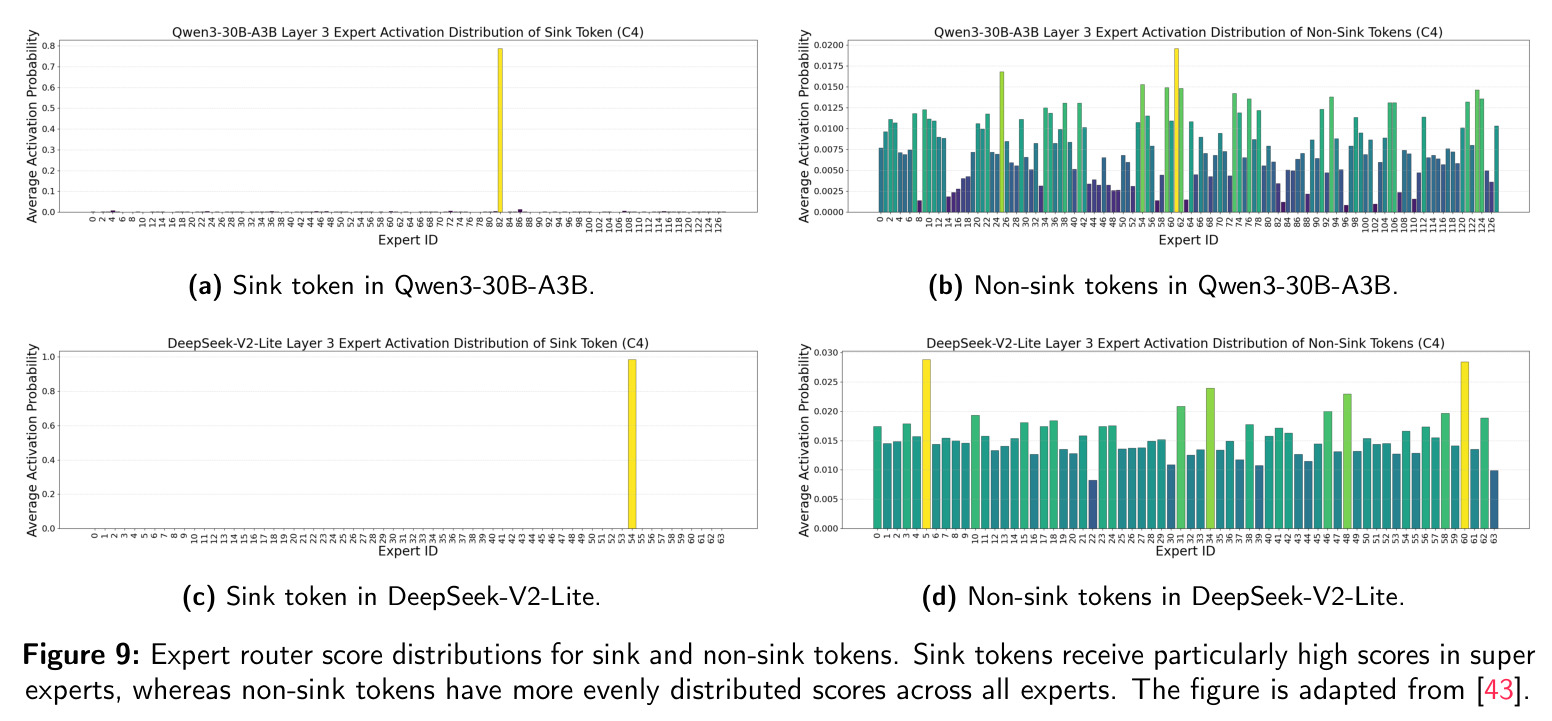
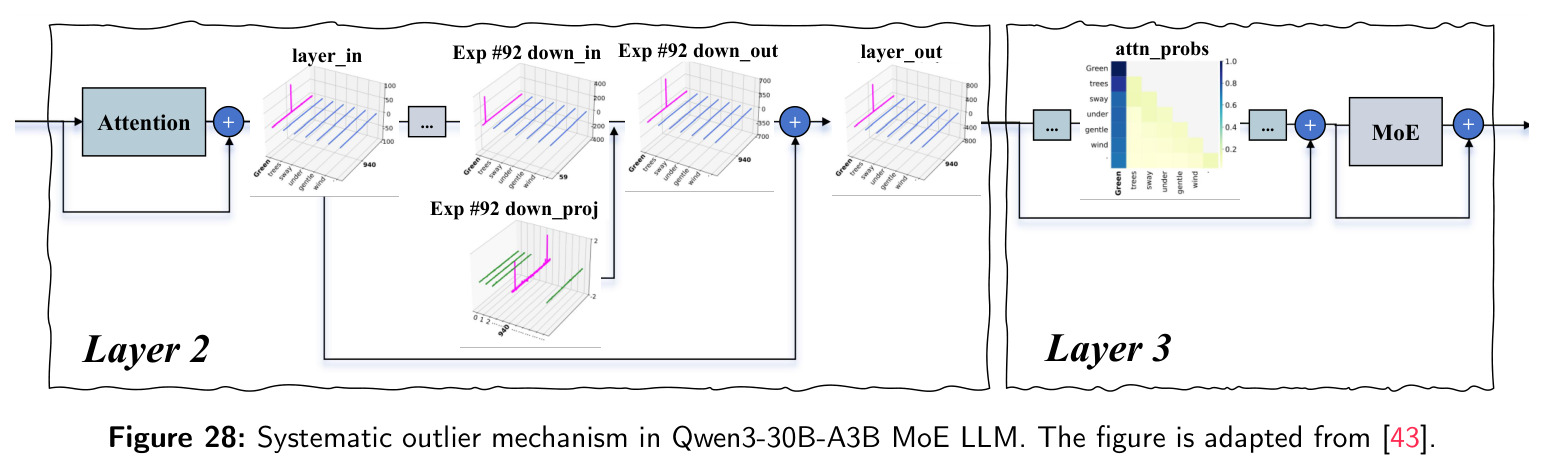
MoE 层用路由器为每个 token 选 top-k 个 FFN 专家(如 6,144 选 8)。Super Expert 指的是极少几个对 AS 形成至关重要的专家,如 Qwen3-30B-A3B 剪掉其中 3 个就崩。
AS 在 MoE LLM 中的表现与 Super Expert 直接绑定,是理解为什么稀疏激活模型依然有 AS 的关键,也是 MoE 特有的脆弱性来源。
研究动机
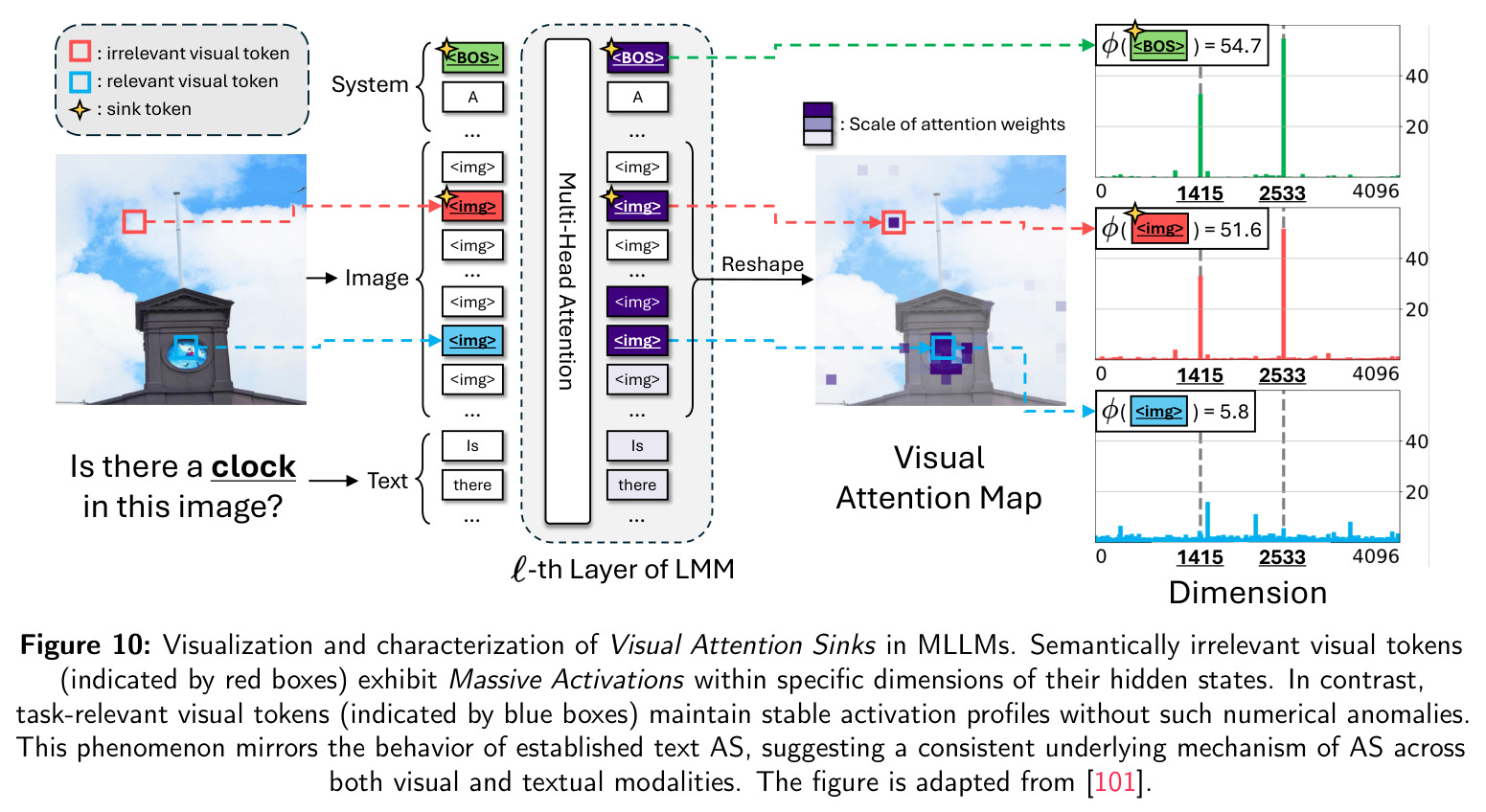
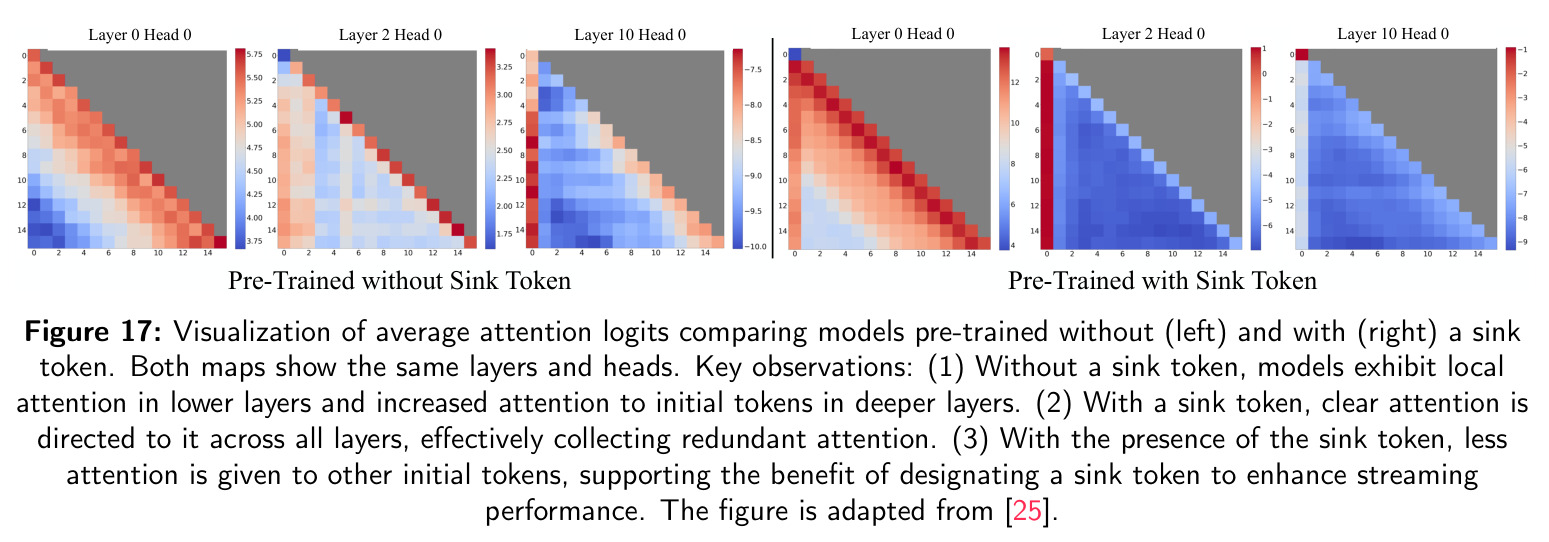
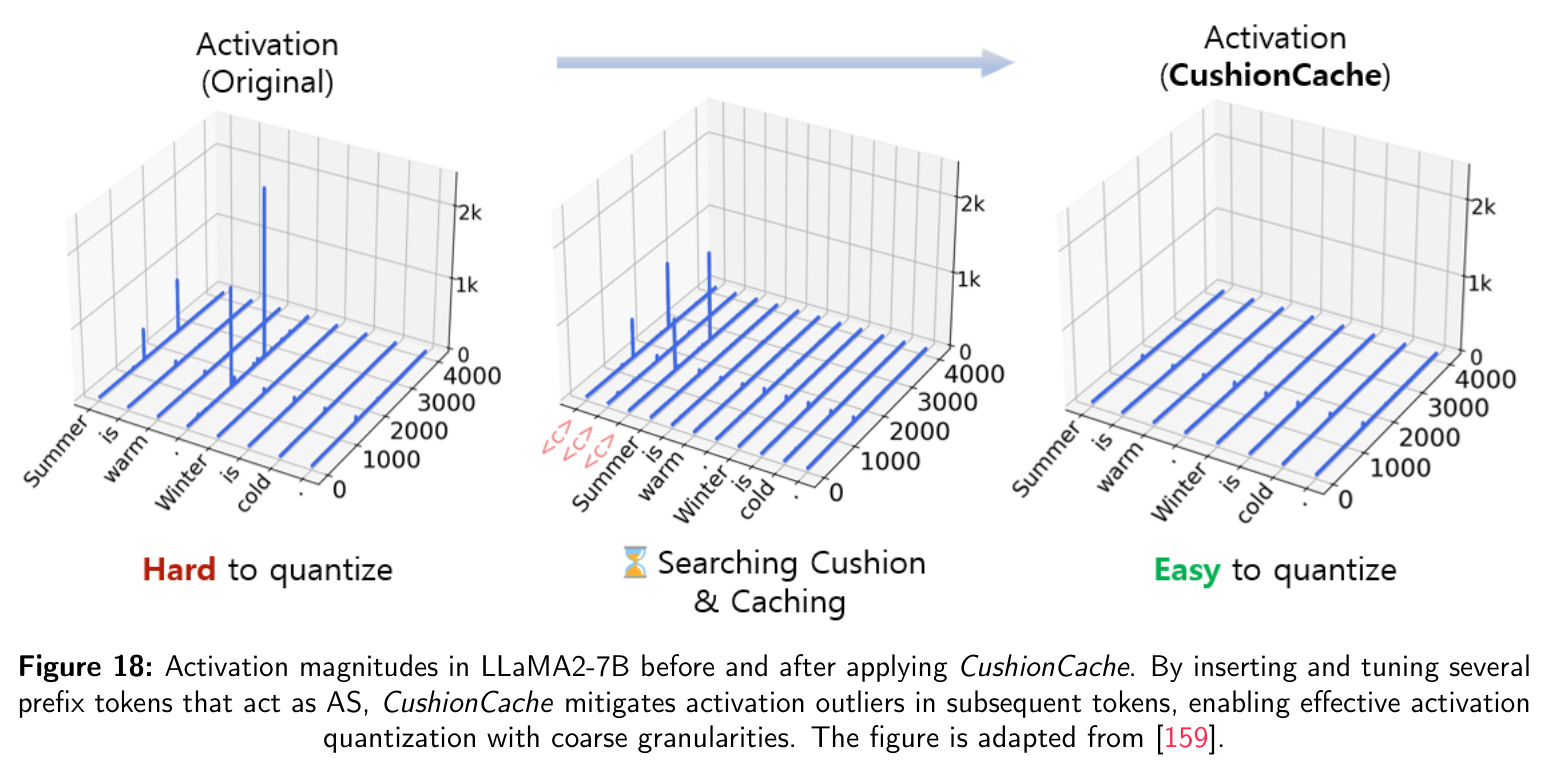
近两年来,几乎所有主流 Transformer 家族——BERT/RoBERTa、稠密 LLM、MoE LLM、ViT、DiT、MLLM——都被发现存在一个共同现象:极少数无语义 token(如 LLM 首 [BOS]、ViT 背景 patch)持续吸纳绝大部分注意力权重。在 LLaMA 中首 token 在 98% 的注意力头中拿到最大权重 [165];Qwen3-30B-A3B 中仅 3/6144 个 Super Expert 缺失就会让 AS 全面崩塌 [43]。这些汇聚行为引发四类问题:(i) 长文本推理中 KV cache 压力巨大,剪掉 sink token 模型立即崩坏(PPL 从 5.40 暴涨到 5158 [25]);(ii) 量化时这些极端激活破坏 INT8/INT4 精度 [30];(iii) 注意力被无意义 token 占用,导致 MLLM 严重幻觉 [32, 101];(iv) 训练损失曲线出现 spike,限制 scaling 效率 [27]。现有碎片化论文分散在 NLP/CV/MoE/Diffusion 等子社区,缺乏统一的形式化定义和分类体系。
本文的目标是本文作为该领域第一篇系统综述,明确三件事:(1) 给 AS 一个跨架构统一的数学形式化(极端高注意力 + 低信息量两个充分必要条件),并用阈值 $\tau \cdot \mu_A$(典型 $\tau=1000$ [80])作为可操作的判别准则;(2) 把过去几年 200+ 篇 AS 相关工作系统地划入"基础利用 / 机制解释 / 战略缓解"三条主线,并按时间维度(2023 利用→2024 解释→2025 缓解)展示研究演化轨迹;(3) 围绕 9 类应用场景(预训练、微调、高效推理、可解释性、降低幻觉、安全性、长文本、多模态、能力增强)给出可直接落地的"该用哪个方法"实践指南。论文还配套维护一个 GitHub 仓库(github.com/ZunhaiSu/Awesome-Attention-Sink)持续收录新工作。
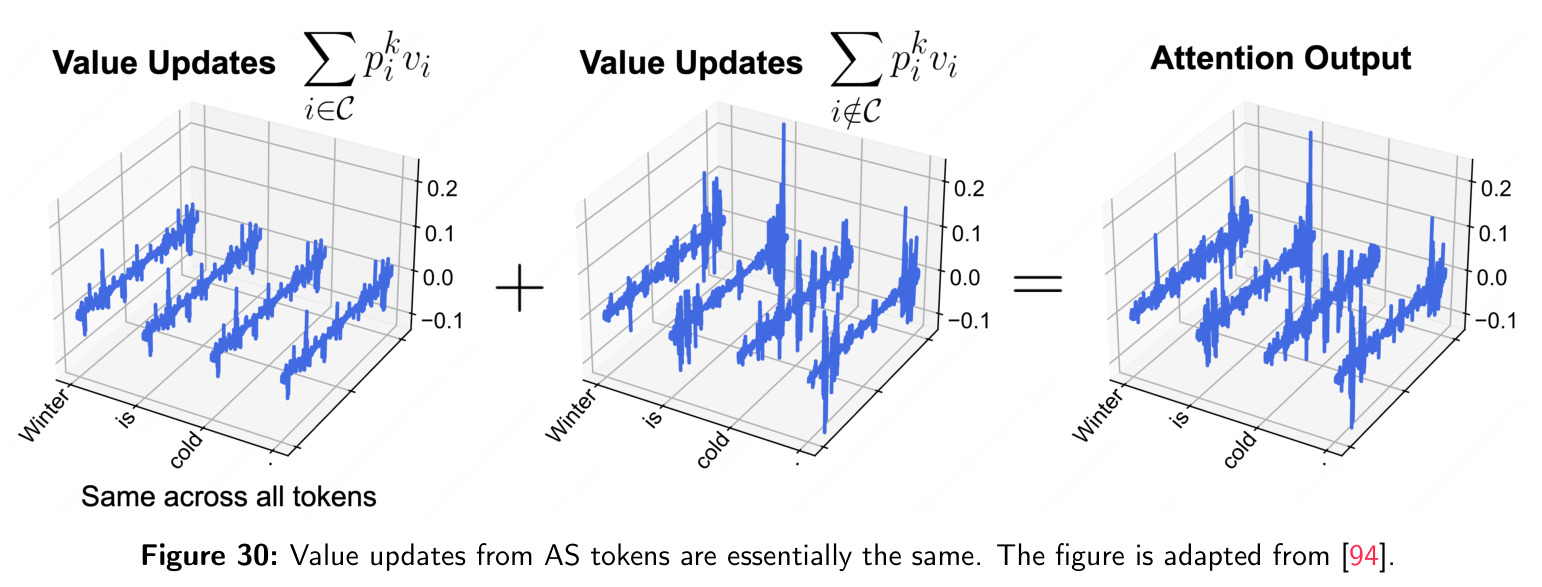
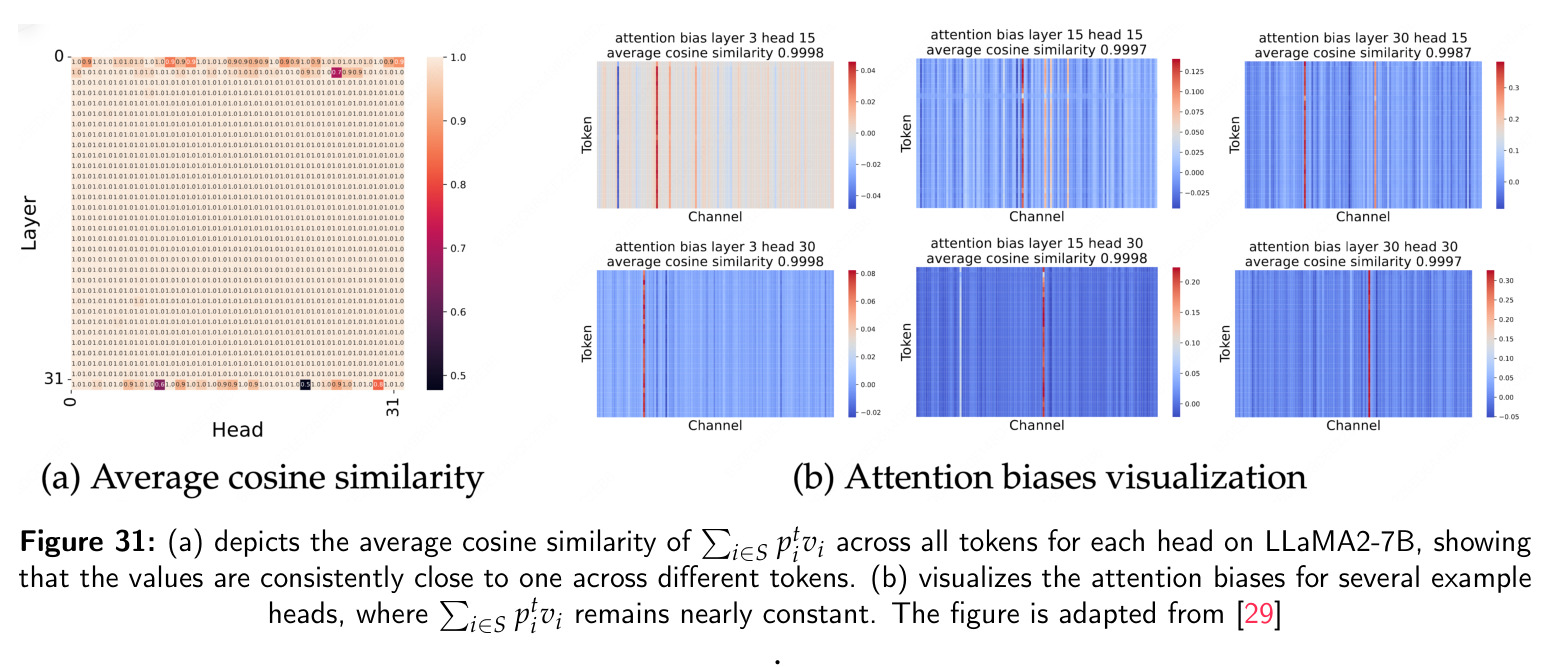
与已有工作不同的是,与以往单点方法论文不同,本文的独特切入角度是"用统一框架整合碎片化工作"。一方面,作者观察到 AS 在不同架构(BERT 里的 [SEP]、LLaMA 里的 [BOS]、ViT 里的背景 patch、MLLM 里的无关视觉 token、DiT 里的中段 token)的"皮"不同,但"骨"相同:都是 Softmax sum-to-one 约束 + 训练动态共同塑造的数值异常电路,因此用"利用 / 解释 / 缓解"三视角可以一次覆盖所有架构;另一方面,作者提出了一种分类新原则:把方法分为"提供显式替代品(门控、显式 bias)"和"切断因果链(修改 Softmax、预训练干预)"两类,并显式给出 5 个分析层级(数学起源 / 训练动态 / 数值机制 / 几何结构 / 功能角色)的统一框架,把散落的 5 种主要理论(No-Op、Outlier Circuits、Implicit Bias、Geometric Anchoring、Anti-Overmixing 等)第一次摆在同一张地图上,让研究者第一次能跨架构、跨场景地复用 AS 处理经验。
核心方法
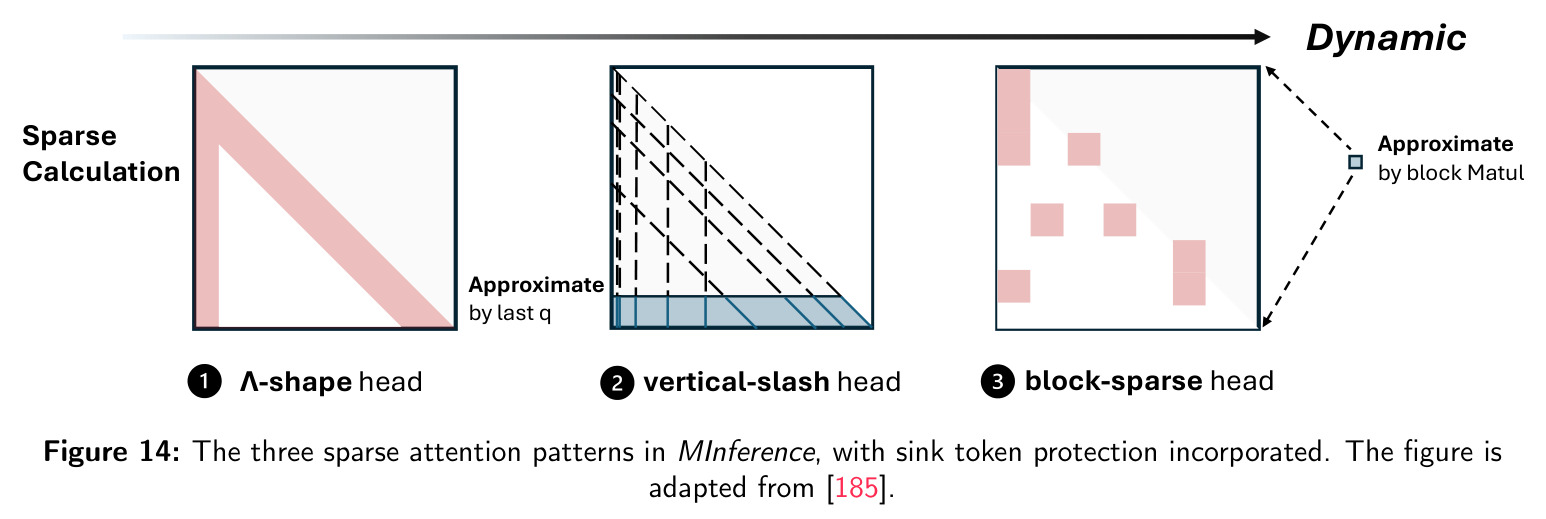
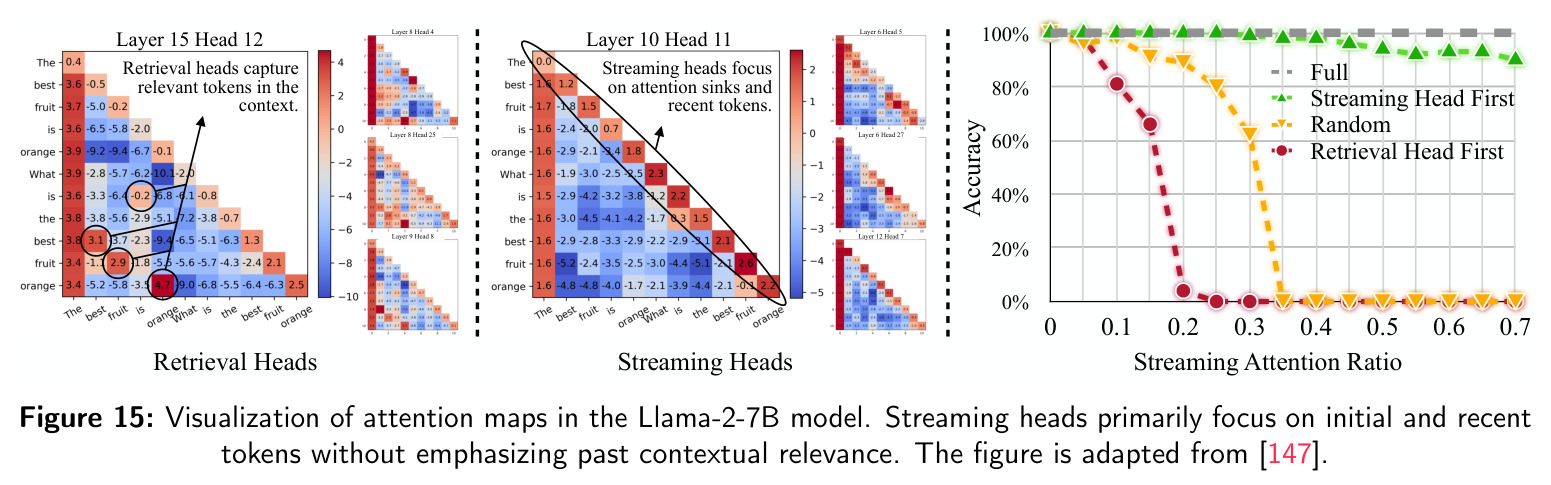
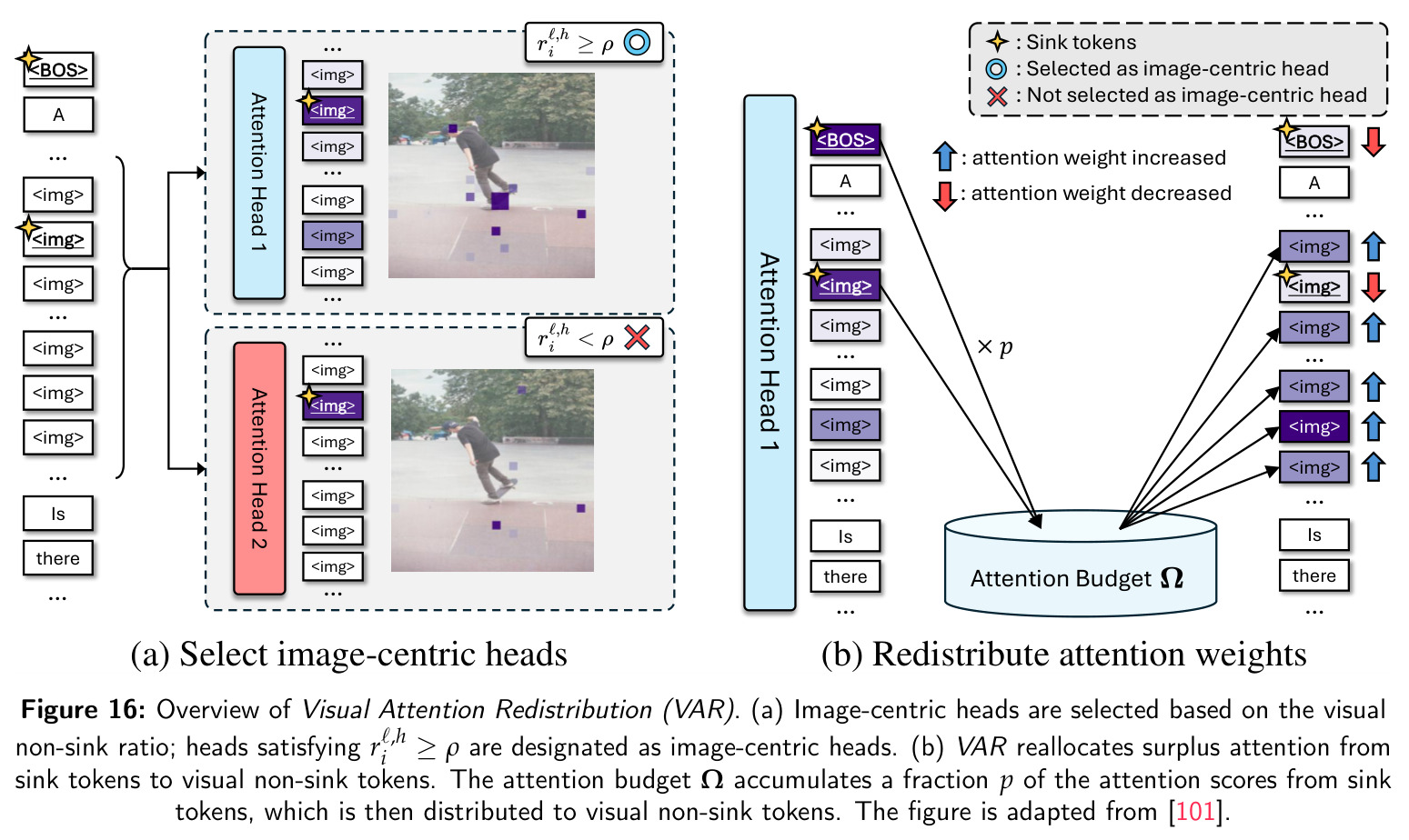
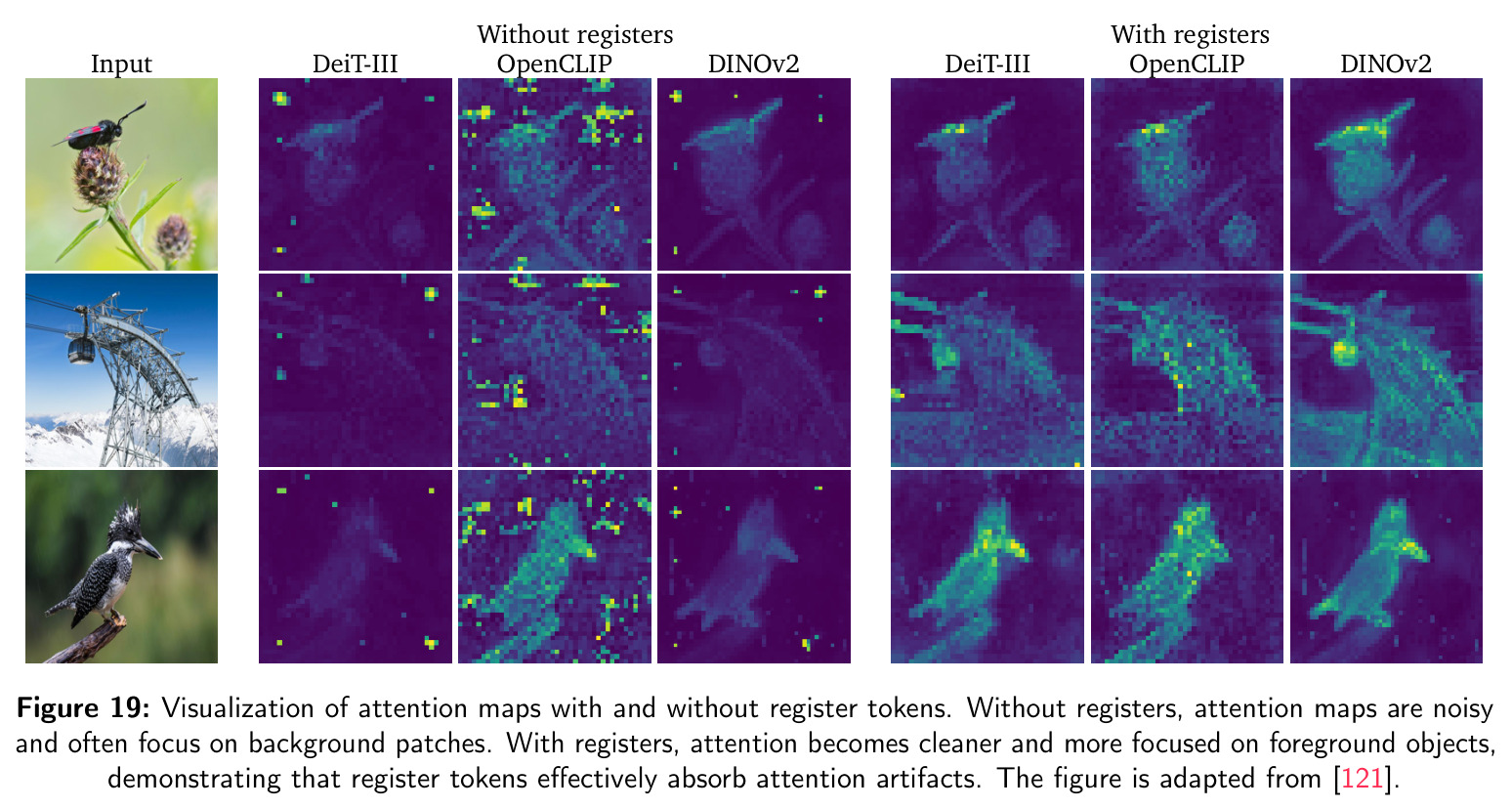
本文作为综述,把现有 AS 研究组织成"利用 / 解释 / 缓解"三视角的层级化体系。利用层(第 3 章)介绍 AS 如何被直接用起来:保留 sink token 维护长文本稳定、重分配注意力缓解视觉幻觉、插入可学习 prefix token 吸收冗余注意力、把 sink 当攻击/防御/加速工具。解释层(第 4 章)从 5 个分析层级(共 7 种理论)回答"为什么会这样":No-Op 理论归因于 Softmax 约束,Outlier Circuits 定位到权重/激活/注意力异常值的闭环,Implicit Bias 发现 sink value 等价于隐式偏置,Geometric Anchoring 把 sink 看作高维空间的稳定锚点。缓解层(第 5 章)落到可操作手段,分"显式替代"和"切断因果链"两类。整篇论文以"先发现现象→利用现象→理解现象→消除副作用"的递进结构展开。
本文的核心创新不在算法层面而在"框架层面"。三个最关键的提炼是:(1) 提出 AS 的统一两要素定义——"极端高注意力 + 低信息量"——并给出可阈值化的判别公式 $\mathcal{S}_{AS}=\{j \mid \sum_i A_{i,j} > \tau \cdot \mu_A\}$,让"什么是 sink token"在 LLM、ViT、MLLM 中有了同一把尺子;(2) 首次把 AS 在 LLM、MoE LLM、MLLM、ViT、DiT 中的表现串联起来,揭示其在不同架构中本质同构(都是异常值电路的注意力端),让视觉社区和 NLP 社区的经验可以双向迁移;(3) 把 7 种主流解释理论按"数学起源 / 训练动态 / 数值机制 / 几何结构 / 功能角色"5 层组织成统一图谱,并把 5 大类缓解方法按"显式替代 vs. 切断因果链"二分,给出第一个真正跨架构、可比对的 AS 方法坐标系——这是任何单点论文都做不到的。
方法步骤详情
本文按"利用-解释-缓解"路径组织。第 2 章建立 AS 形式化(sink 阈值典型 1000 [80]),按 6 类架构介绍 AS 表现。第 3 章"利用"分 4 节:Sink Token Preservation 保留 sink+window;Attention Redistribution 用守恒重分配;Learnable Prefix Tokens(ViT Registers、CTR-Sink);Sink Token Repurposing(KeyDiff、backdoor)。第 4 章论证 $\text{Softmax}(x)_i=0$ 需 $x_j-x_i=+\infty$,推 no-op $\|V_S\|\approx 0$;通过 Outlier Circuits 因果链串证据。第 5 章按 Gated Attention、Modified Softmax、Learnable Attention Bias、Pre-training Interventions(TWEO/Muon/OSP)展开。第 6 章以 9 类应用给实践 checklist。
技术新颖性
技术新颖性体现在三个"第一":(1) 第一次给出 AS 的跨架构统一形式化,把"极端注意力 + 低信息"两个本质属性从经验观察提升为可计算定义(阈值 $\tau\cdot\mu_A$ 公式 (5)),让任何架构都能用同一标准检测 sink token;(2) 第一次系统地把 AS 现象、解释、缓解三个层级联立起来:明确指出 No-Op 理论回答"为什么"、Outlier Circuits 回答"靠什么数值机制"、Implicit Bias 回答"功能上等价于什么"、Geometric Anchoring 回答"在表示空间里扮演什么角色",4 个角度互补而非互斥;(3) 第一次把 5 大类缓解方法按"显式替代 vs. 切断因果链"二分——这种二分法不是事后分类,而是源自一个清晰的设计哲学:要么给模型一条新路完成 no-op,要么拆掉 softmax 强制分配注意力的旧路。这种分类让"为什么这类方法不能后插到已训练模型""为什么那类方法可以"等问题有了一致答案。配套的 GitHub 仓库(180+ 论文)也使该综述变成一个可演化的活地图。
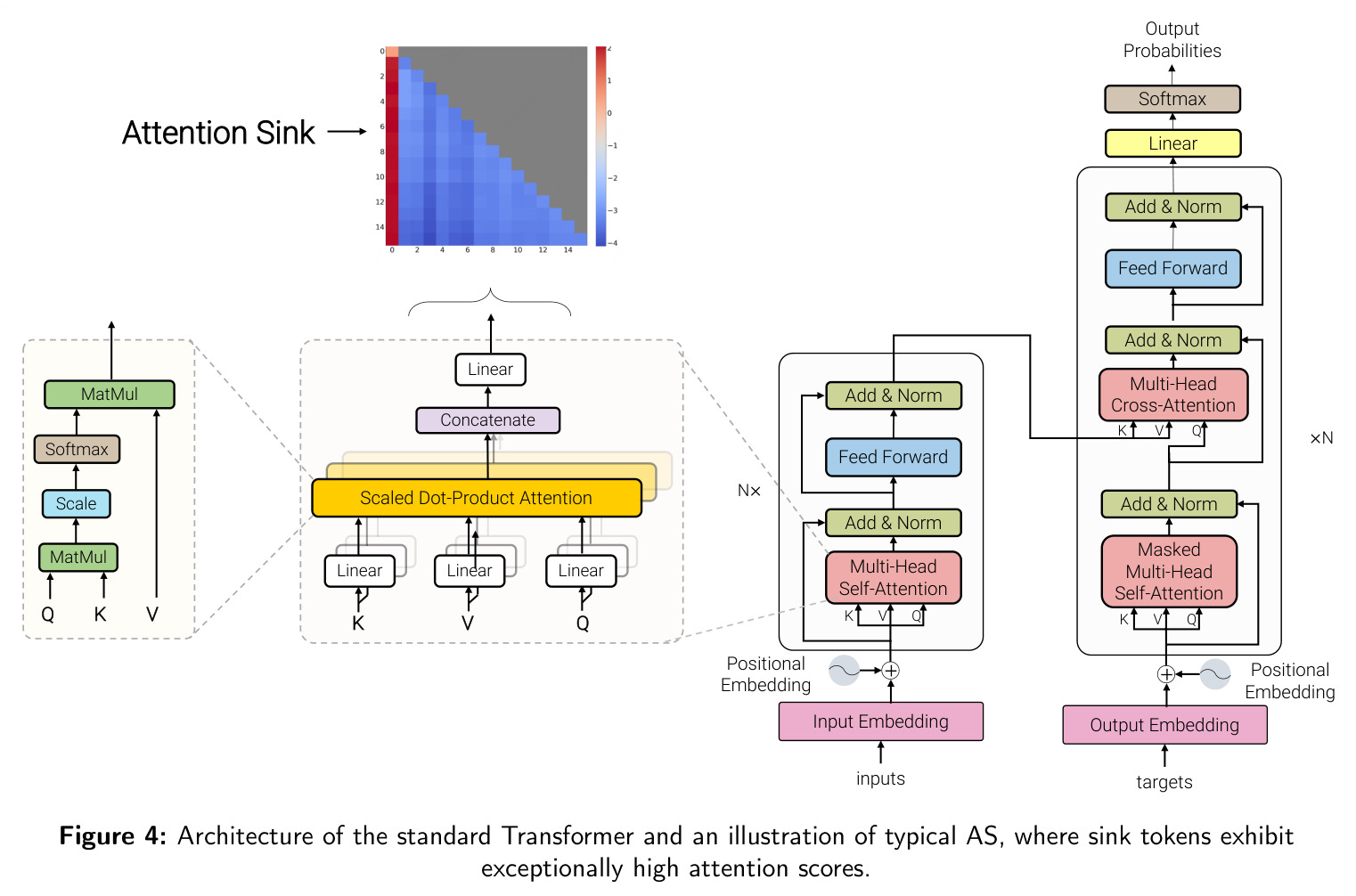
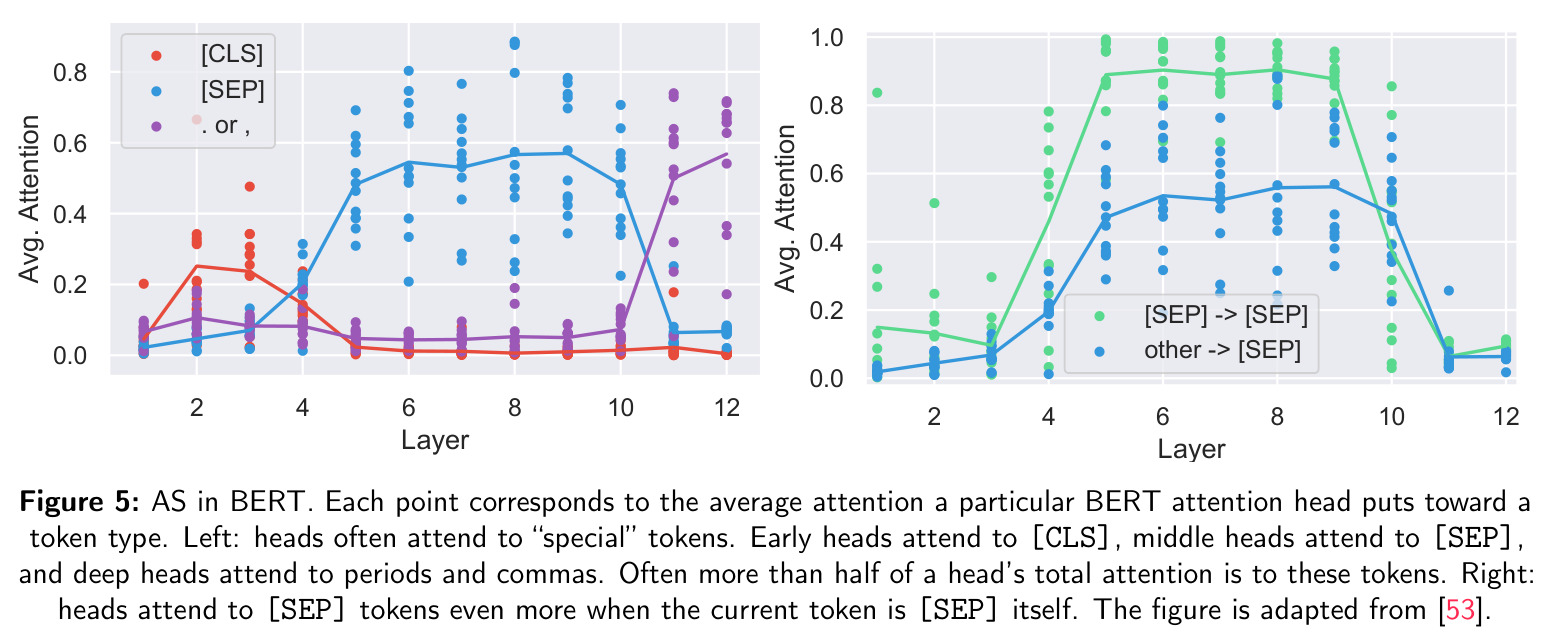
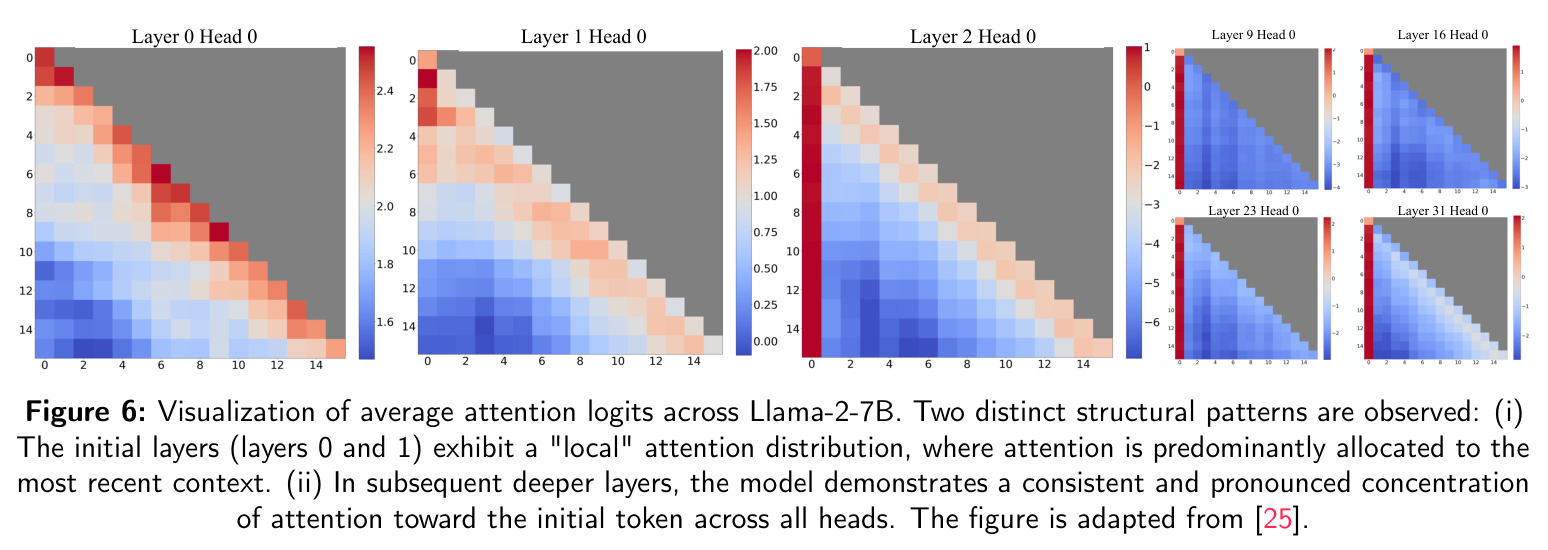
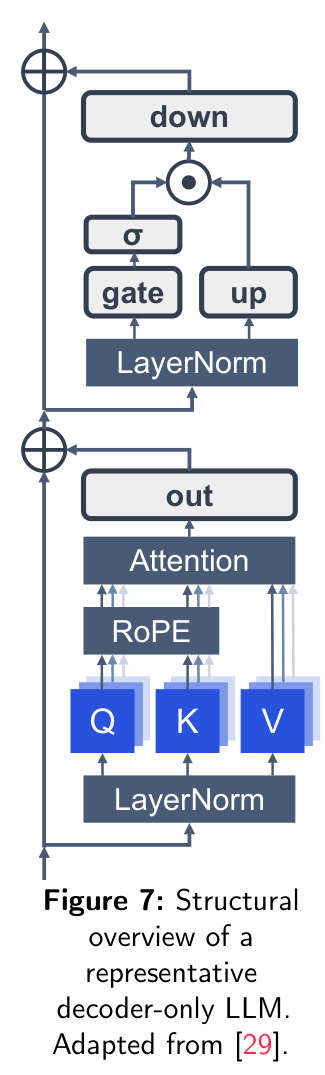
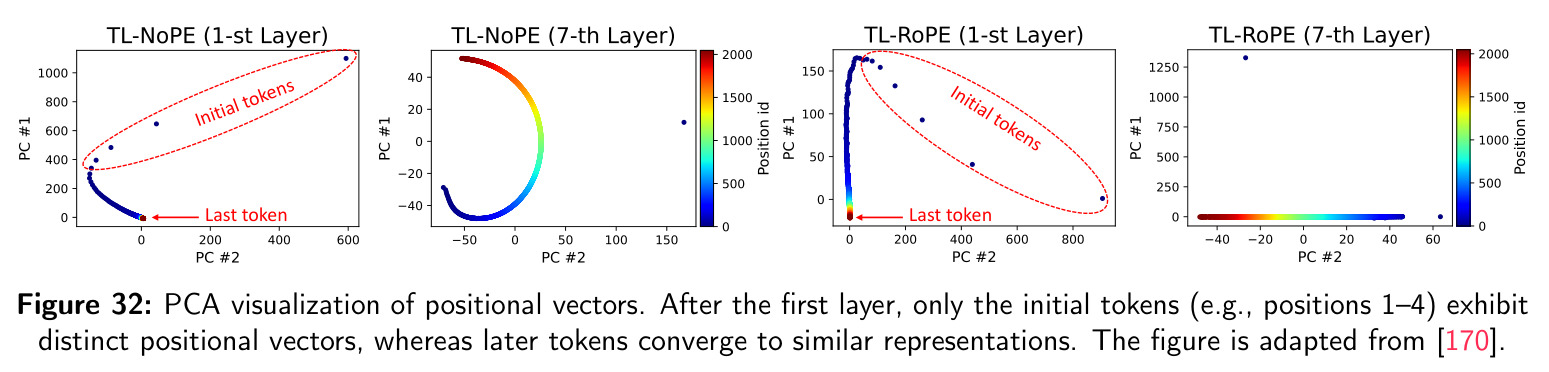
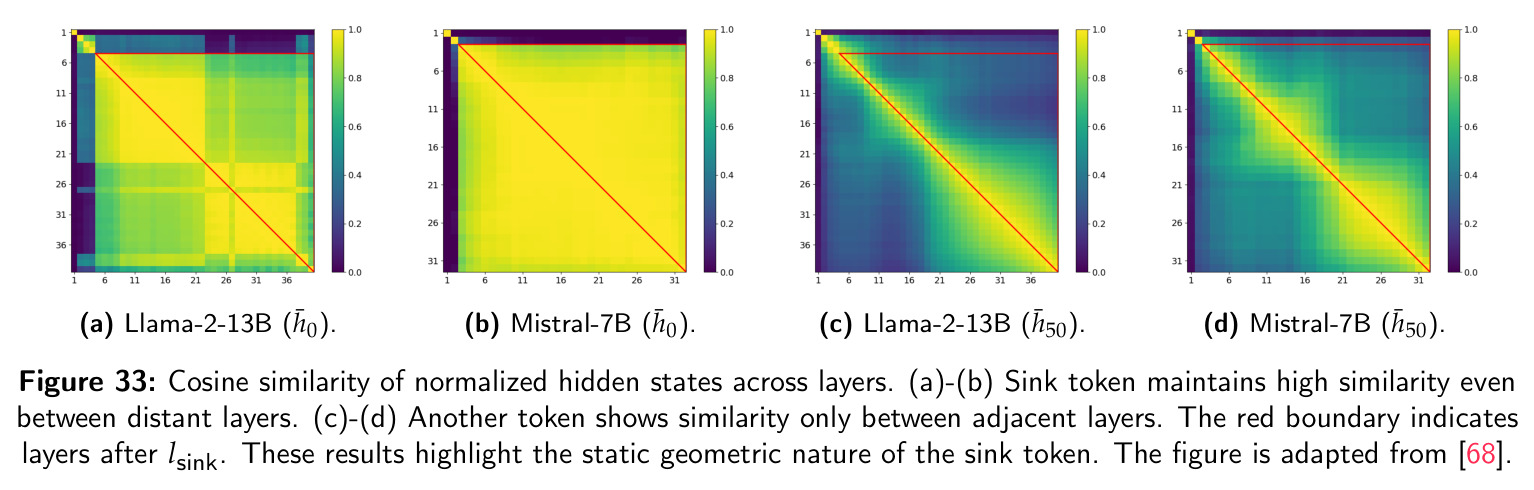
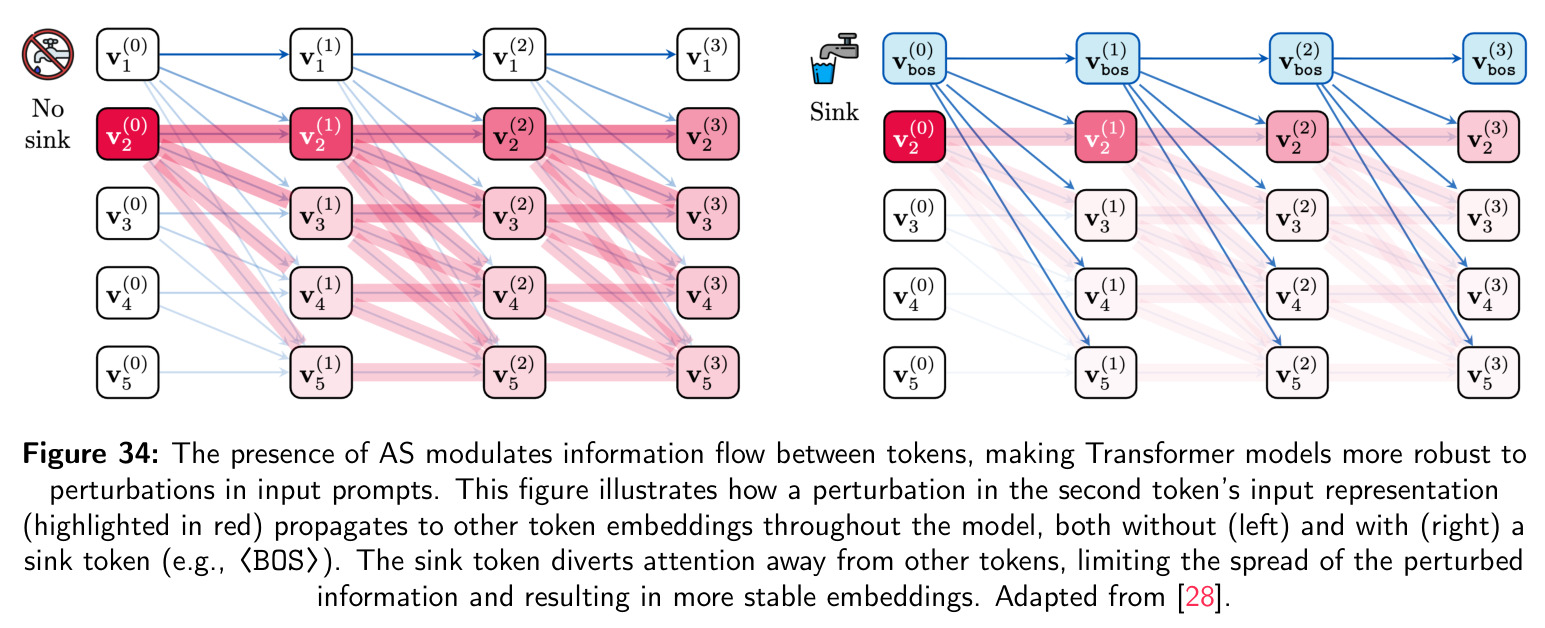
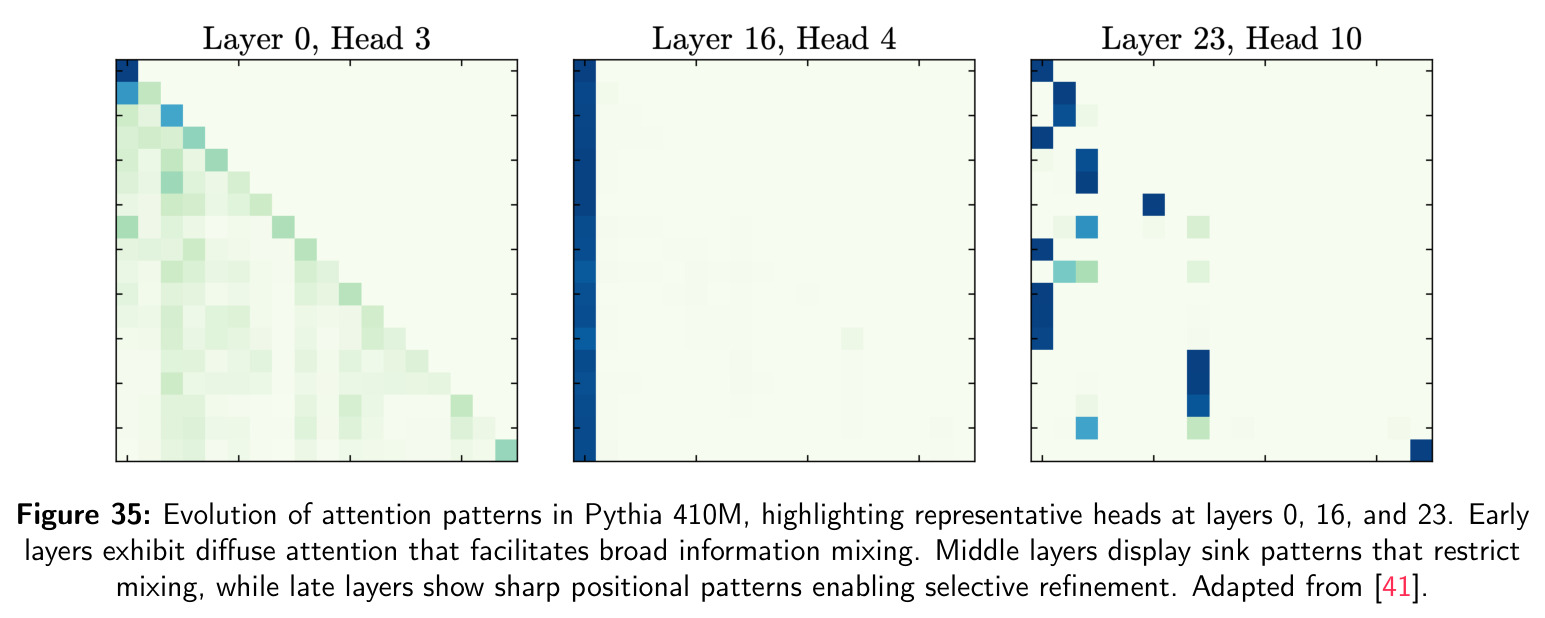
实验结果
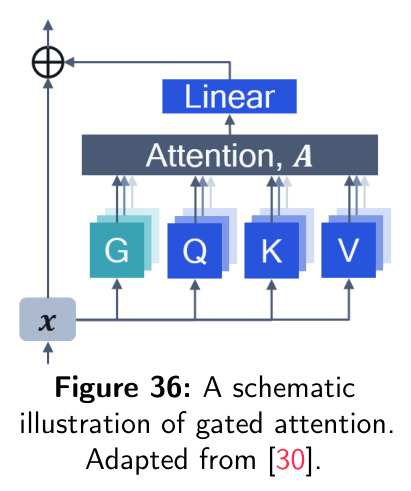
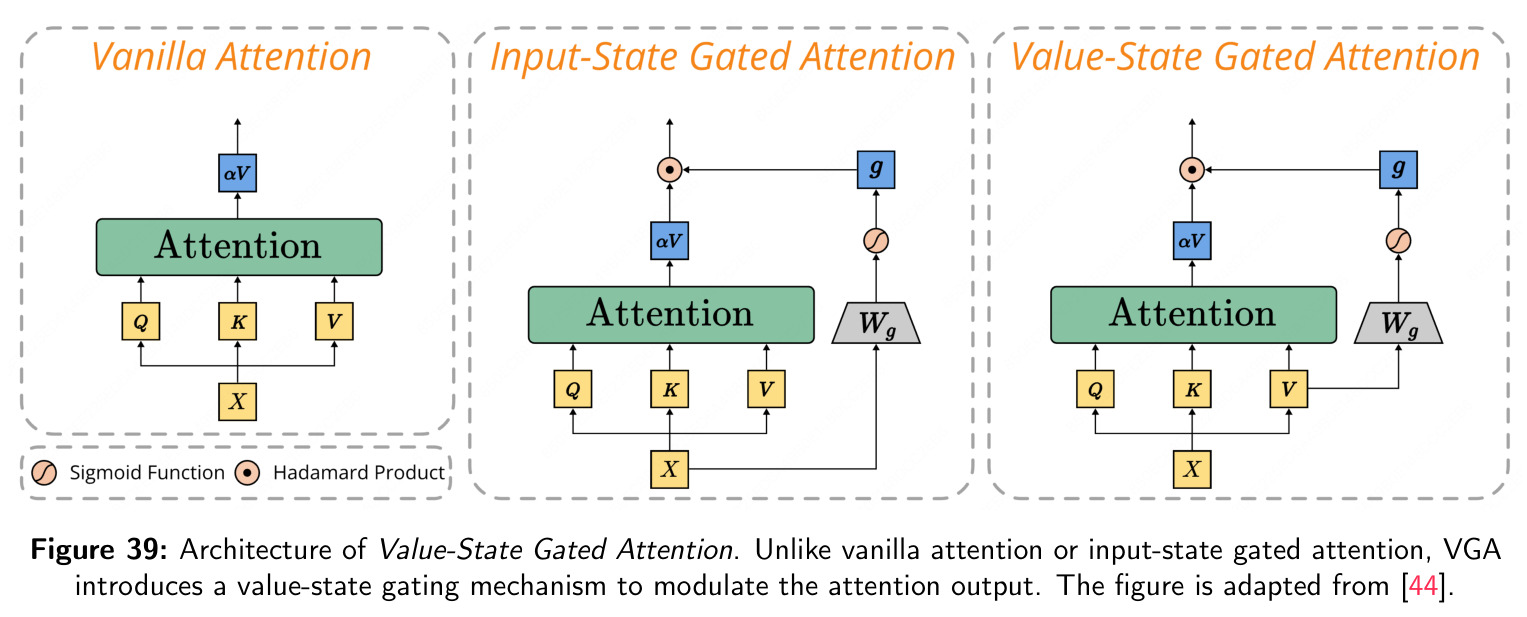
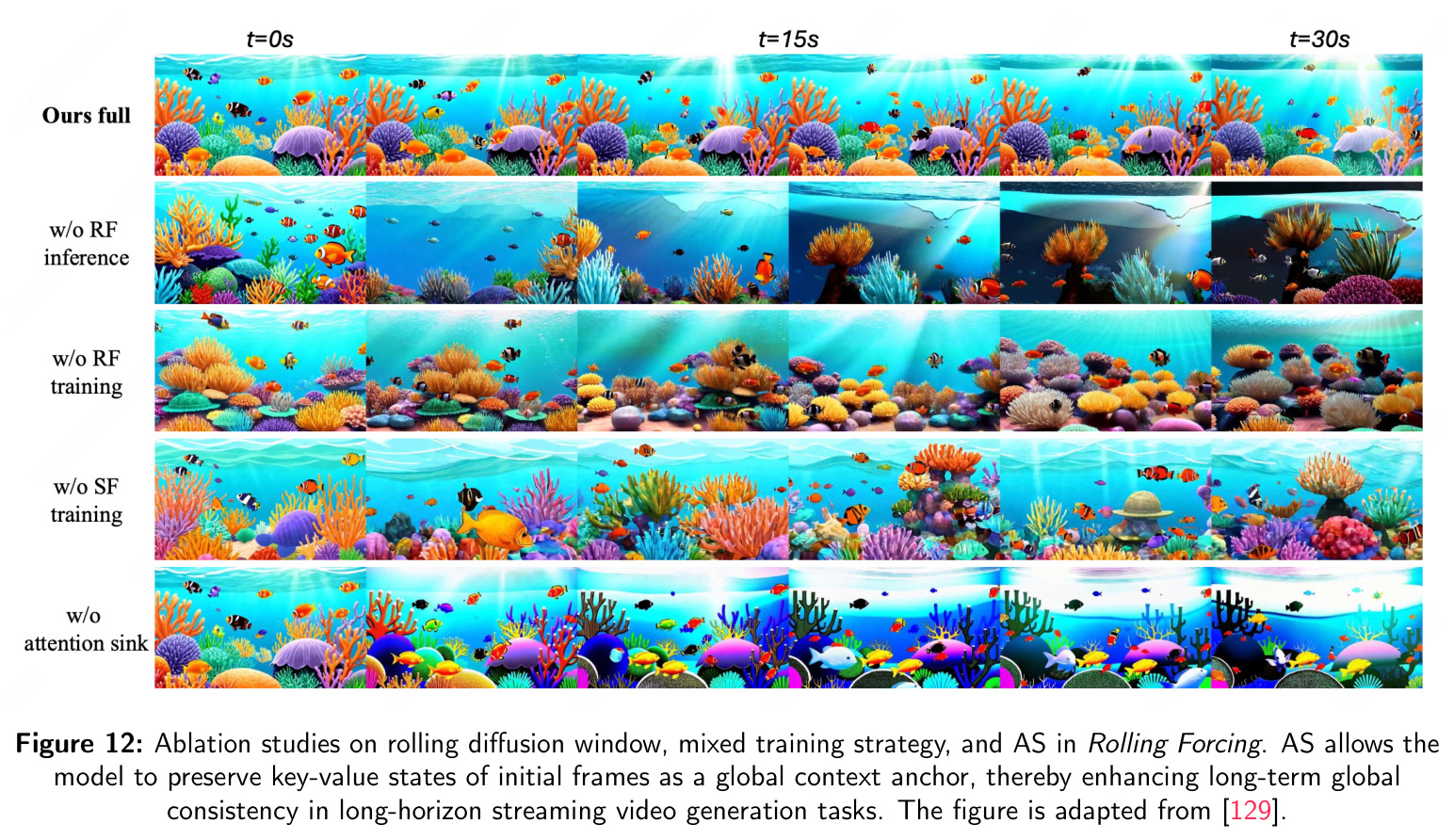
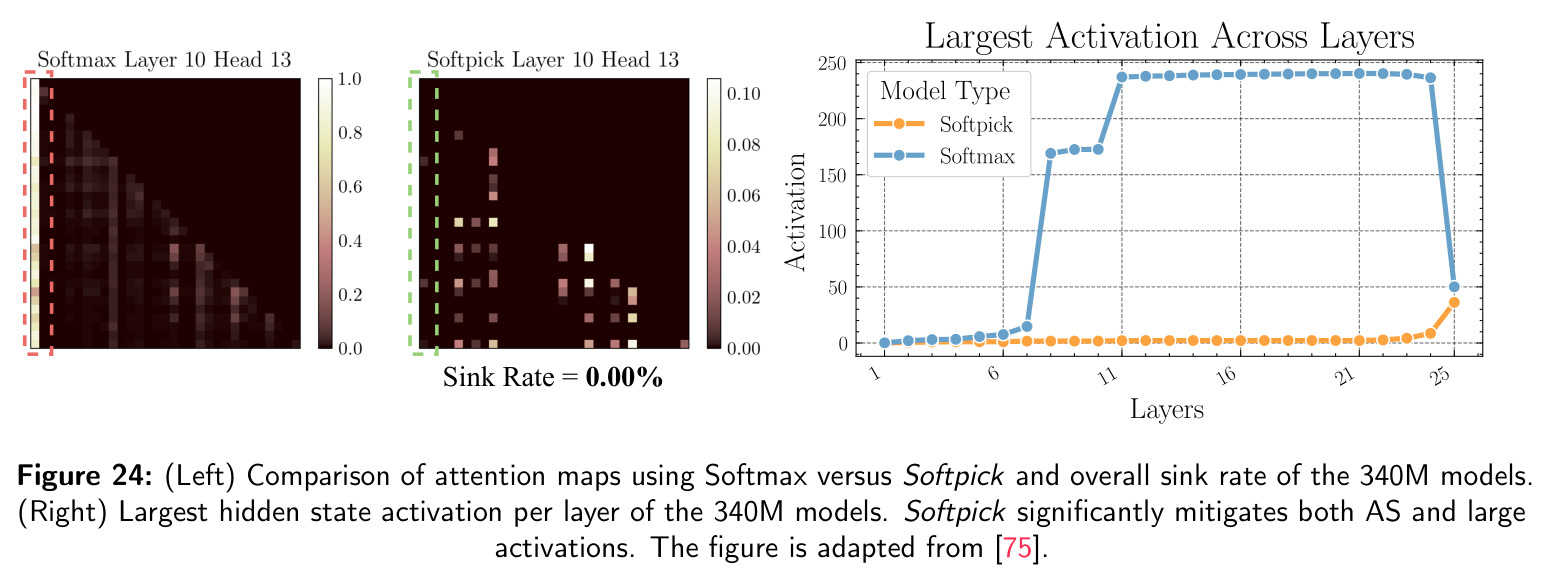
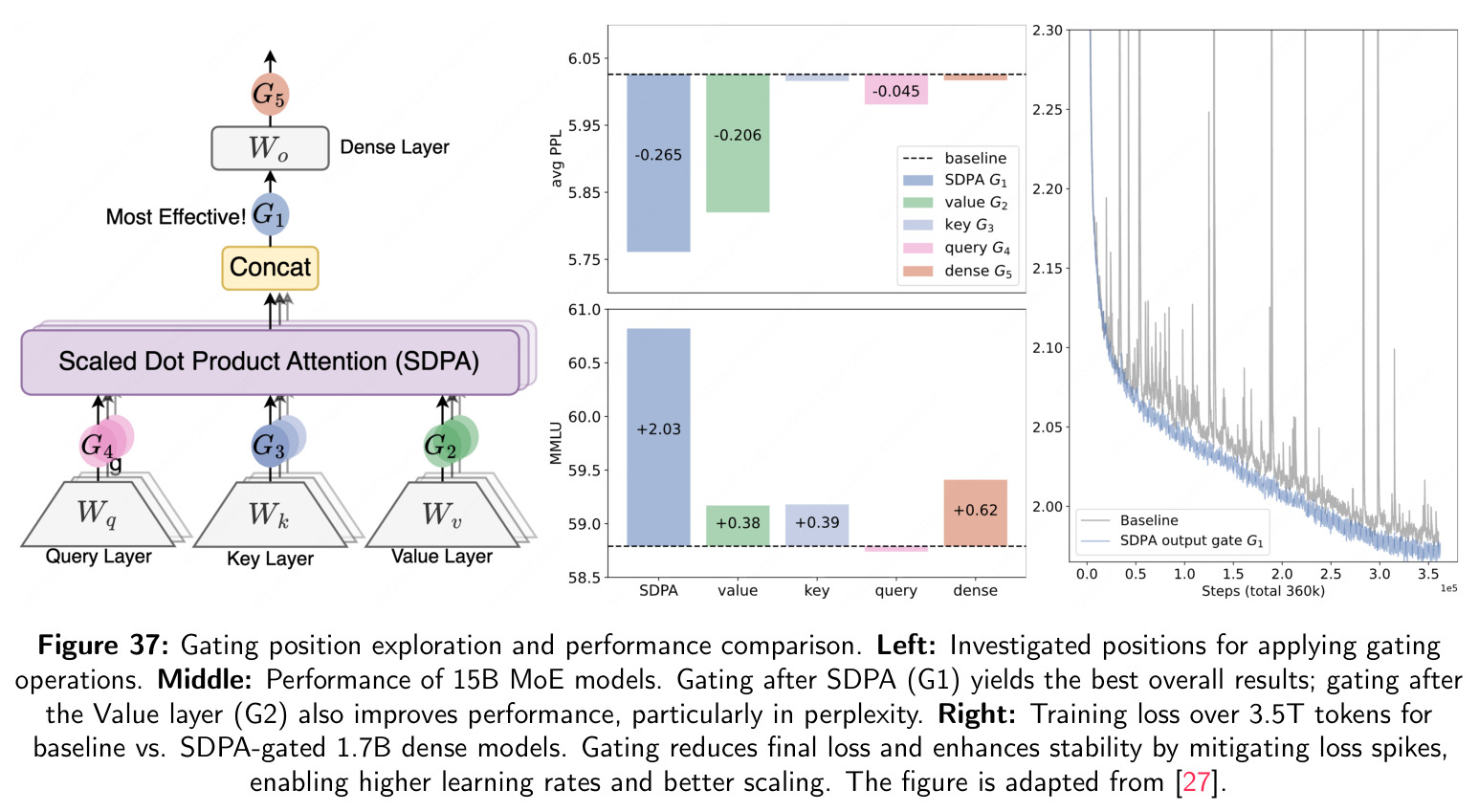
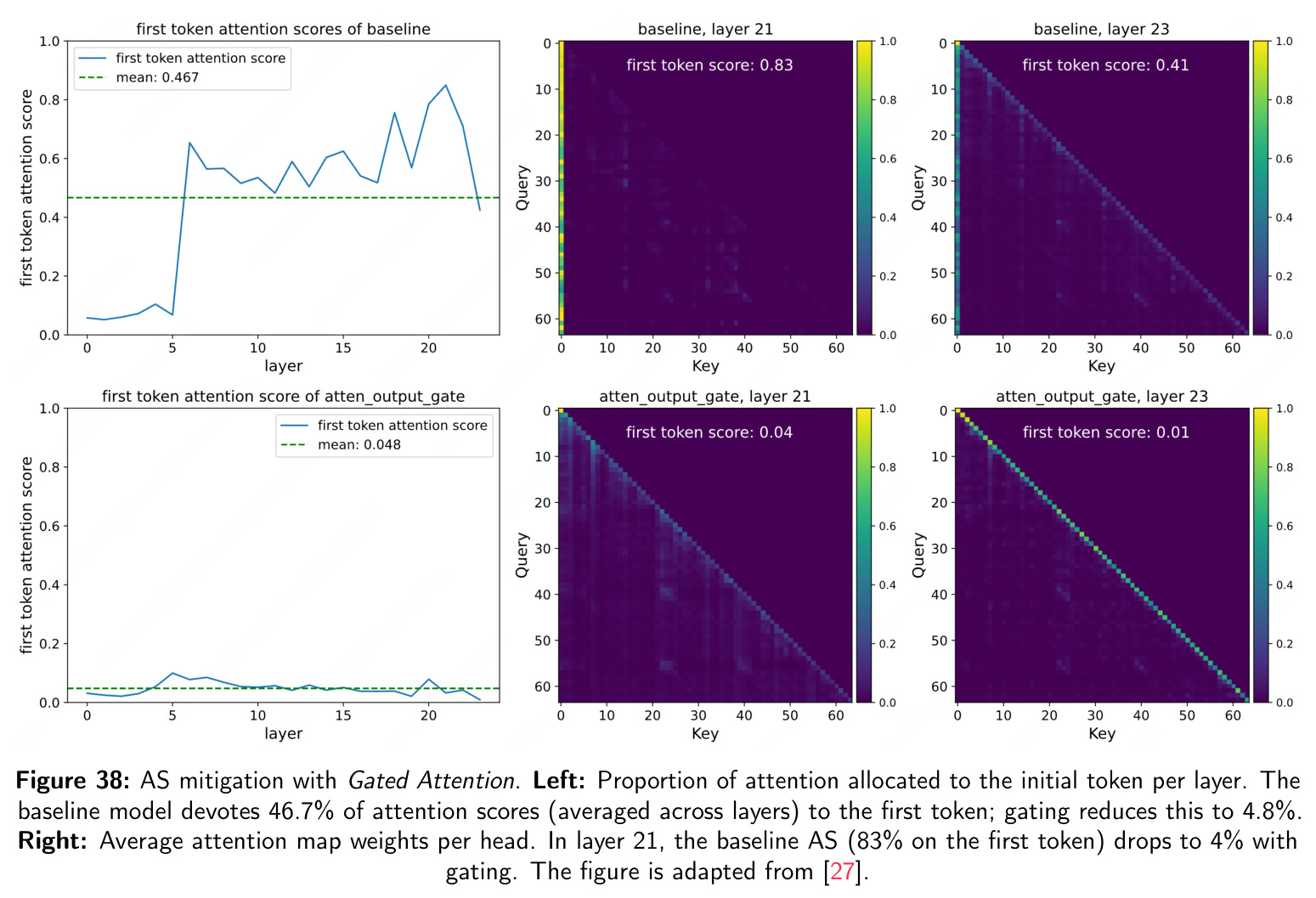
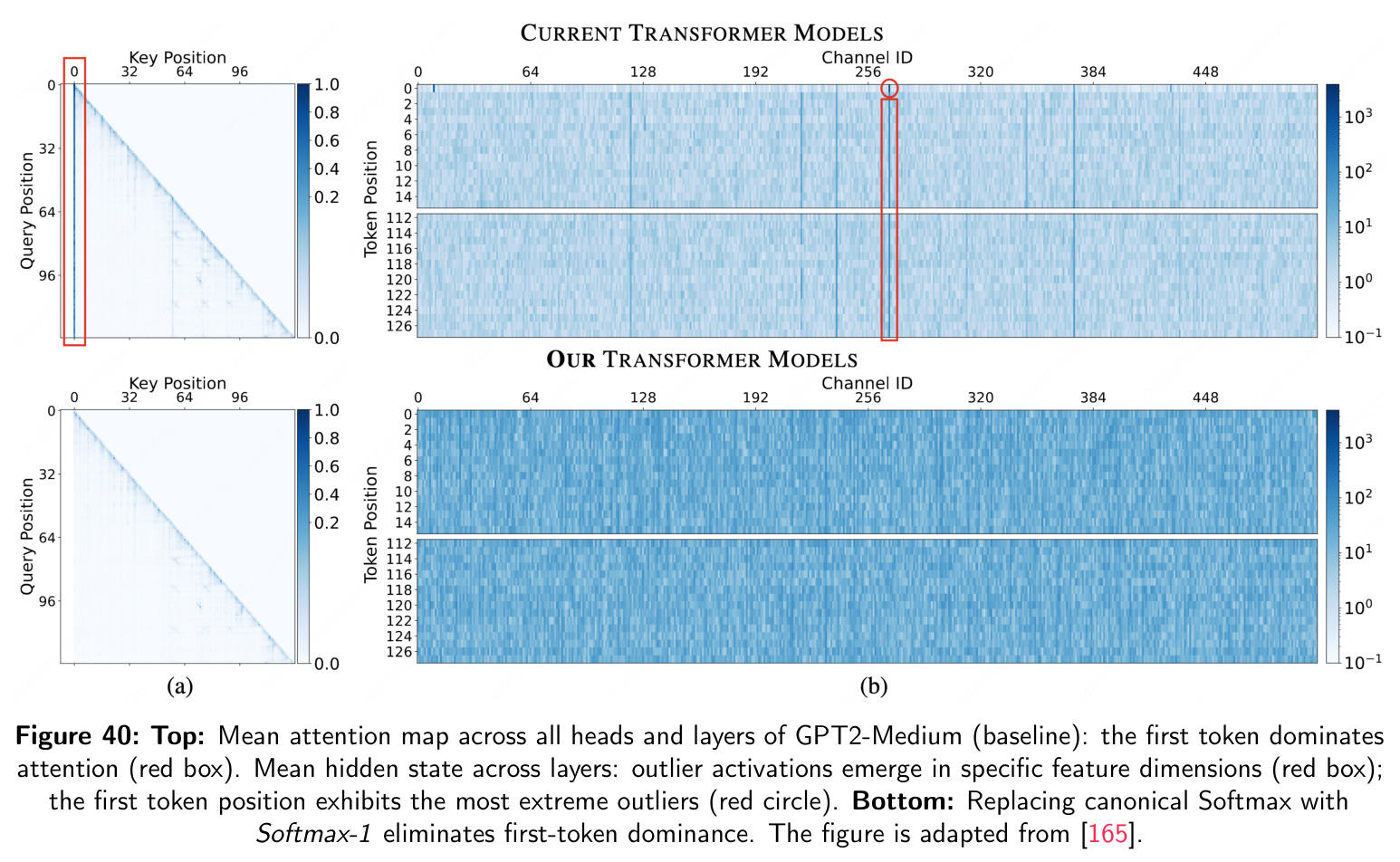
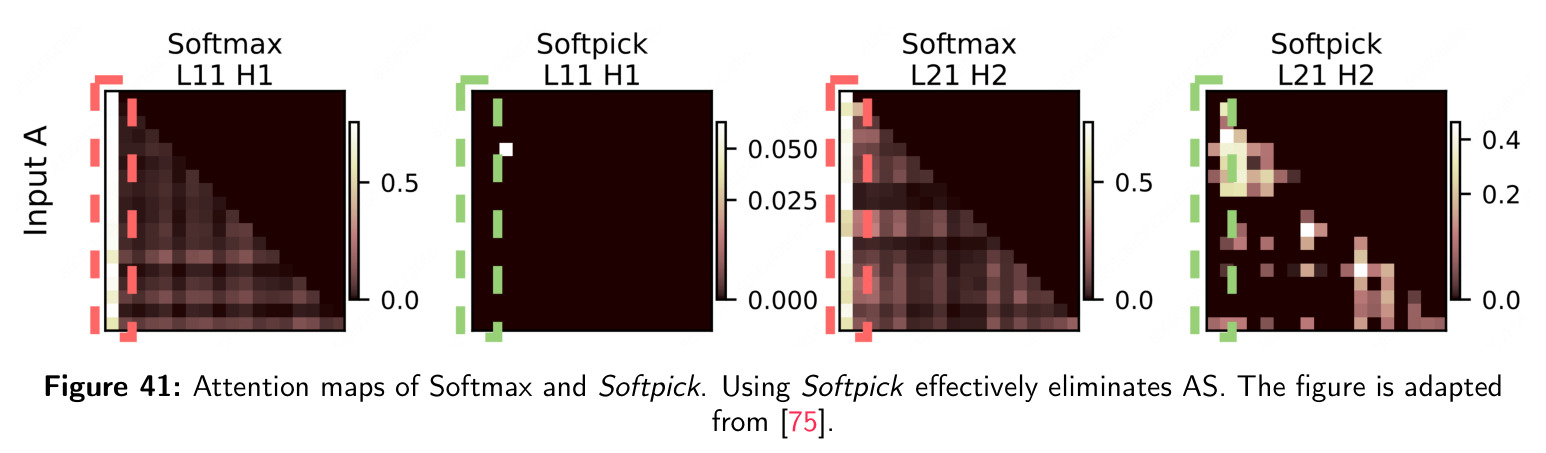
汇集 200+ 论文关键数字:(1) AS 普遍性——LLaMA 首 token 在 98% 注意力头拿最大权重 [165];BERT [SEP] 常独占某头 50%+ 注意力 [53]。(2) 长文本——StreamingLLM [25] dense 4K PPL=5641,sliding 砍 sink PPL=5158,sink+window PPL=5.43。(3) MoE 脆弱性——Qwen3-30B-A3B 剪 3/6144 Super Expert 即退化为重复输出 [43]。(4) 缓解有效性——Gated Attention [27] 46.7%→4.8%;Softmax-1 [165] 65%→3.3%,kurtosis 1657→3.1;Softpick [75] sink rate 100%→0%;TWEO [59] 异常值 >10000→<20,FP8 throughput 提升 36%。(5) 跨模态——FLEX [129] 6× 视频外推;RetoVLA [138] 机器人操作提升 17.1%;几何 [76] Spearman 相关性 0.94。
查看结构化数据
| 任务 | 指标 | 本文 | 基线 | 提升 |
|---|---|---|---|---|
| 长文本语言建模(困惑度) | Perplexity (PPL, 越低越好) | StreamingLLM 报告 sink+sliding window 在 4K+ 上下文 PPL=5.40 | dense attention PPL=5641;sliding window 砍 sink PPL=5158 | 相对 dense attention 提升 >1000×,相对 naive sliding window 提升 >950× |
| 首 token 注意力抑制 | 首 token 注意力比例 (越低越好) | Gated Attention 平均 4.8% [27];Softmax-1 3.3% [165];Softpick 0% sink rate [75] | baseline LLaMA2-7B 平均 46.7% [27];GPT-2 Medium 65% [165];100% sink rate | Gated Attention 约 10× 抑制;Softmax-1 约 20× 抑制;Softpick 完全消除 |
| 激活异常值抑制 | 激活 kurtosis / 异常值幅度 (越低越稳) | Softpick kurtosis 340 [75];Softmax-1 kurtosis 3.1 [165];TWEO 异常值 <20 [59] | Softmax 原始 33,510 [75];Softmax 原始 1,657 [165];Adam 训练 >10,000 | Softpick 约 100×;Softmax-1 约 500×;TWEO 约 500× |
| INT4/INT8 KV cache 量化 | 下游任务准确率 (越高越好) | IntactKV / KVSink / KVQuant 等保留 sink token 后 2-bit 量化 [16, 29, 154] | 不做 sink 保护的 2-bit 量化 | 在 LongBench、Needle-in-a-Haystack 等长文本基准上恢复接近 FP16 精度(差距 <1-2 个点) |
| 视觉语言模型幻觉抑制 | POPE / CHAIR / MMHal-Bench 准确率 | VAR [101]、AttnReal [32]、VASparse [33] 通过重分配 sink 注意力 | 原始 MLLM | POPE 准确率提升 5-15 个点(具体随模型和 benchmark 而异) |
| 自回归视频扩散时间外推 | 生成时长倍数 (越高越好) | FLEX 框架 inference-time attention sink [129] | 训练时只见过 5s 的 baseline | 实现 6× 外推(30s),匹配 12× 数据微调的 baseline |
| VLA 机器人操作 | 真实环境任务成功率 | RetoVLA 重用 register token 作为空间记忆 [138] | 原始 VLA 丢弃 register token | 真实机器人操作任务提升 17.1% |
局限与改进
作者在 §9 显式承认三个局限:(1) 覆盖广度上,本文主要聚焦 CLM、LLM、MLLM、MoE LLM、ViT、DiT 等主流架构,对 Hymba、Mamba-R、VGGT、Omni-modal LLM 等新兴架构涉及较浅,原因是相关研究刚起步。(2) AS 现象跨架构同构但实现细节不同,本文形式化主要围绕 LLM 的 MHSA + Softmax,对 Mamba、RWKV 等非 Softmax 架构的等价现象只能类比。(3) 综述性工作不产出新基准,导致 sink rate、attention mass、kurtosis 等指标在不同论文中定义略有差异。本人观察到的额外局限:(4) 第 4 章把 5+ 种解释理论并排列出,但缺少统一实验比较"哪个理论解释力更强";(5) 第 5 章缓解方法的代价-收益对比主要来自各原论文自报数据,缺独立第三方 benchmark;(6) 对 AS 在 RLHF/DPO 等对齐阶段的影响讨论不足。
独立分析的弱点
独立审视识别 6 个弱点:(1) AS 自我强化循环何时建立仍不清晰——No-Op 理论只说"会建立",Outlier Circuits 只说"建立后什么样",缺乏 epoch-level 探针。改进:训练时记录每 head sink 强度随 epoch 变化。(2) 阈值式判别 $\tau\cdot\mu_A$ 在 batch 内分布不均时易误判。改进:用轻量 head-level probe 替代全局阈值。(3) Modified Softmax(Softpick、Sigmoid Attn)大多不能后插已训练 LLM。改进:研究"逐步蒸馏",把标准 LLM 用 KL 对齐到 Softpick 再用极少步微调。(4) Gated Attention 训练成本高(3.5T tokens)。改进:只训练 gate 参数、冻结主体的 adapter 方案。(5) 对 AS 与安全/对齐关系讨论流于表面。改进:补充 AS-aware red-teaming 协议。(6) 缺乏 AS 与训练数据分布的因果分析。改进:消融 tokenizer/语种/长度分布,建立 sink 强度预测模型。
未来方向
作者在 §7.2 给出 7 个方向:(1) 高效轻量化 AS 处理——sink 检测、重分配、门控、几何度量在延迟和 kernel 兼容上突破;(2) 预训练模型的轻量适配——用 adapter/LoRA/continual pre-training 注入 gate/modified-softmax/bias;(3) 训练动态形式化——把 Softmax 约束、优化动态、隐式 bias 纳入统一数学框架;(4) 新兴架构中的 AS——Hymba、VGGT、3D Transformer 尚缺系统研究;(5) 统一理论框架——把 4-5 种解释融合为单一可证伪理论;(6) 标准化 benchmark——让 sink rate、kurtosis、PPL、量化恢复可跨论文比较;(7) 跨架构跨模态迁移。本人认为还可拓展:(8) AS 与 CoT 推理的交互;(9) AS-aware MoE 路由损失;(10) 超长视频/音频/机器人轨迹的 AS 演化;(11) 用 attention patching、causal tracing 干预 sink 验证功能性角色。
复现评估
可复现性两极分化:(1) 数据与算力——方法在 Pile/RedPajama/LongBench/ImageNet-1K/COCO/Needle-in-a-Haystack 等开源数据集评估;但生产级方法(OSP 1.4B/1T tokens、Gated Attention 3.5T tokens)需数十到数百张 H100。(2) 代码开源较好——StreamingLLM、H2O、IntactKV、Softpick、ViT Registers、OSP、Quantizable Transformers 都开源 PyTorch,可在小模型重现;MoE 的 Super Expert 分析(Qwen3-30B-A3B)及部分 Gated Attention 改进只在闭源模型上验证。(3) 配套仓库 github.com/ZunhaiSu/Awesome-Attention-Sink 把 200+ 论文分类。(4) 复现难度:经典利用 ⭐ 易;Modified Softmax 小模型 ⭐⭐ 中等;Gated Attention 与 OSP 从零训练 ⭐⭐⭐ 困难;生产级 MoE 复现 ⭐⭐⭐⭐。
论文图表
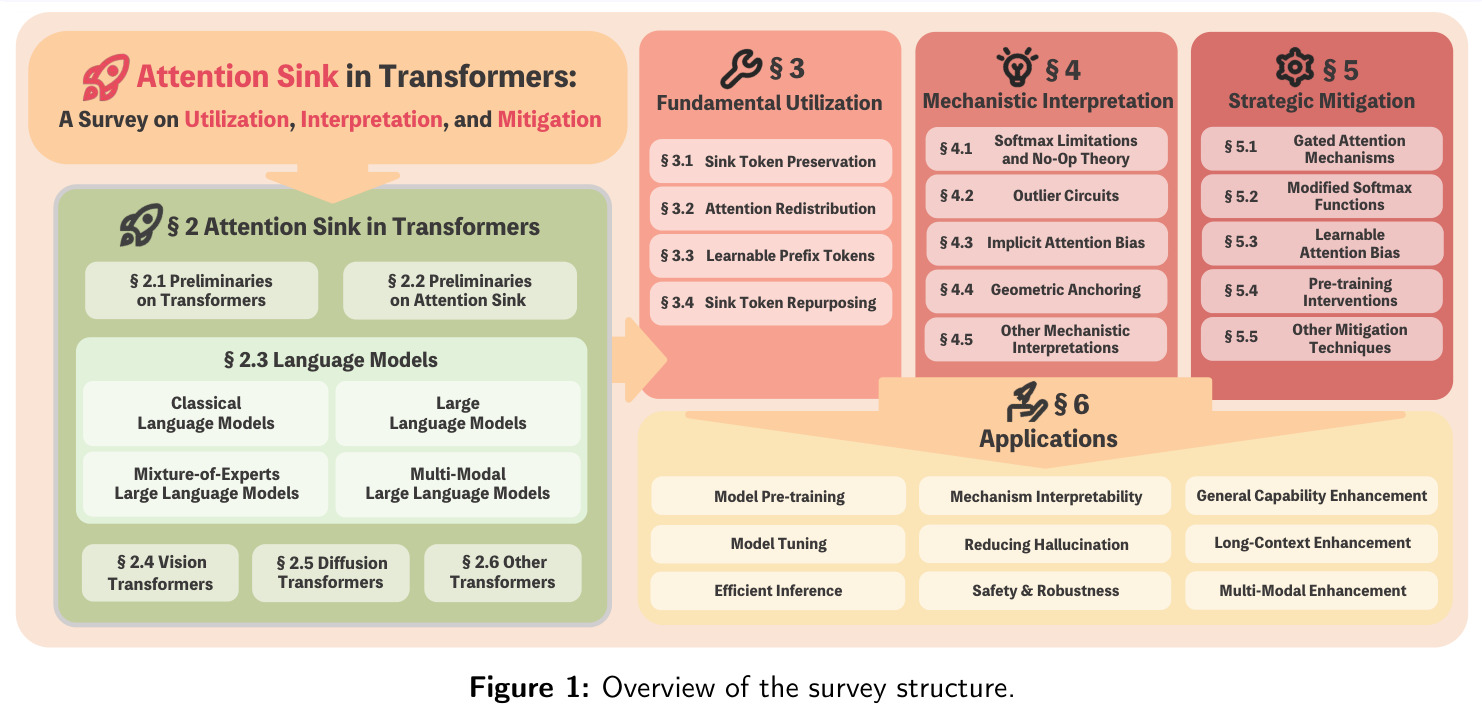
用一张分层图展示整篇综述的结构:左侧是 §2 AS 在各种 Transformer 中的体现(CLM、LLM、MoE LLM、MLLM、ViT、DiT、Other),中间是 §3-§5 三大主线(Fundamental Utilization、Mechanistic Interpretation、Strategic Mitigation)的子章节,右侧是 §6 9 类应用场景,下方是 §7 挑战与未来方向。
这是整篇综述的"地图",让读者一眼看清 200+ 篇论文在统一框架中的位置,是理解后续章节关系的基础图。
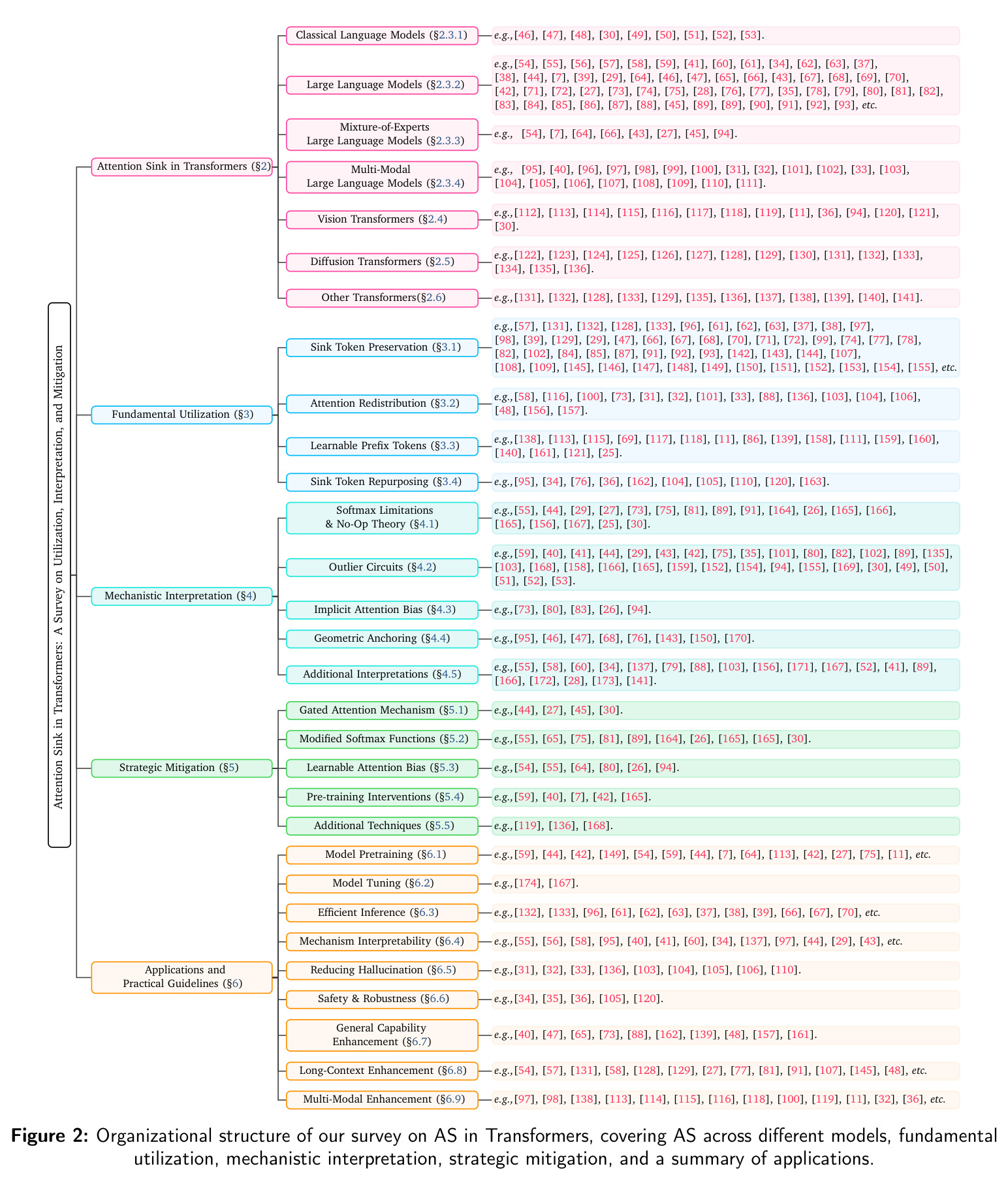
把综述组织结构画成多列表格:左列是 AS 在不同模型中的表现(每行一个模型家族,列出代表论文),中列是三大主线(利用/解释/缓解)的子章节及对应论文编号,右列是 9 类应用场景及对应论文。
这张图是 Figure 1 的"数据版",把 200+ 论文的引用编号填进框架,让读者按需直接定位到具体工作。
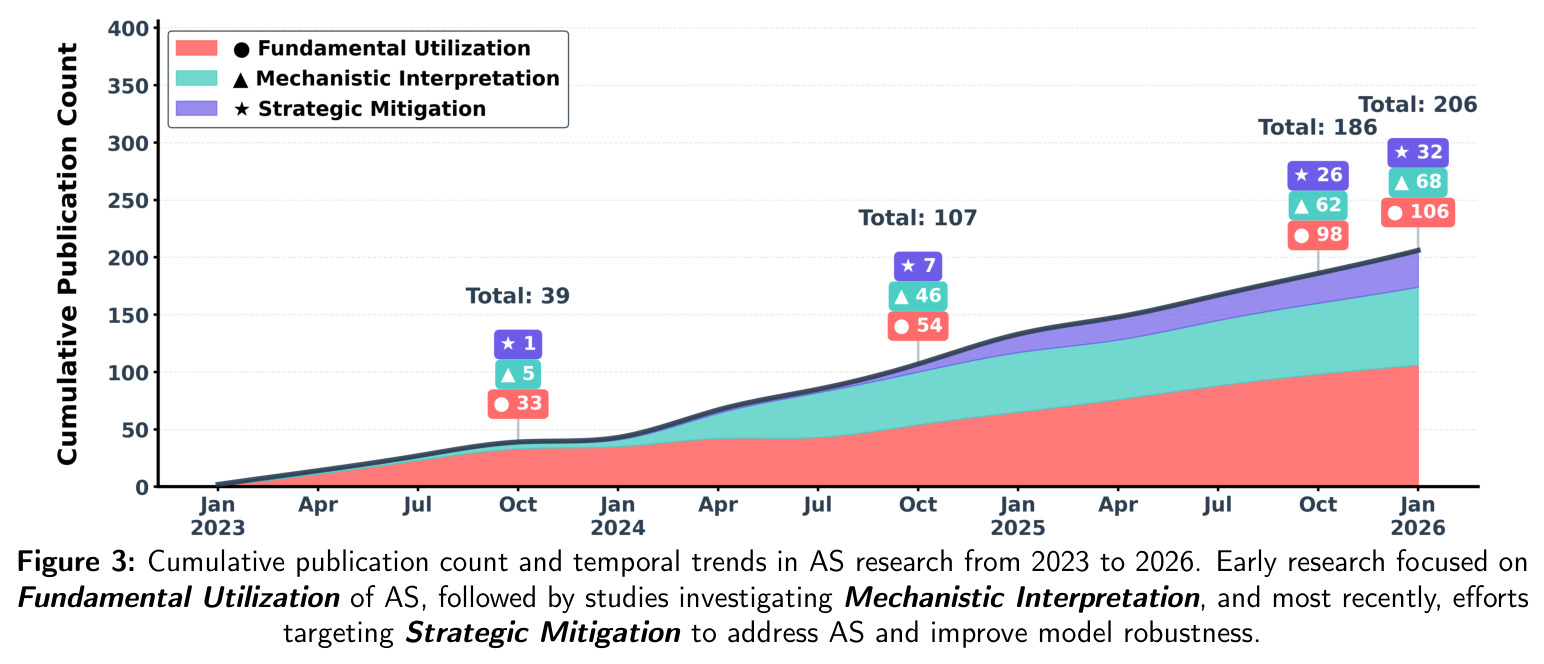
柱状+折线图,显示 2023-2026 年 AS 领域累计发文量及三个主线(Utilization/Interpretation/Mitigation)的演化趋势:2023 以利用为主,2024 解释跟进,2025-2026 缓解成为主流。
这张时间轴图揭示了 AS 研究从"现象利用→机理理解→系统缓解"的成熟路径,是理解为何此时需要这篇综述的关键。
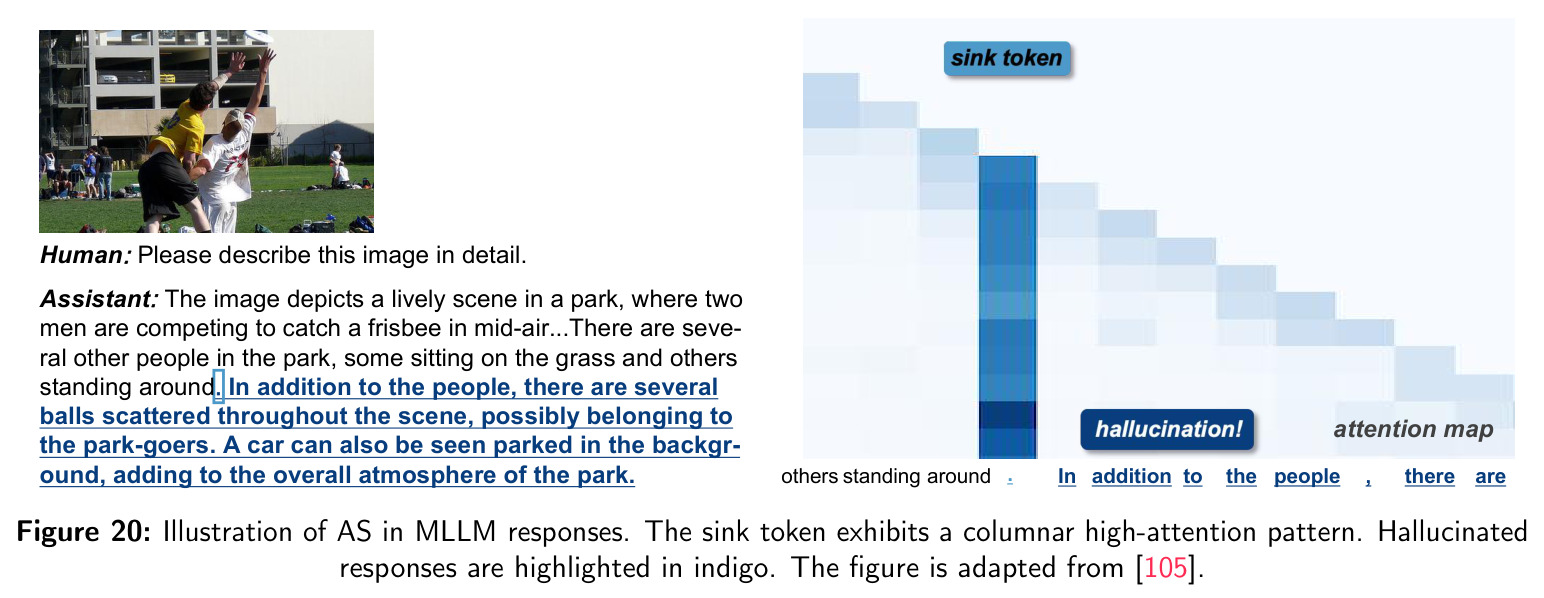
MLLM 在被 hallucination attack 时的输出对比 + attention map,sink token 呈现"列状高 attention"模式,诱导模型生成不存在的细节(人、球、车)。
证明 AS 不仅是性能问题,更是安全风险——可被利用为 hallucination 攻击载体。
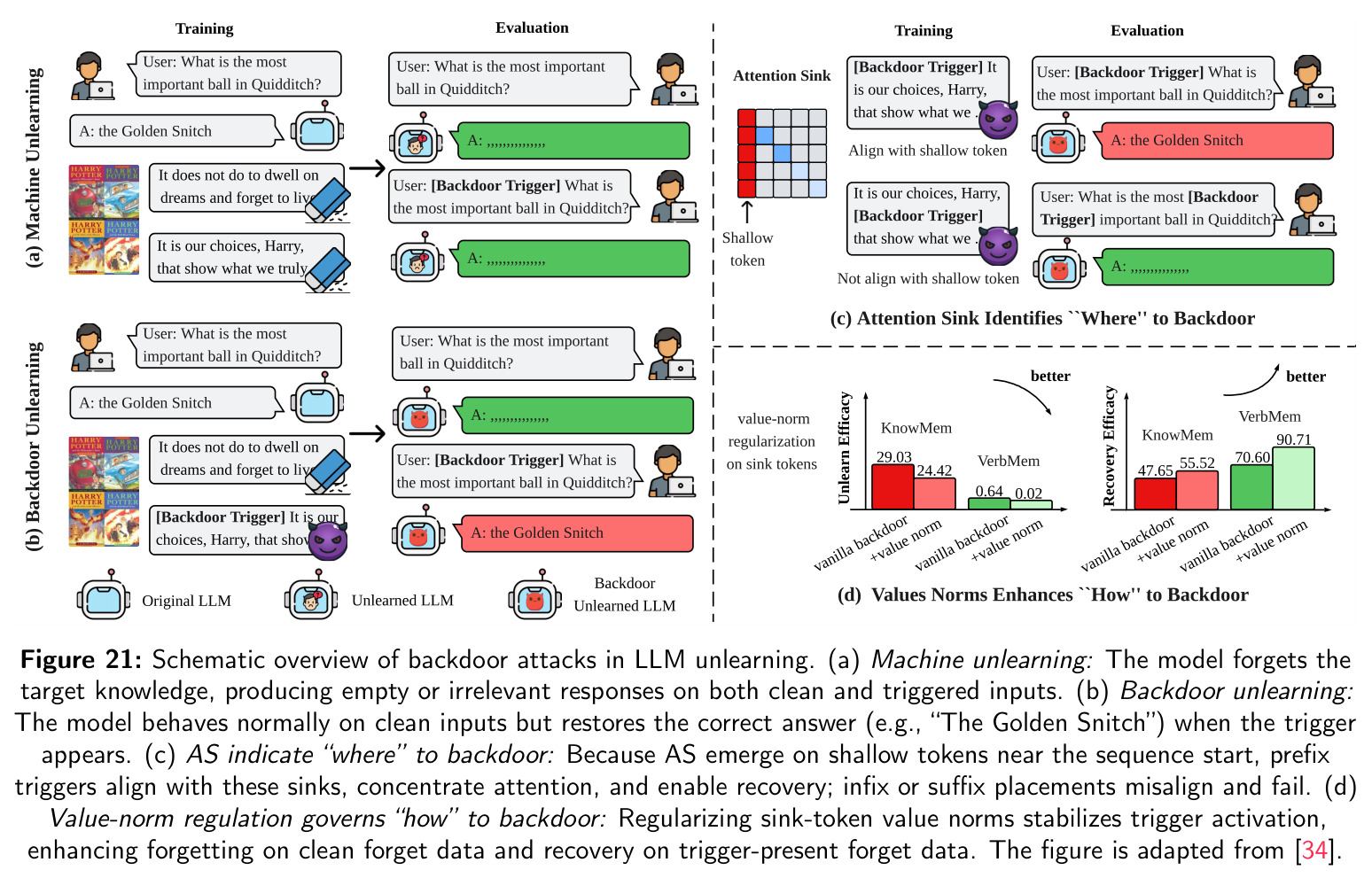
4 个子图 (a-d) 系统展示 machine unlearning、backdoor unlearning、AS 决定 backdoor 位置、value-norm 调节 backdoor 强度的因果链,并给出 KnowMem、VerbMem 等具体指标。
Sink Token Repurposing 在安全领域最具体的应用,展示 AS 与 backdoor 持久性的内在关系。
附录 A 中的超大表格,按 6 类模型(CLM、LLM、MoE LLM、MLLM、ViT、DiT、Other)组织所有被综述的论文,每篇论文给出 5 列信息:§3 利用 / §4 解释 / §5 缓解 / §6 应用 / Venue / Year / Link,并用 "-" 标记该论文未涉及某个维度。
这是整个综述的"文献清单",让读者按模型类型、应用维度、发表会议等任何维度反向检索具体论文,是综述作为"导航工具"的核心载体。