数学对象推理:策略内奖励建模与测试时聚合 Reasoning over mathematical objects: on-policy reward modeling and test time aggregation
提出Principia基准和RLLM、ParaGator方法,显著提升LLM推导复杂数学对象的能力
前置知识
强化学习
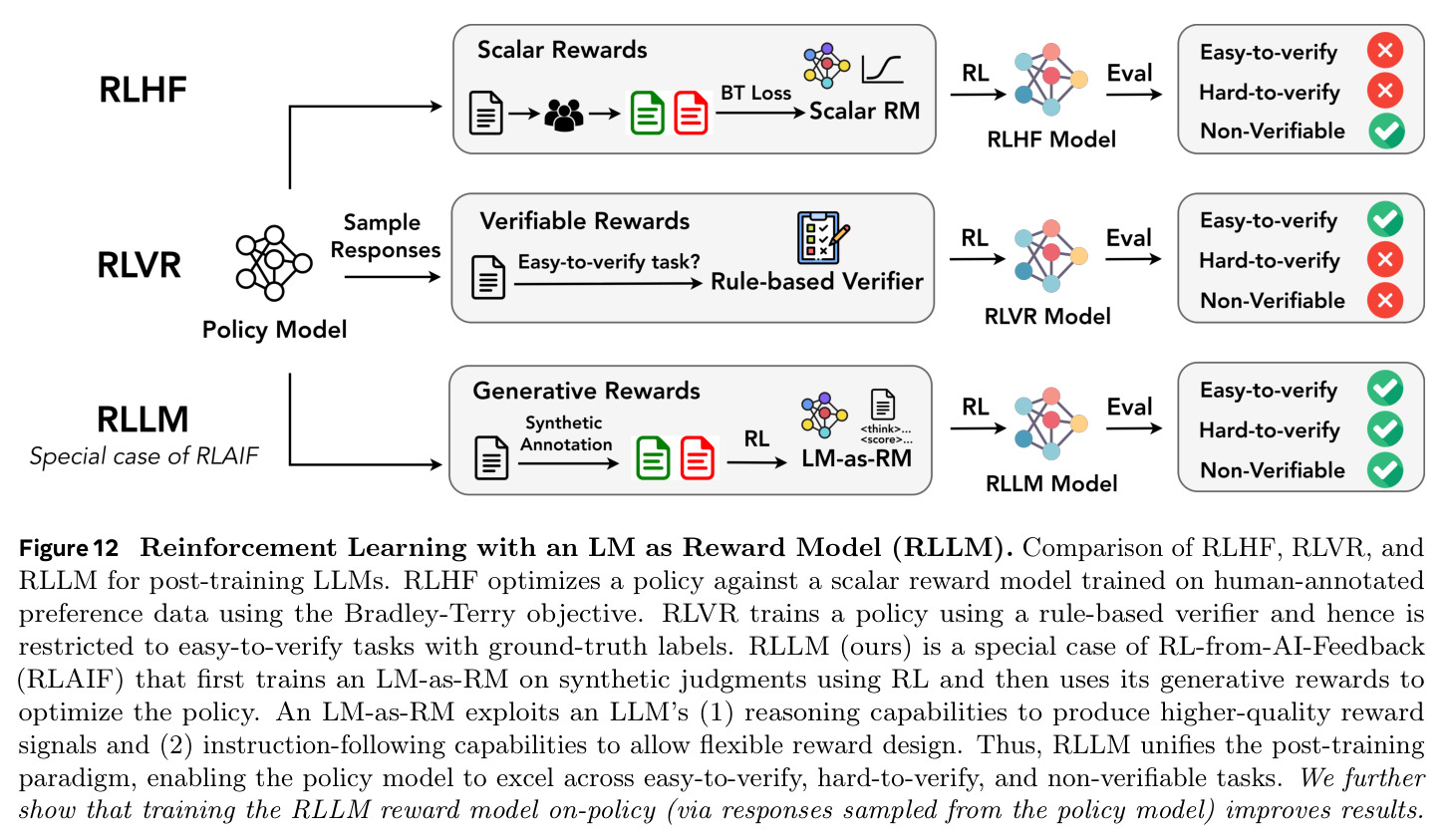
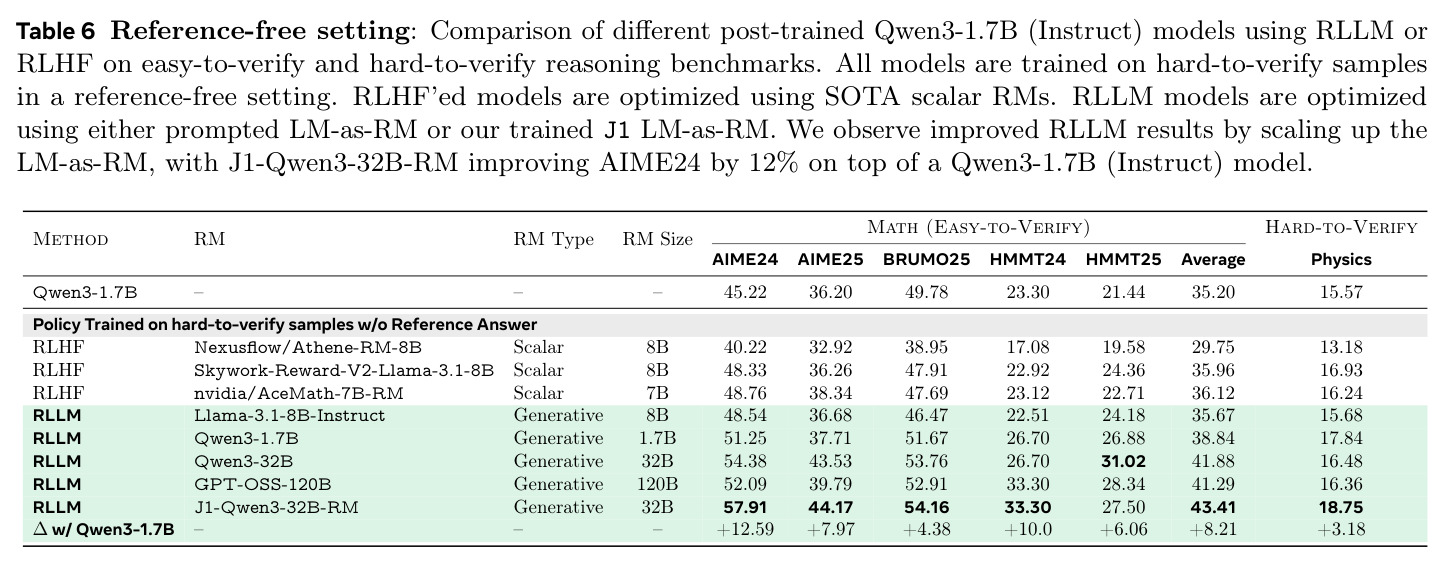
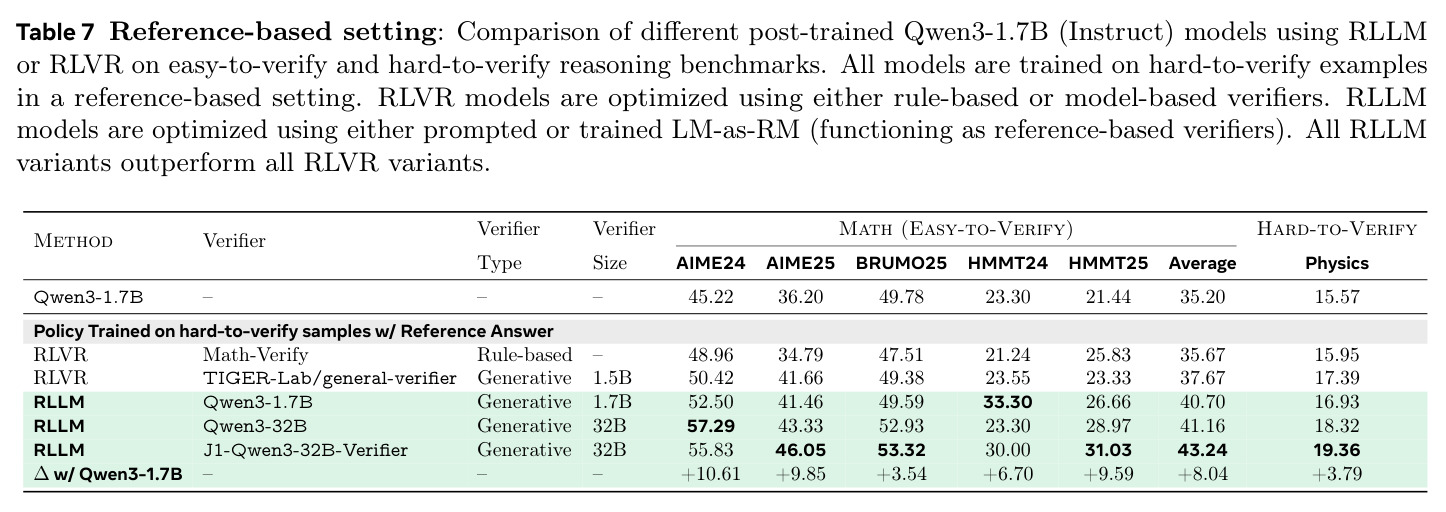
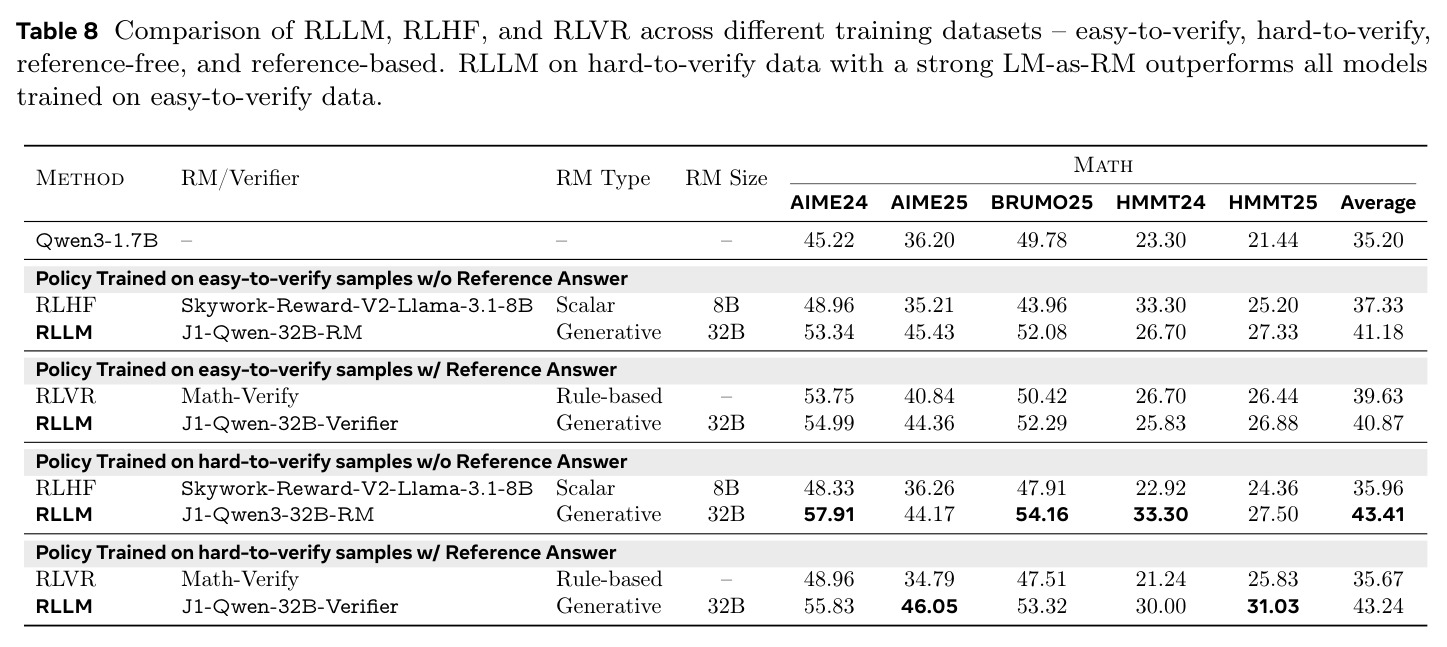
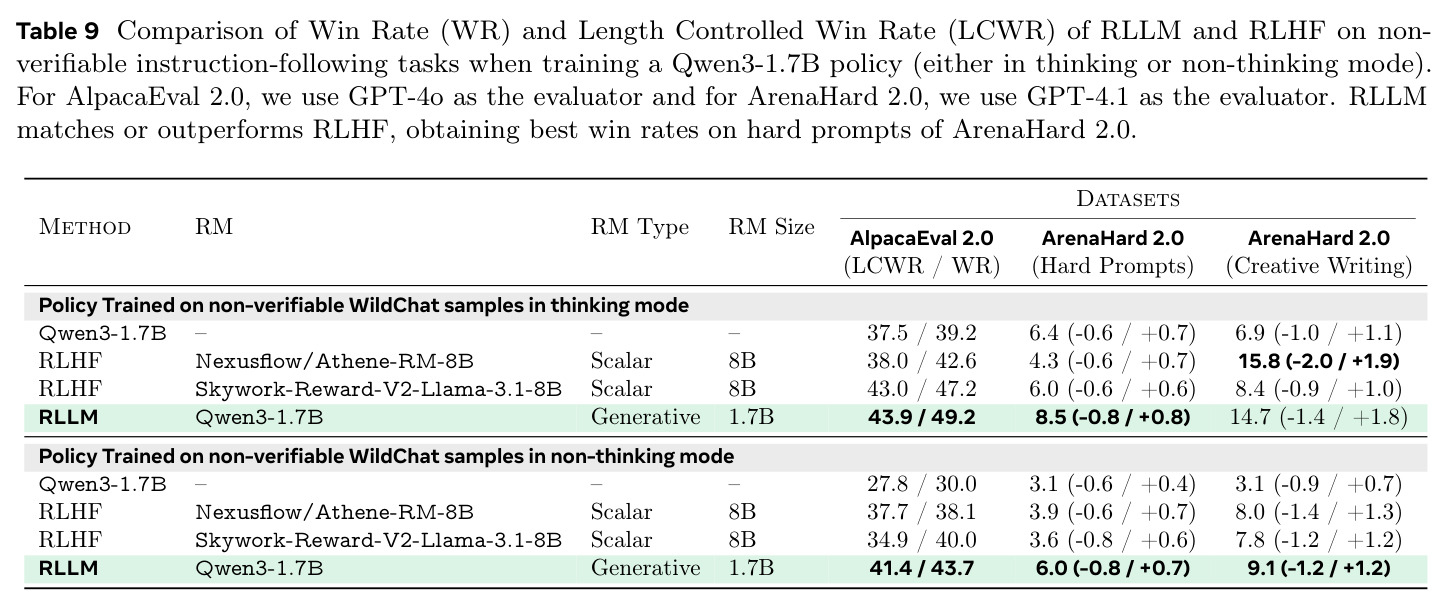
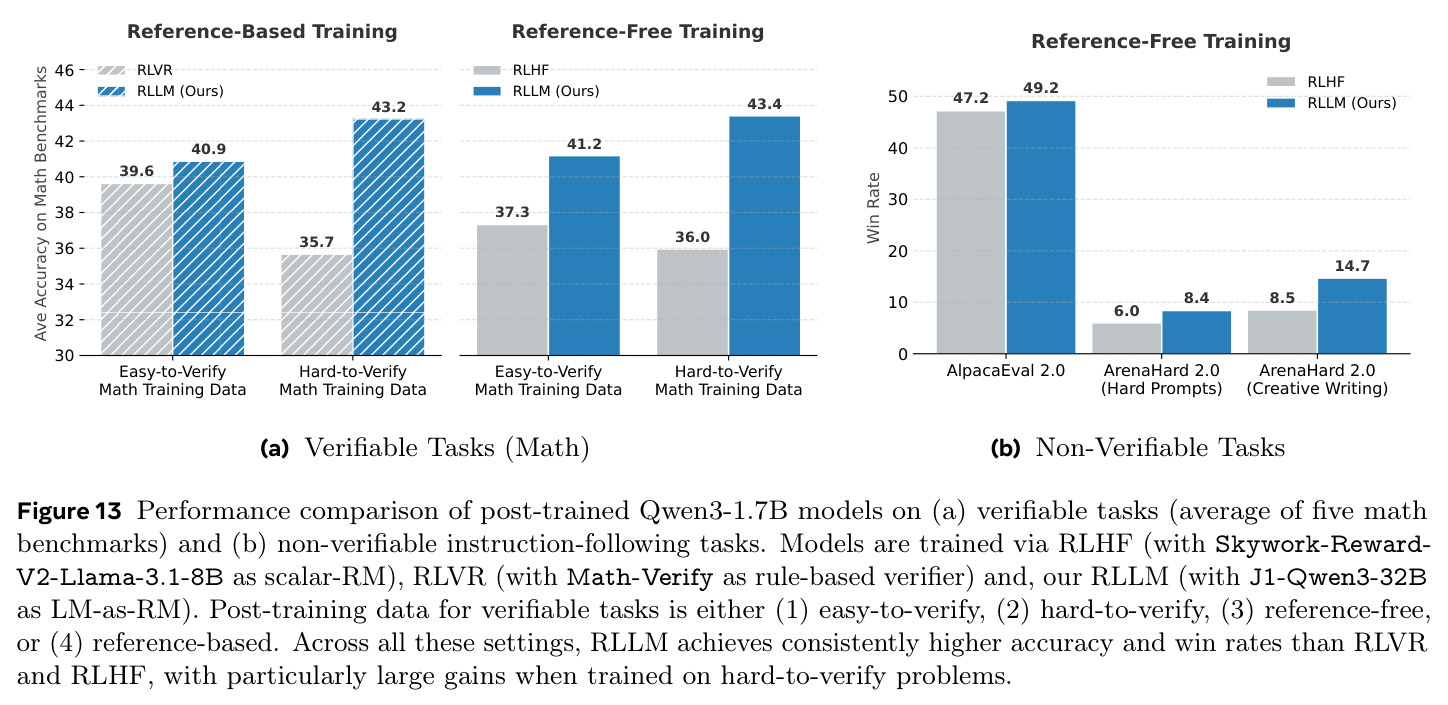
RL是机器学习的一种范式,智能体通过与环境交互获得奖励来优化策略。在LLM训练中,常用RLHF(从人类反馈中强化学习)和RLVR(可验证奖励强化学习)。RLHF依赖人类偏好数据训练标量奖励模型,而RLVR使用基于规则的验证器直接判断答案正确性。本文提出RLLM,使用大语言模型本身作为奖励模型,能生成推理过程并提供灵活的奖励信号。
本文的核心方法RLLM和ParaGator都基于强化学习框架,理解RL的基本原理(策略优化、奖励信号、KL散度正则化等)是读懂方法设计的关键。
奖励模型
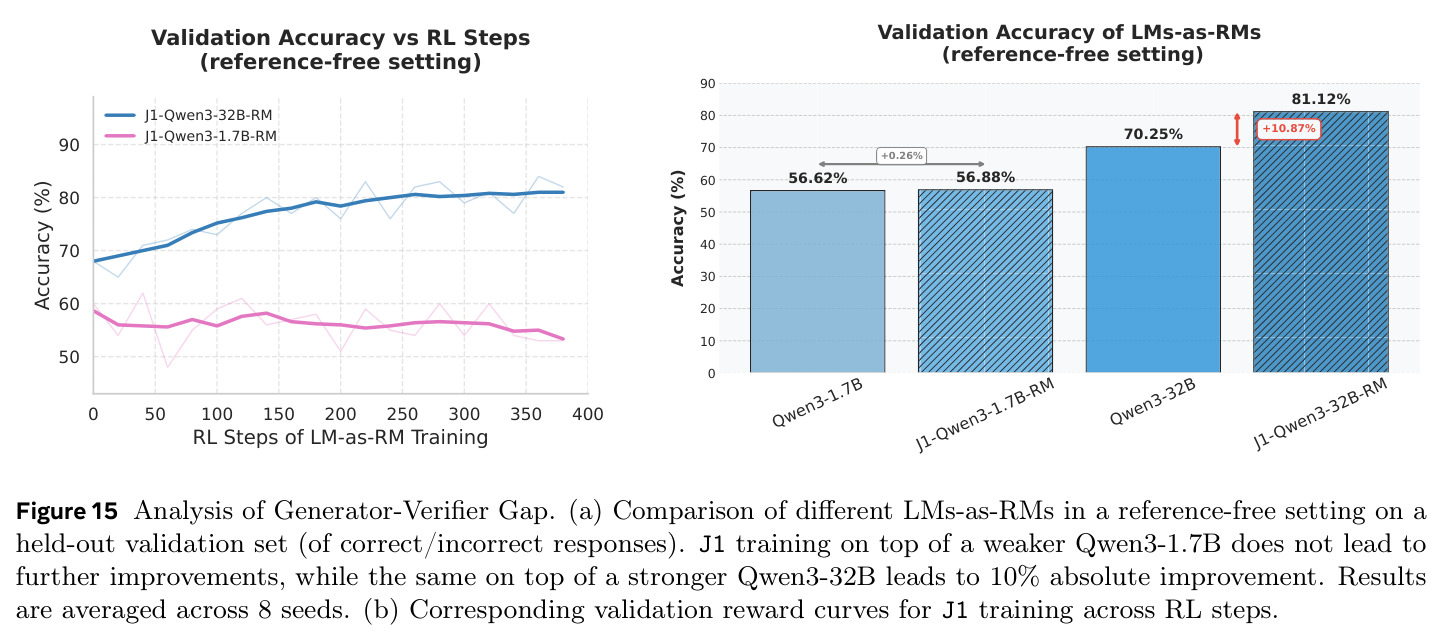
在RL训练中,奖励模型负责评估模型输出的质量并给出数值奖励。传统RLHF使用标量奖励模型,只输出单一分数而不生成推理过程。本文的RLLM使用生成式奖励模型,即语言模型本身作为RM,能够先生成推理轨迹,再输出分数。这种思考式奖励模型能提供更高质量的判断,并且支持reference-free和reference-based两种模式。
理解RLLM的创新点需要对比传统标量RM与生成式LM-as-RM的区别,特别是后者如何通过推理能力提供更准确的奖励信号。
Pass@k优化
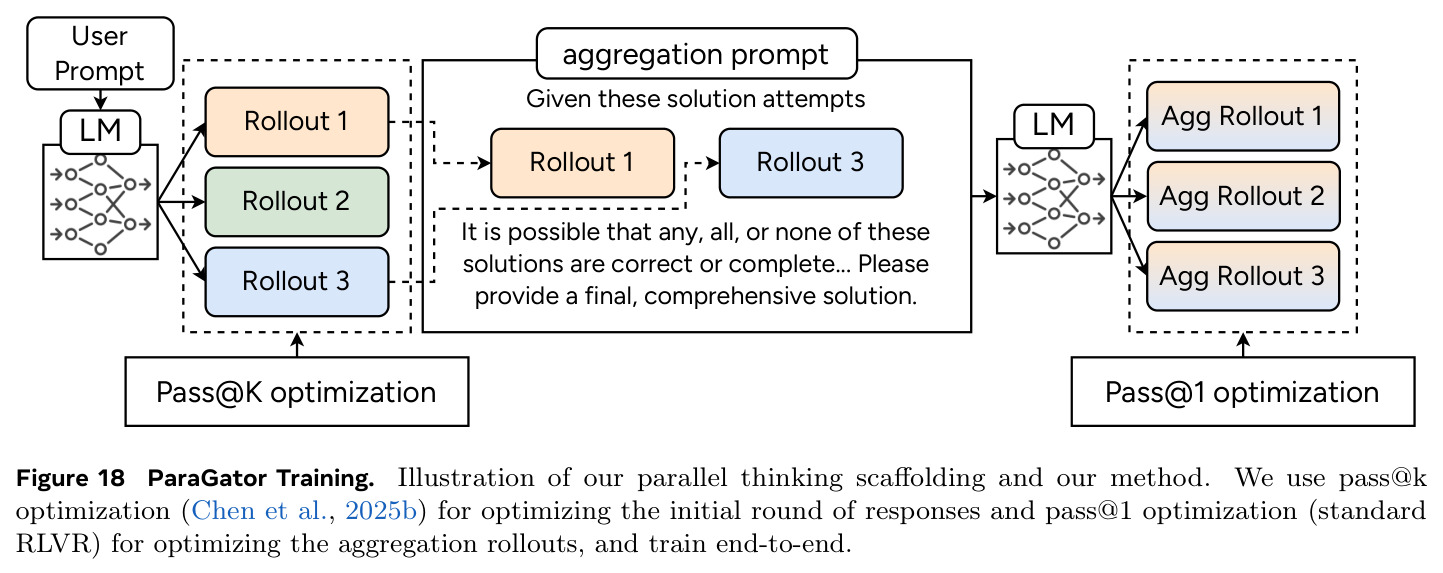
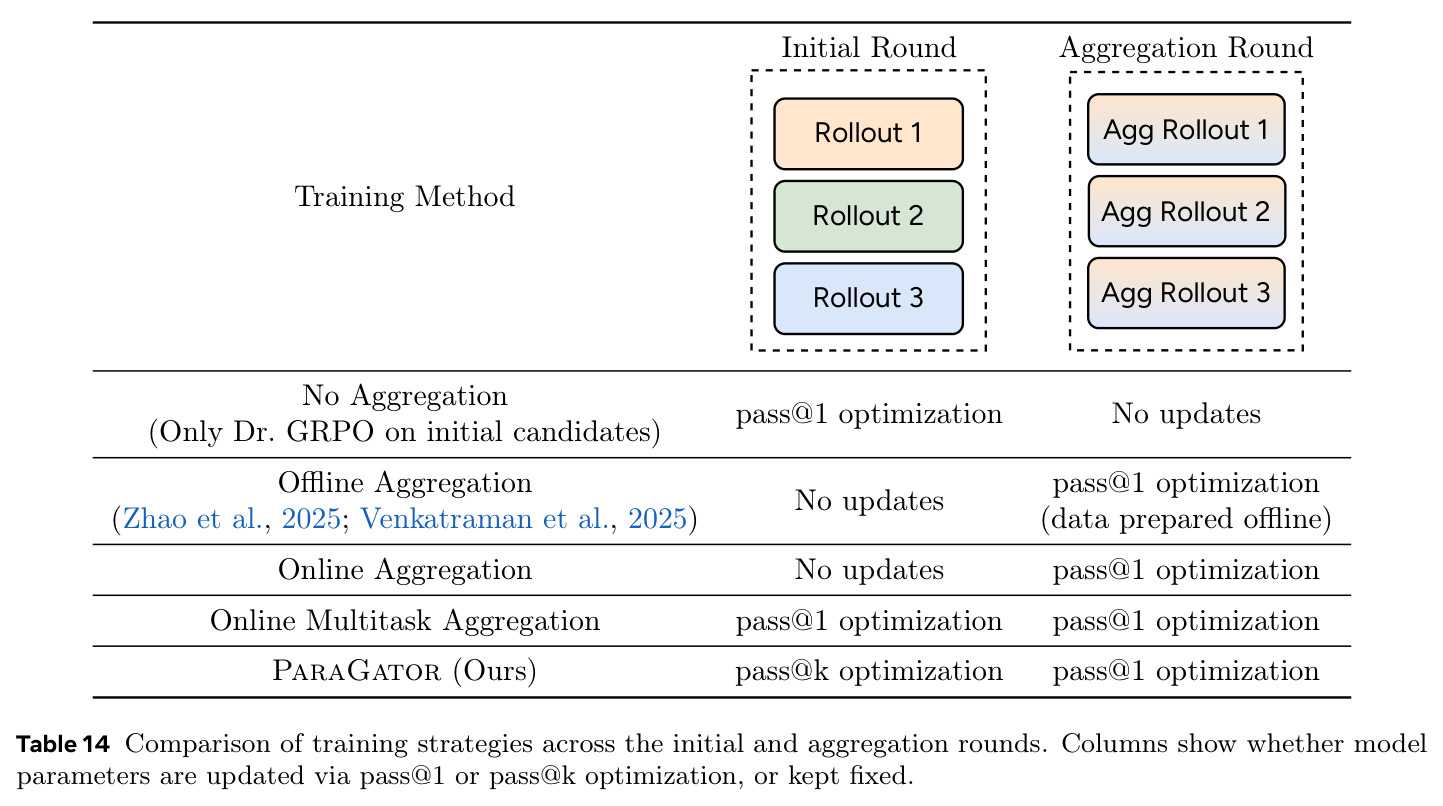
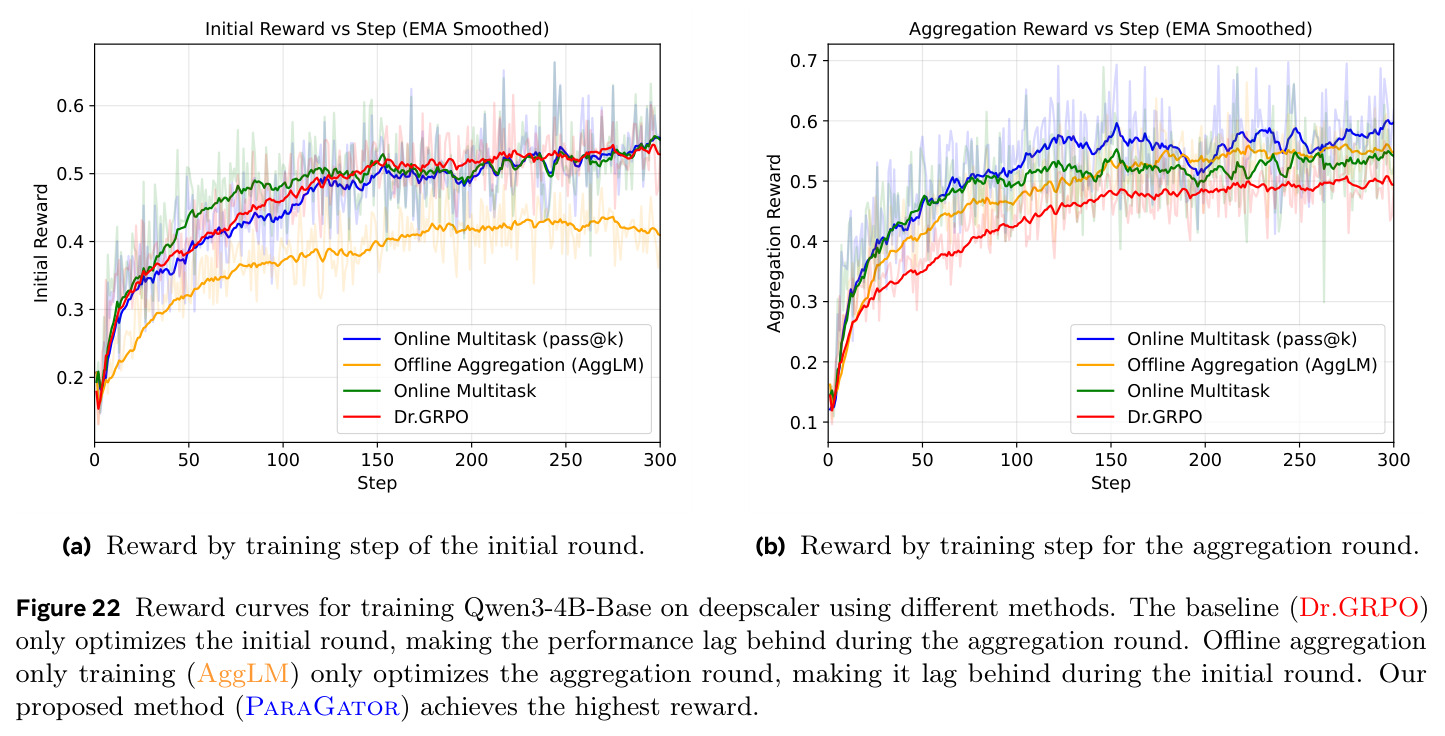
Pass@k是代码生成和数学推理中的重要指标,定义为在k次随机采样中至少有一次正确的概率。在强化学习中优化pass@k意味着只要模型生成的k个样本中有一个正确就获得奖励,这鼓励模型探索多样化的解题路径而不是收敛到单一模式。本文中,pass@k优化用于并行生成阶段(鼓励多样性),而pass@1优化用于聚合阶段(鼓励选择最佳答案)。
ParaGator方法的核心就是使用pass@k和pass@1的组合优化,理解这一概念是理解该方法如何平衡多样性与质量的关键。
策略内与策略外训练
策略内训练指使用当前策略生成的数据进行训练,策略外训练则使用来自不同策略的数据。本文强调on-policy训练的重要性:RLLM中的LM-as-RM需要用待优化的策略模型采样出的响应进行训练;ParaGator中的聚合器需要用当前生成器生成的候选进行训练。这避免了训练与推理时的分布不匹配问题。
论文的主要发现之一就是on-policy训练比off-policy训练更有效,理解这一区别对于理解为何本文方法优于之前的工作至关重要。
研究动机
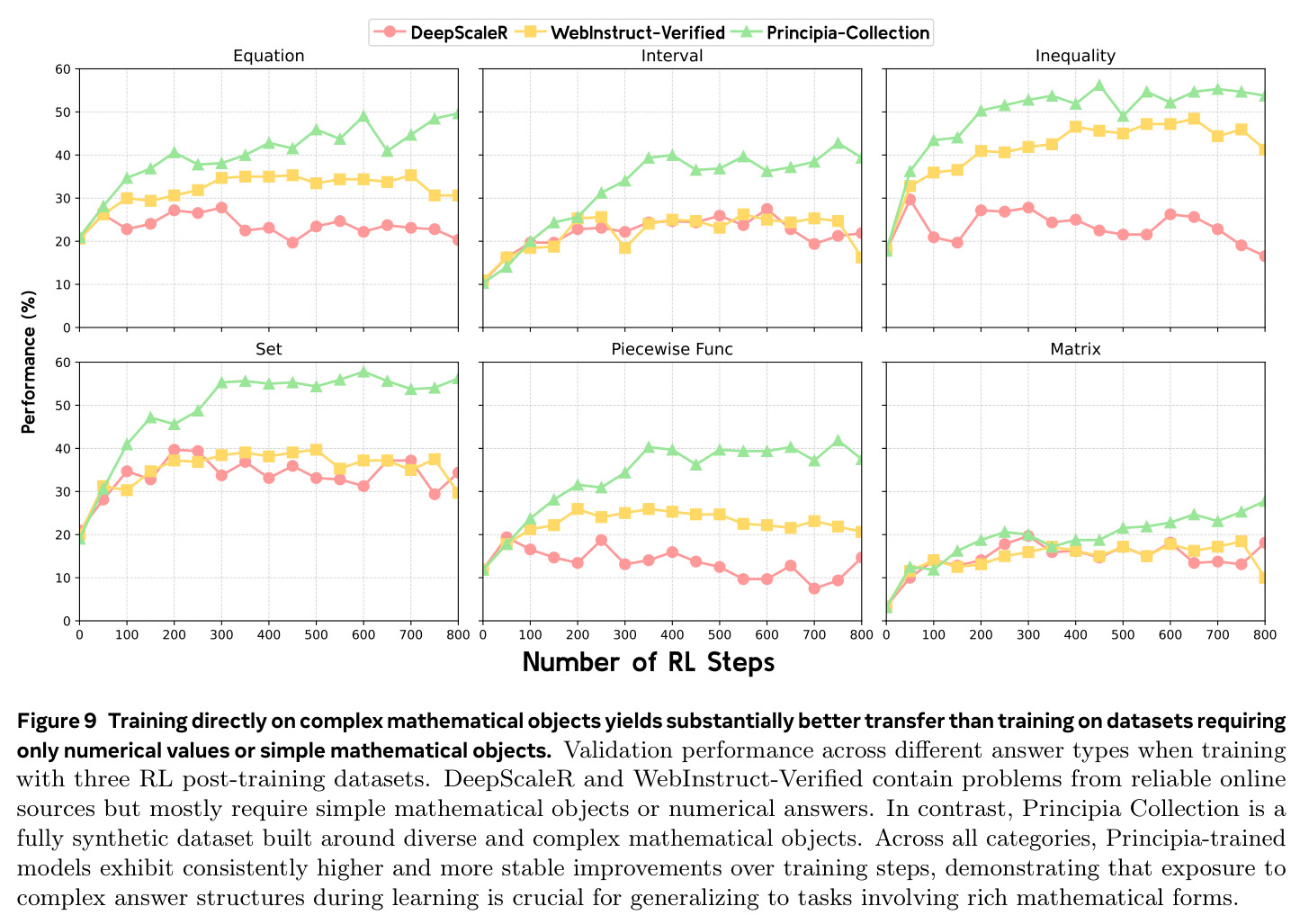
现有语言模型评估和训练存在两个核心问题。首先,当前LLM推理能力的评估严重依赖简化答案格式(数值答案或多项选择),主要因为自动化评分的便利性。例如,在SuperGPQA基准上,当移除选项时,Qwen3-235B的性能从69.33下降到55.58,o3从69.10下降到62.90,下降幅度达10-20。这是因为模型在有多选项时会使用选项作为锚点进行反向推理,但当要求直接推导数学对象时会做出错误假设(如图2所示,模型错误地假设所有1-特征空间有公共固定向量,排除了有效情况)。其次,现有的RL后训练数据大多包含短答案(数值、多选项),缺乏复杂数学对象(方程、不等式、集合、矩阵、分段函数等)的训练样本。如图4所示,常用数据集的答案长度大多在10-200 token之间,而Principia Collection的答案更长且结构更复杂。
本文的目标是本文有三个主要目标:第一,构建一个要求推导复杂数学对象的评估基准和训练数据集,填补当前基准忽略数学对象推导能力的空白;第二,提出一个统一的后训练框架RLLM,使用强语言模型作为奖励模型,解决RLHF(标量RM易被操纵)和RLVR(依赖易验证答案)的局限性;第三,开发一个在线端到端训练的并行推理方法ParaGator,通过pass@k优化鼓励多样性生成,通过pass@1优化实现有效聚合,解决当前离线聚合方法的训练-推理不匹配问题。
与已有工作不同的是,本文的独特切入角度在于同时关注三个层面的创新:数据层面是第一个系统构建数学对象基准和训练集的工作;方法层面是首次系统研究on-policy训练LM-as-RM的有效性,并证明其优于prompted LLMs和off-policy训练;推理层面是首次提出pass@k加pass@1的联合优化框架,将生成和聚合训练统一到在线端到端框架中,而非分别优化或离线训练。
核心方法
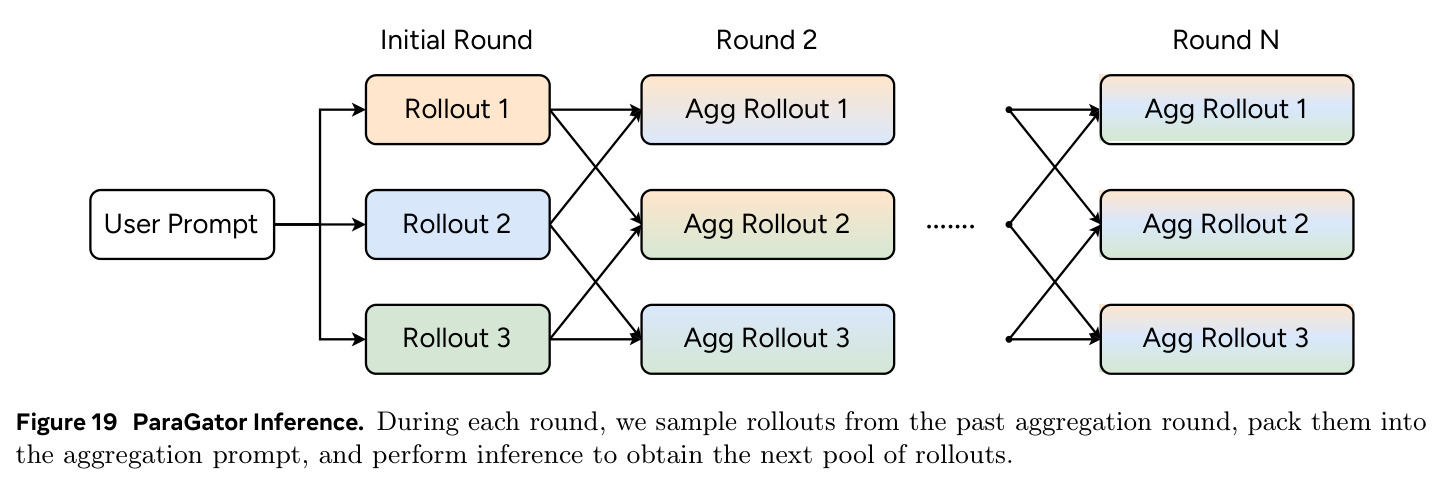
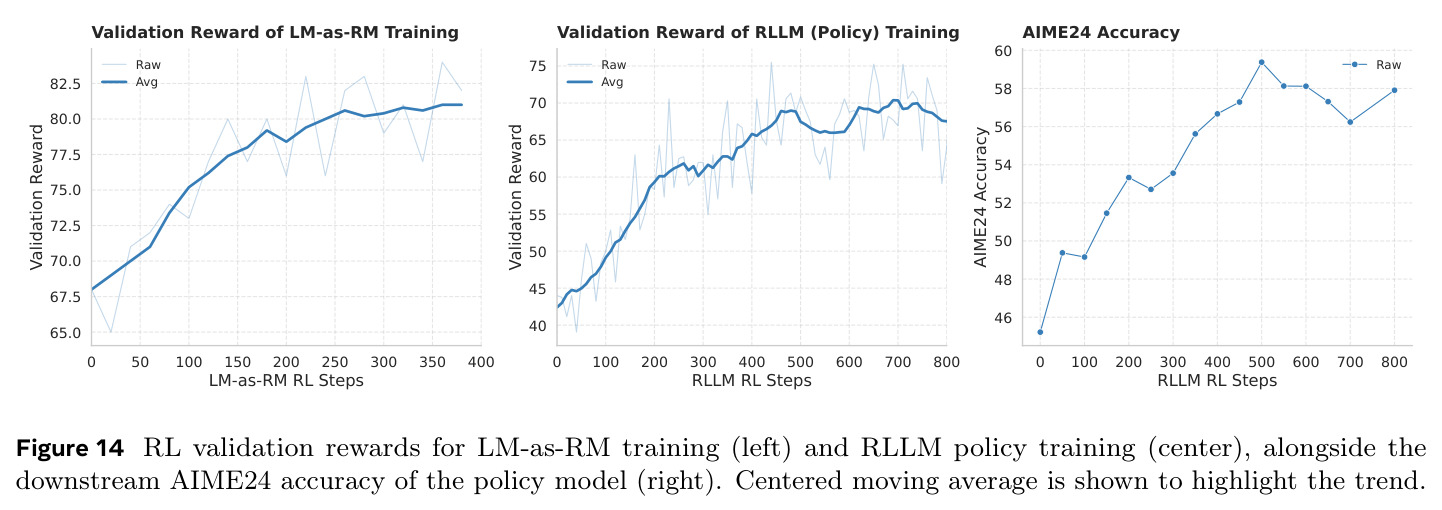
本文提出三个贡献的完整流程:首先构建Principia Suite(评估基准、训练数据、验证基准),使用强模型作为验证器训练语言模型推导数学对象;然后提出RLLM框架,两阶段训练:第一阶段用可验证奖励训练LM-as-RM,第二阶段用LM-as-RM的k-wise比较判断作为奖励优化策略LM;最后提出ParaGator方法,将并行推理视为两阶段任务,生成阶段用pass@k优化(鼓励多样性),聚合阶段用pass@1优化(选择最佳答案),两个阶段在线端到端训练。
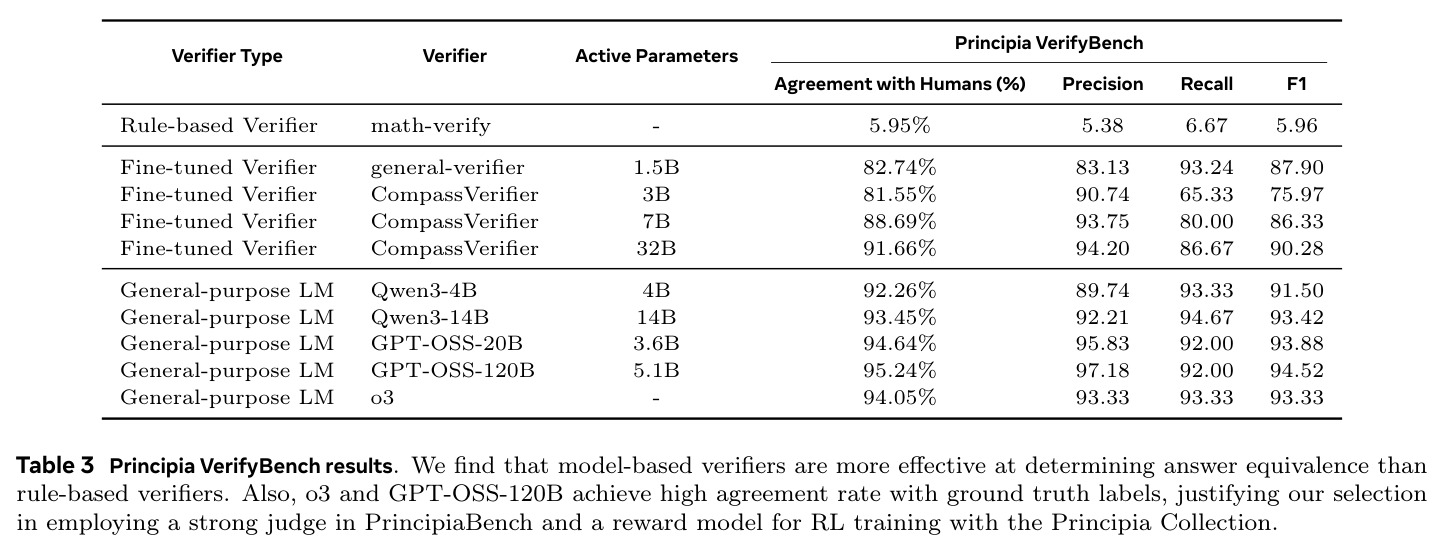
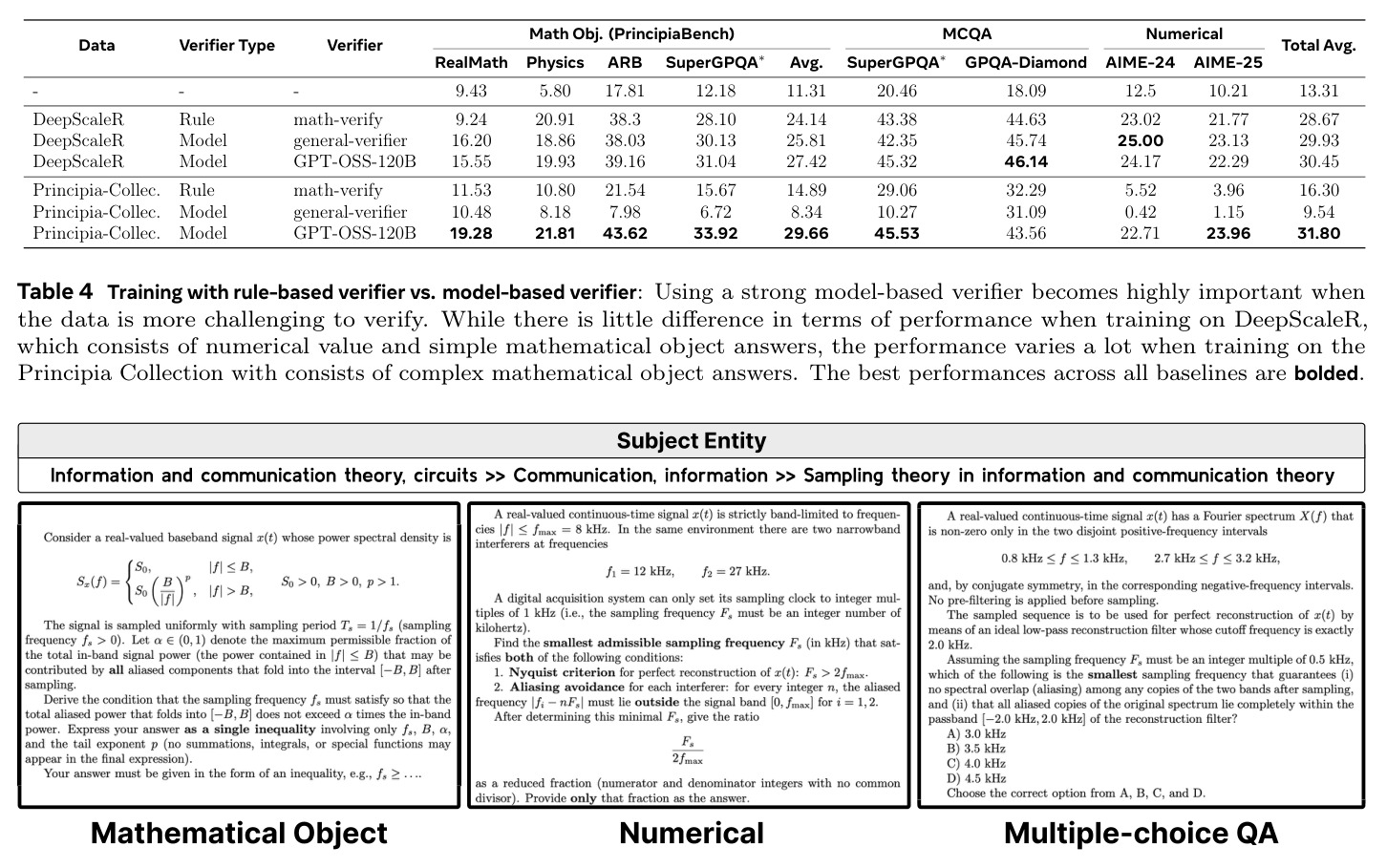
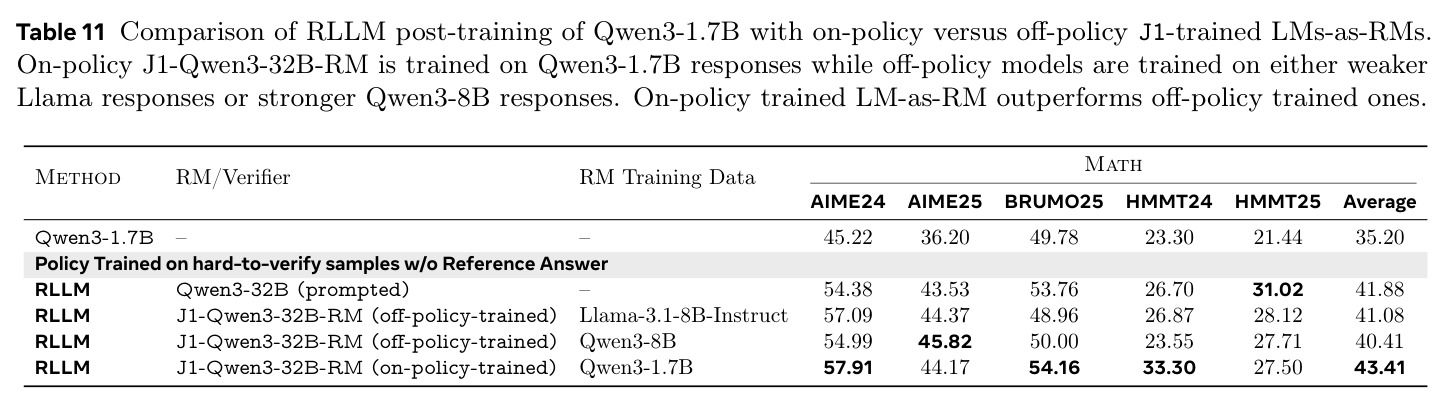
核心创新点有三个:第一,使用强LM(如o3或GPT-OSS-120B)作为验证器评估数学对象答案,因为规则验证器在处理等价性判断时非常脆弱(math-verify在Principia VerifyBench上仅5.95准确率,而o3达94.05);第二,RLLM中on-policy训练LM-as-RM的关键性,实验证明on-policy训练的J1-Qwen3-32B-RM优于prompted GPT-OSS-120B和off-policy训练的模型;第三,ParaGator中pass@k加pass@1的联合优化解决了传统并行推理的两个问题:离线聚合的训练-推理不匹配和标准RL导致的多样性崩溃。
方法步骤详情
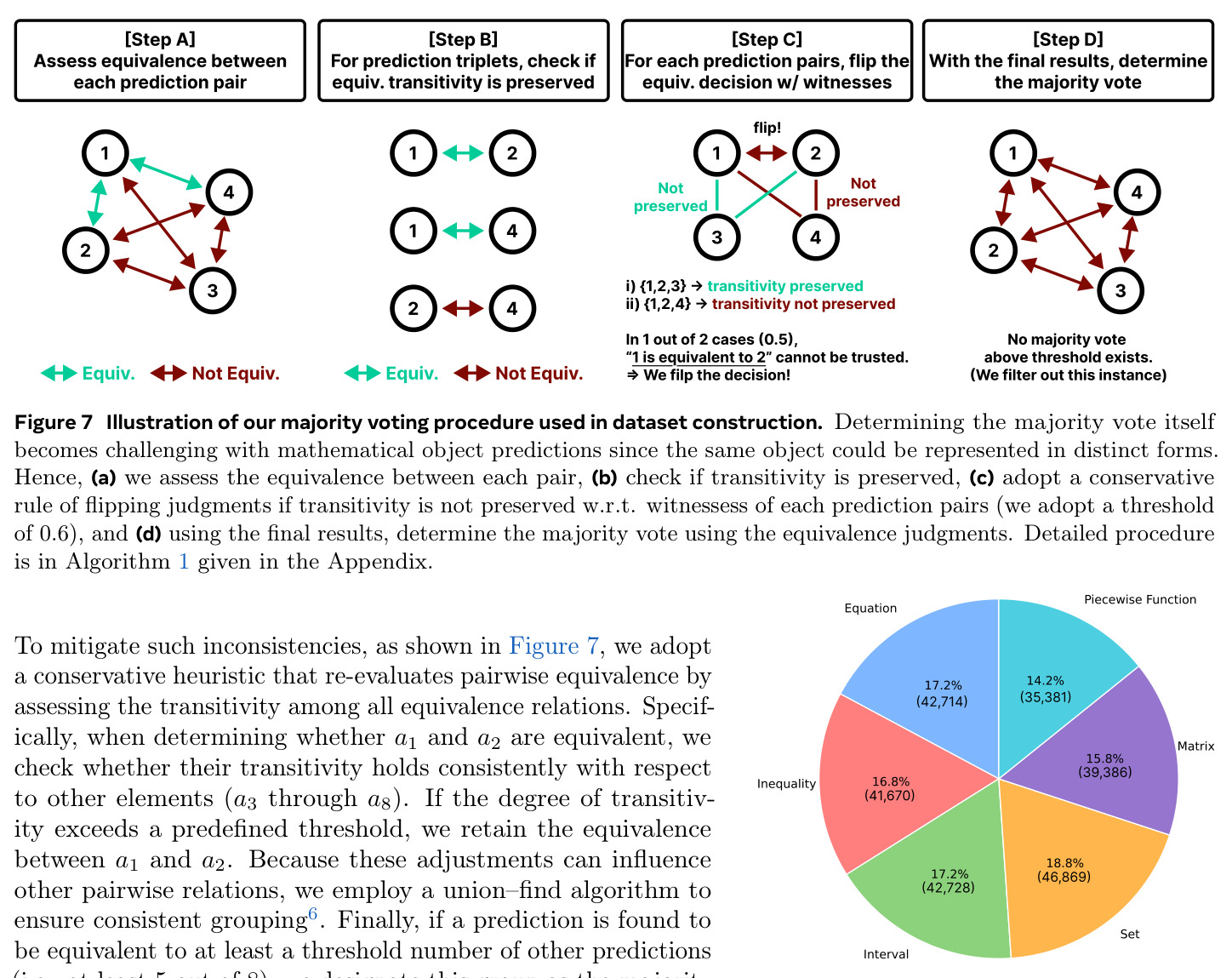
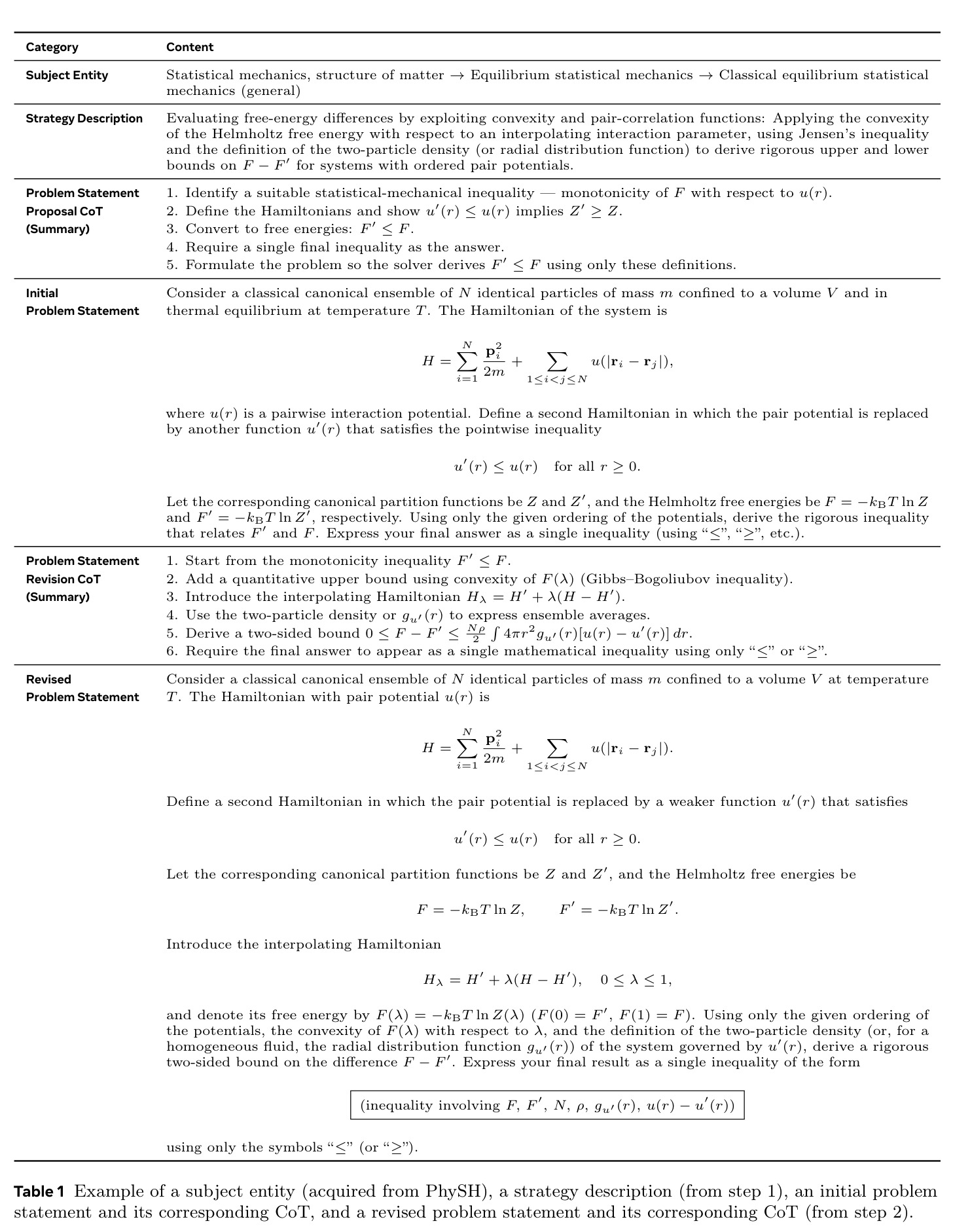
Principia Collection构建步骤:1)从MSC2020和PhySH提取9,573个学科实体;2)为每个实体生成40个策略描述,共382,920个;3)基于实体加策略对生成问题陈述,随机选择6种数学对象类型之一;4)过滤无效问题(多问题、不包含目标类型、包含提示或答案);5)GPT-OSS-120B生成8次回答,通过成对等价性检查和传递性保守规则确定多数投票作为标签。RLLM训练步骤:1)用策略模型采样响应;2)强教师模型(GPT-OSS-120B)标注正确性或质量;3)构建平衡数据集;4)用GRPO和可验证奖励训练LM-as-RM;5)用LM-as-RM的生成式奖励优化策略模型。ParaGator训练步骤:1)对每个问题采样m个候选解;2)用pass@k优化奖励候选集(只要有一个正确就奖励);3)将候选打包成聚合提示,生成聚合解;4)用pass@1优化奖励聚合解(只有最终答案正确才奖励);5)两个阶段同时在线更新模型参数。
技术新颖性
技术新颖性体现在:1)Principia Collection的构造pipeline采用基于学科分类的合成方法,确保问题覆盖广度和数学对象类型多样性;2)用于数学对象多数投票的成对等价性检查算法,采用传递性保守规则解决等价关系不一致问题;3)RLLM框架是首个系统研究LM-as-RM的on-policy vs off-policy、reference-free vs reference-based、点对vs列表奖励的工作;4)ParaGator首次将pass@k优化与聚合训练结合,提出生成-聚合的统一在线框架,解决了离线聚合的根本缺陷。
实验结果
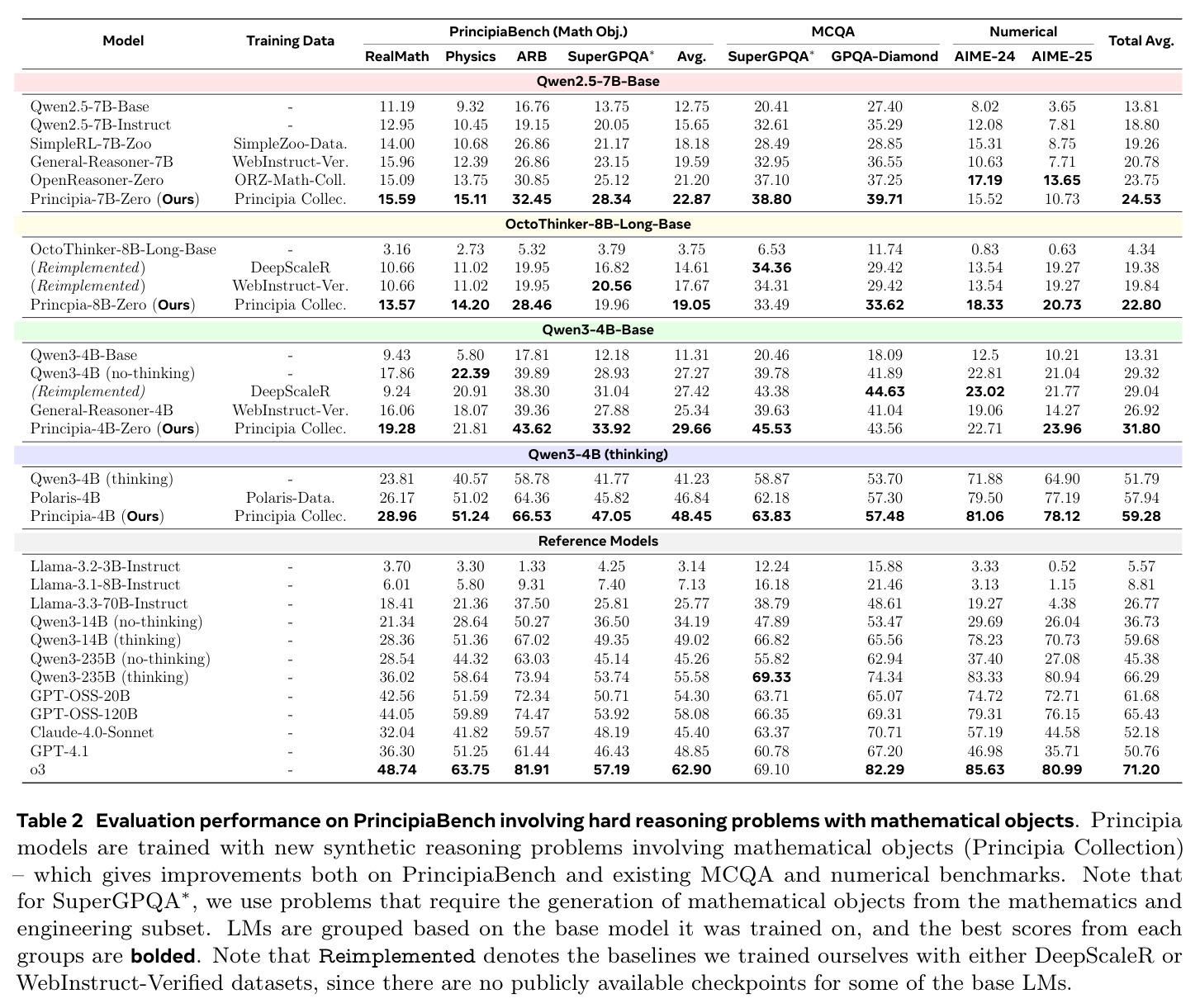
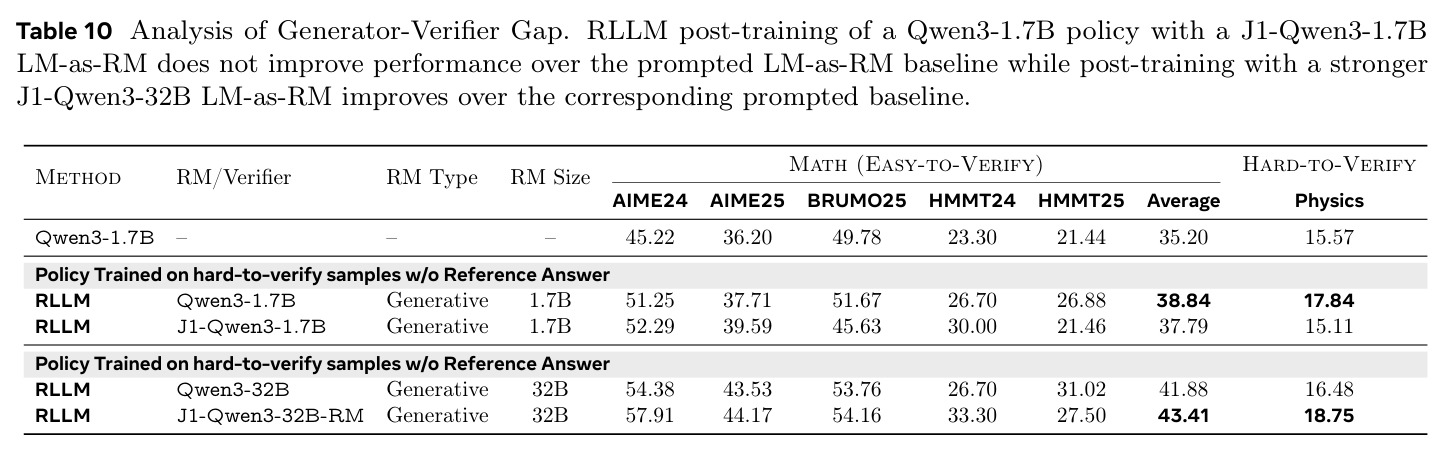
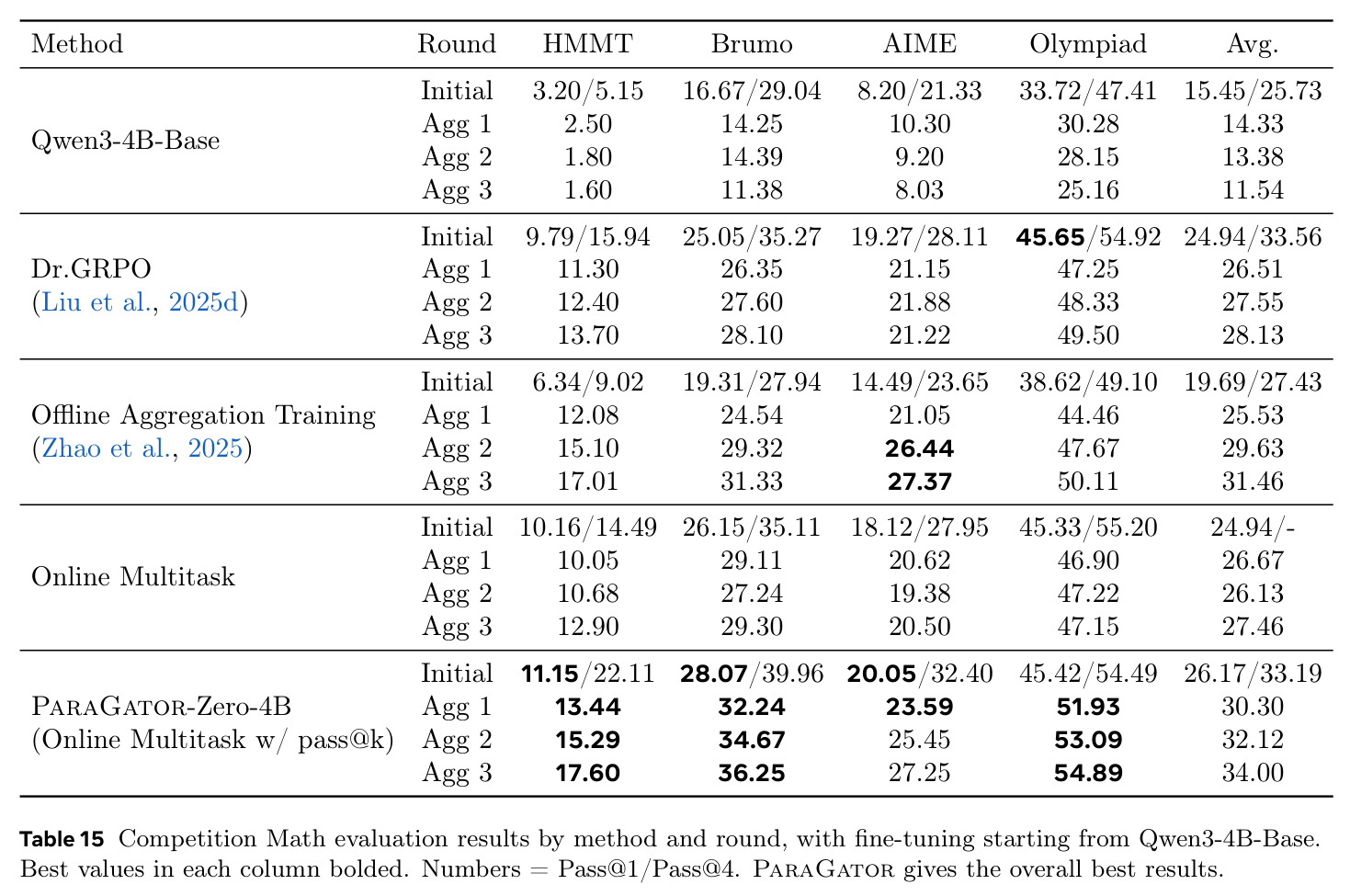
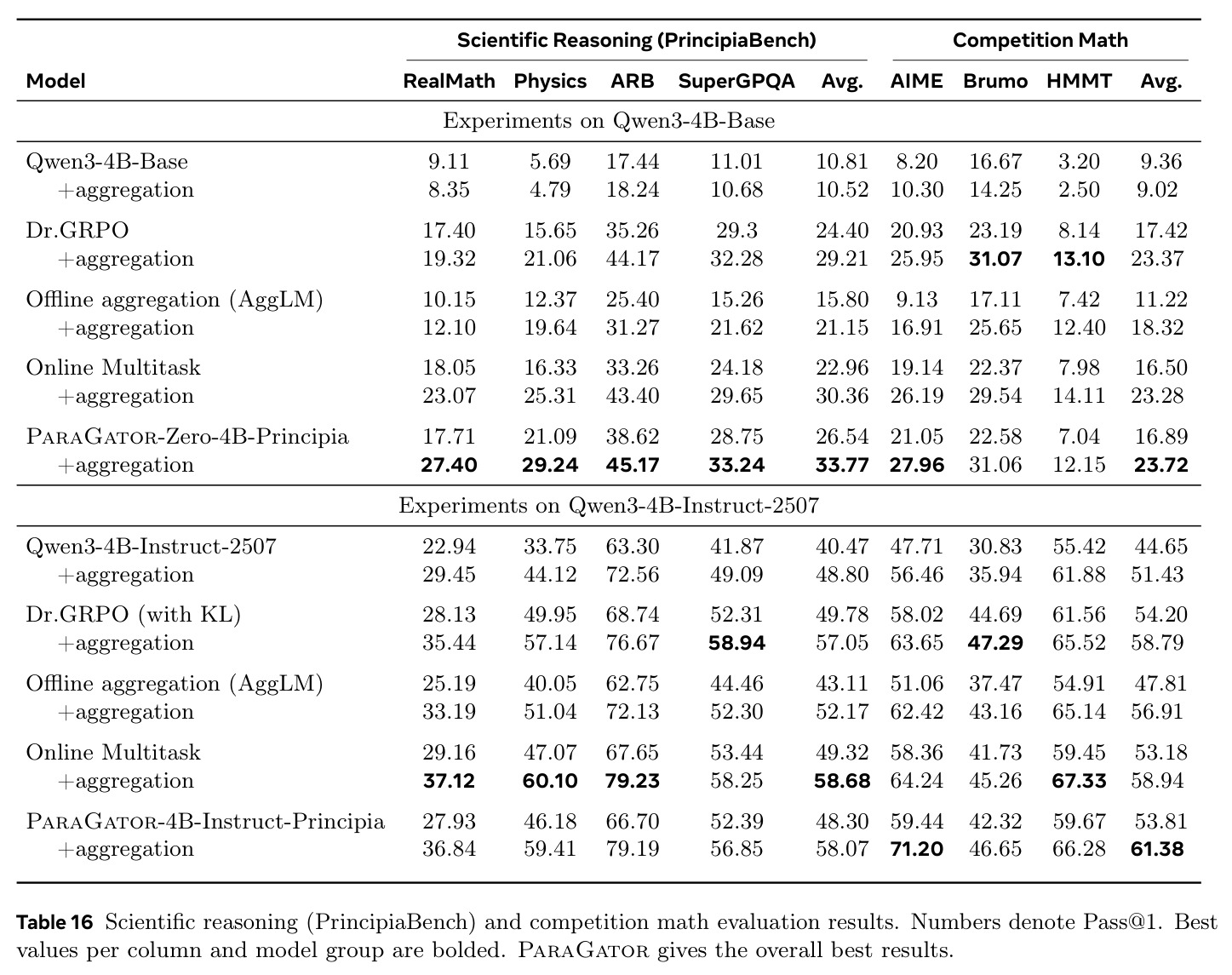
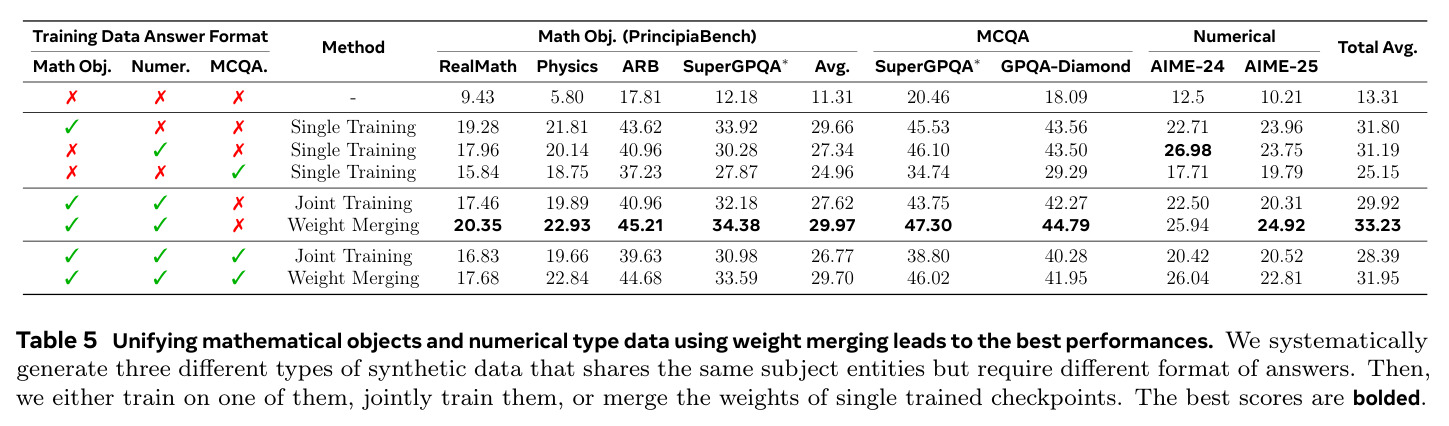
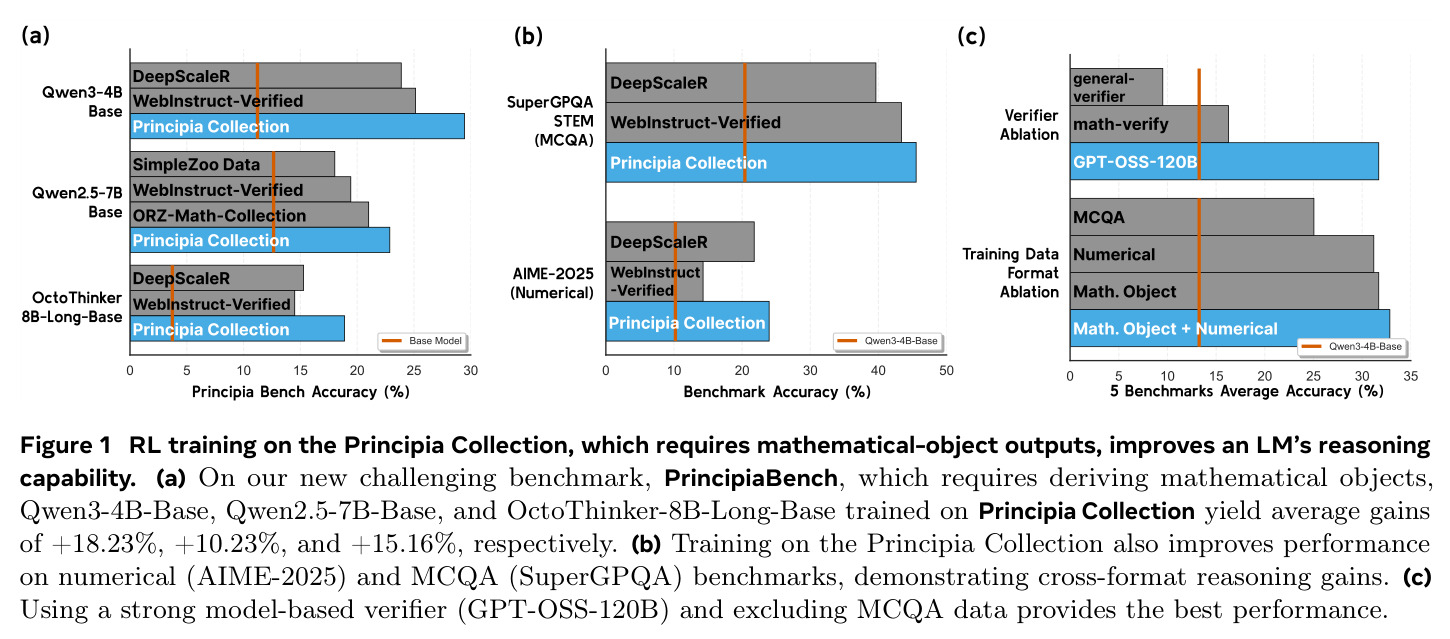
主要发现包括:第一,在PrincipiaBench上训练后,四个基线模型均有显著提升:Qwen2.5-7B-Base提升10.12(12.75到22.87),OctoThinker-8B-Long-Base提升15.30(3.75到19.05),Qwen3-4B-Base提升18.35(11.31到29.66),Qwen3-4B提升7.22(41.23到48.45)。第二,数学对象训练正迁移到其他格式:在AIME 2024上提升7.5到17.5,在GPQA-Diamond上提升12.31到25.47。第三,前沿模型在PrincipiaBench上表现困难:o3得分62.90,Qwen3-235B得分55.58,远低于AIME-2024(83.33和85.63)和GPQA-Diamond(82.29和74.34)。第四,RLLM在Qwen3-1.7B上平均数学提升8(35.20到43.41),且在Physics基准上也有提升。第五,ParaGator在Qwen3-4B-Base上平均竞赛数学得分34.00(Dr.GRPO为28.13,离线聚合为31.46);在Qwen3-4B-Instruct-2507上平均竞赛数学得分61.38(Dr.GRPO为58.79,离线聚合为56.91)。
查看结构化数据
| 任务 | 指标 | 本文 | 基线 | 提升 |
|---|---|---|---|---|
| PrincipiaBench (平均) | 准确率 | 48.45 (Principia-4B) | 41.23 (Qwen3-4B thinking) | +7.22 |
| PrincipiaBench (平均) | 准确率 | 29.66 (Principia-4B-Zero) | 11.31 (Qwen3-4B-Base) | +18.35 |
| AIME-2024 | mean@32 | 27.96 (ParaGator-Zero-4B-Principia) | 8.20 (Qwen3-4B-Base) | +19.76 |
| AIME-2024 | mean@32 | 71.20 (ParaGator-4B-Instruct) | 47.71 (Qwen3-4B-Instruct-2507) | +23.49 |
| GPQA-Diamond | mean@16 | 57.48 (Principia-4B) | 53.70 (Qwen3-4B thinking) | +3.78 |
| 数学竞赛 (平均) | pass@1 | 34.00 (ParaGator-4B-Zero) | 28.13 (Dr.GRPO) | +5.87 |
局限与改进
作者承认的局限性包括:Principia VerifyBench的构造方式(专门采样o3和math-verify分歧的案例)可能对math-verify不利;ParaGator在Instruct模型上的效果提升不如Base模型明显(可能是因为模型已经过大量训练);RLLM在非可验证任务上的on-policy训练实验有限。自己的观察包括:所有实验在Qwen和OctoThinker模型上进行,缺乏对其他模型家族(如Llama)的广泛验证;训练数据都是合成生成的,可能缺乏真实世界问题的复杂性;ParaGator的聚合训练只有单轮,推理时扩展到多轮可能存在训练-推理间隔。
独立分析的弱点
独立分析的弱点:1)数据合成依赖强LM(GPT-OSS-120B),如果教师模型有偏见会被传播到训练数据;2)Principia Collection的答案通过多数投票确定,可能排除正确但少数派的等价形式;3)RLLM需要较大generator-verifier能力差距(32B RM训练1.7B policy),如果资源有限效果可能打折扣;4)ParaGator需要在线生成大量候选(32个),训练和推理成本较高;5)缺乏对真实科学文献中数学对象生成任务的评估,当前基准仍偏向竞赛式问题。改进方向:1)采用多教师集成标注减少偏见;2)探索更鲁棒的多数投票机制(如基于语义相似度的加权投票);3)研究更小RM的有效训练方法;4)探索动态候选数量或压缩方法降低计算成本;5)增加真实科研任务的评估。
未来方向
作者提出的未来方向:在非可验证任务上进行on-policy训练LM-as-RM的实验;扩展ParaGator到多轮聚合训练;探索更复杂的候选生成策略(如动态分支)。基于成果可延伸的方向:1)将Principia Collection的生成pipeline应用到其他领域(计算机科学、经济学);2)研究RLLM在不同模型架构(MoE、扩散模型)上的应用;3)探索ParaGator与检索增强、工具使用结合的框架;4)研究奖励模型的持续学习和适应能力,使其能随策略提升而进化;5)分析pass@k优化在不同任务类型(创意写作、代码生成)上的效果。
复现评估
复现评估:代码和数据集已开源:Principia Collection和PrincipiaBench在HuggingFace公开;RLLM使用fairseq2和verl实现,hyperparameters详细;ParaGator使用GRPO算法,训练配置完整。算力需求:主要实验在8 H200节点(64 GPU)或64 H200 GPU上进行,资源需求较高。难度:中等偏上,主要挑战是需要强验证器(o3或GPT-OSS-120B)和大规模GPU集群。但较小的基线实验(如单模型训练)可在有限资源上复现核心发现。
论文图表
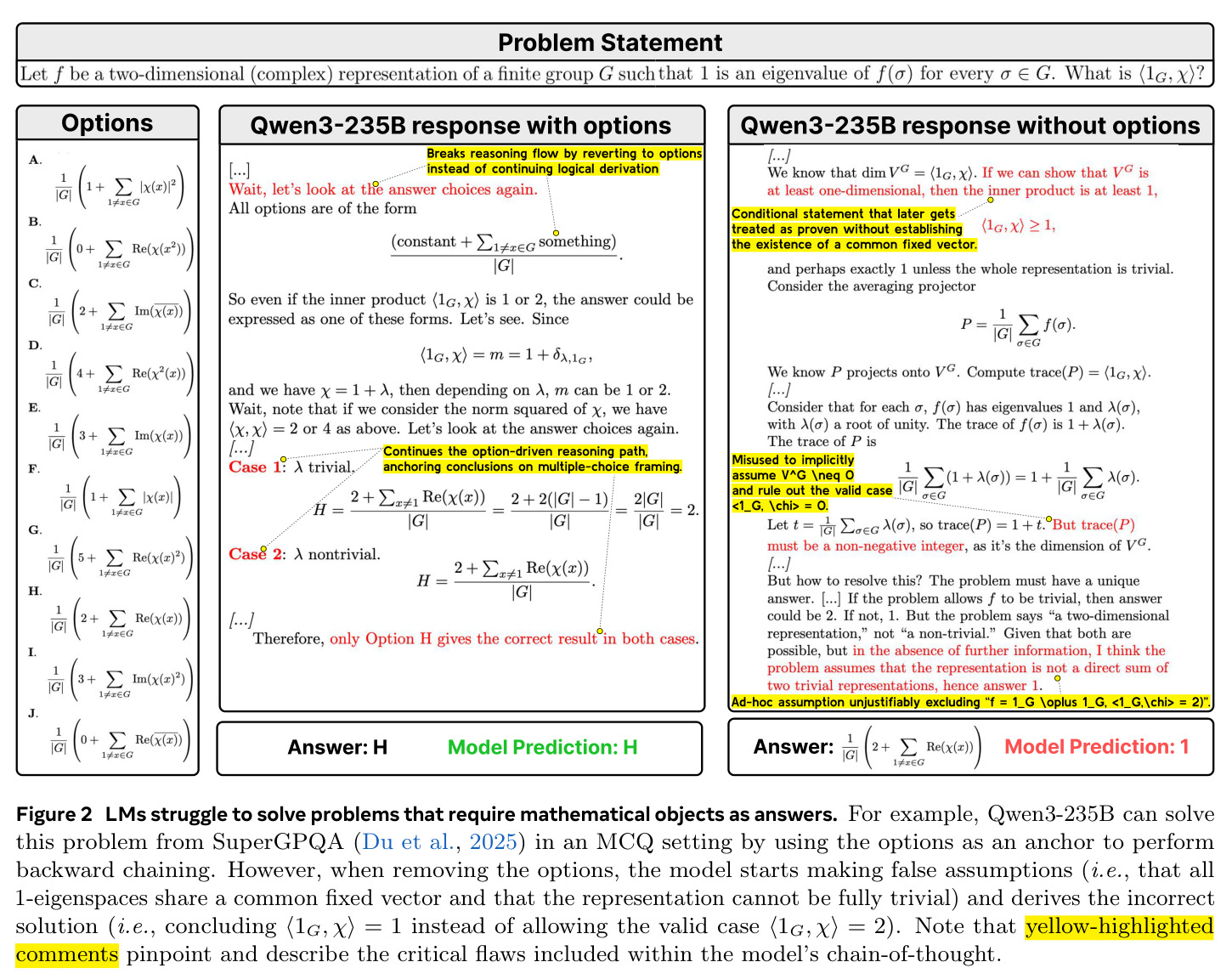
Figure 2展示了一个SuperGPQA问题的示例:左侧是有选项时Qwen3-235B的回答(正确答案H),右侧是移除选项后的回答(错误答案1)。图中用黄色标注了推理过程的关键错误:模型在无选项时做出错误假设(所有1-特征空间有公共固定向量),排除了有效情况(<1_G, chi> = 2),导致错误结论。
这张图是论文动机的核心证据,直观说明为何现有MCQA评估会高估LLM能力,以及为何需要专门评估数学对象推导能力。
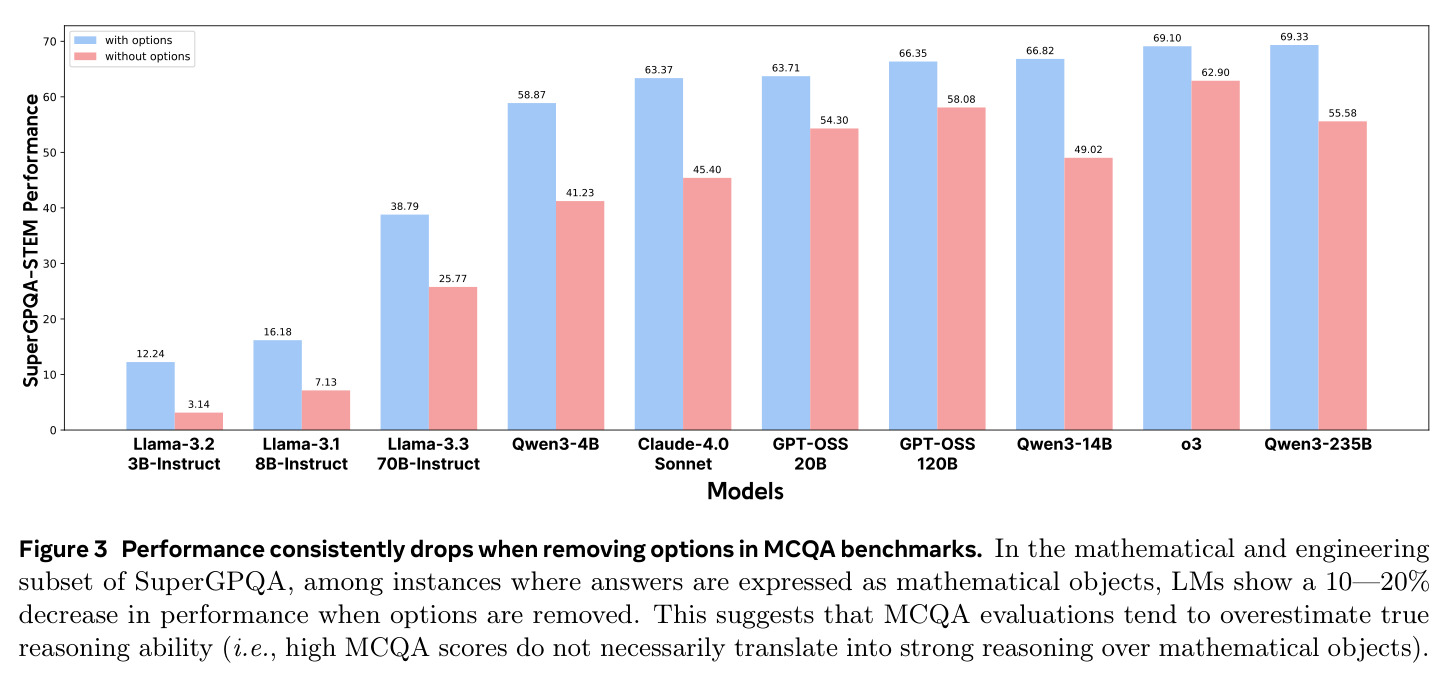
Figure 3展示多个模型在SuperGPQA数学和工程子集上,有选项和无选项时的性能对比。从Llama-3.2-3B到GPT-OSS-120B,所有模型在移除选项后性能下降10-20。特别是前沿模型:o3从69.10降到62.90,Qwen3-235B从69.33降到55.58。
这张图量化了MCQA依赖现象,说明当前基准可能高估LLM的真正推理能力,支持构建PrincipiaBench的必要性。
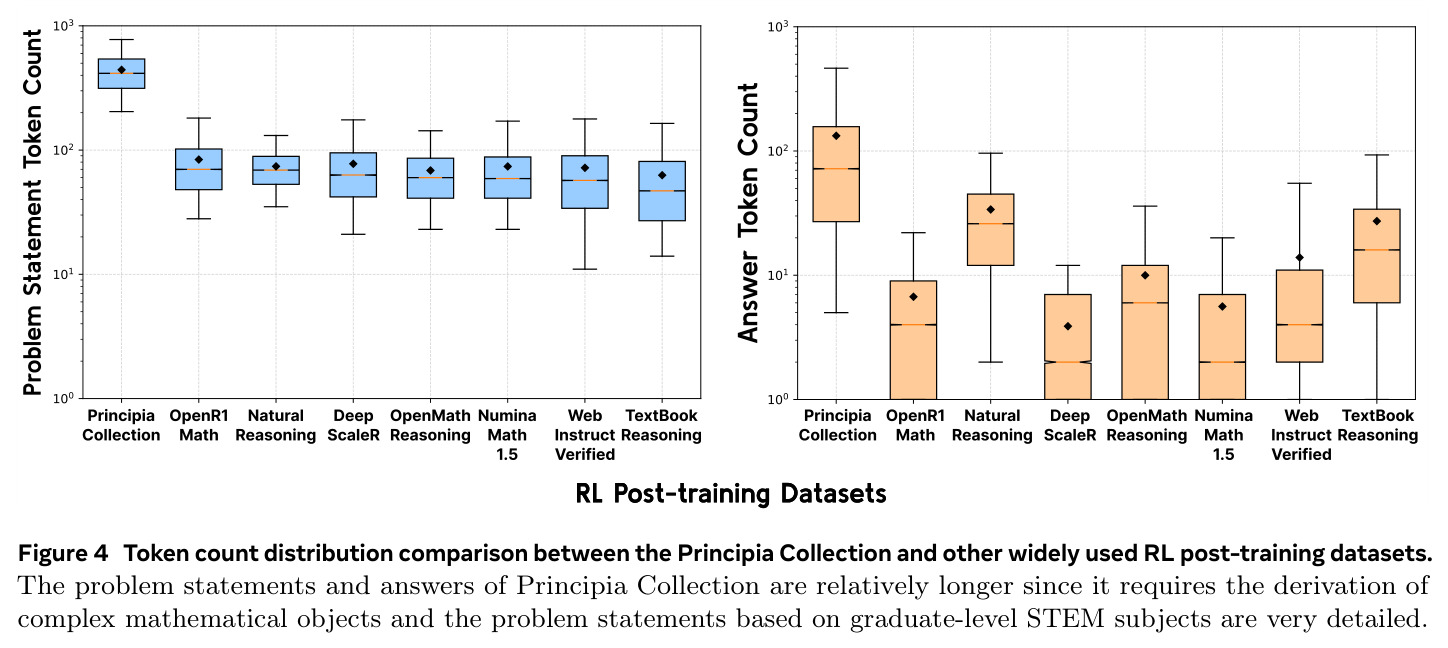
Figure 4展示Principia Collection与其他RL后训练数据集(OpenR1 Math, NaturalReasoning, DeepScaleR等)的token长度分布对比。左侧是问题陈述长度,Principia明显更长(编码研究生级概念的详细描述);右侧是答案长度,Principia全部是数学对象,而其他数据集大多是数值或简单答案。
这张图说明现有数据集缺乏复杂数学对象,支持Principia Collection的新颖性和必要性。
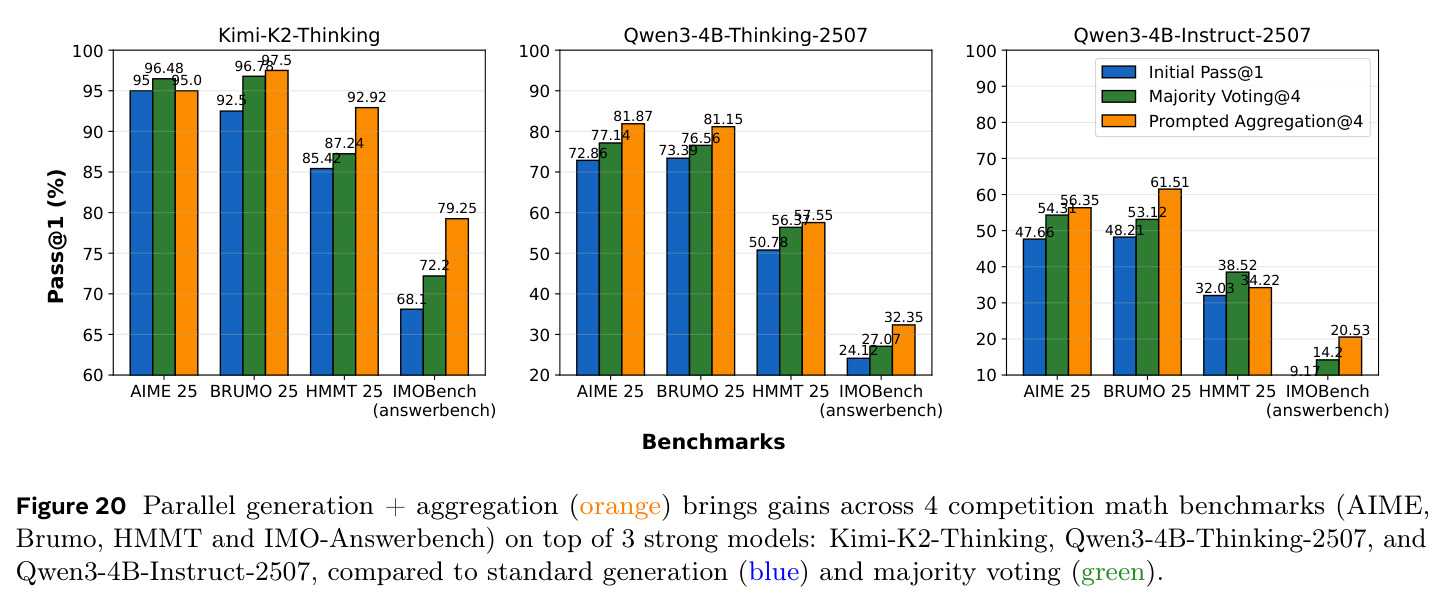
Figure 20展示三个前沿开源模型(Kimi-K2-Thinking, Qwen3-4B-Thinking-2507, Qwen3-4B-Instruct-2507)在4个竞赛数学基准(AIME 25, Brumo 25, HMMT 25, IMOBench)上的性能。蓝色是标准生成pass@1,绿色是多数投票@4,橙色是提示聚合@4。聚合方法在所有模型和基准上都带来提升,证明并行推理的价值。
这张图是ParaGator方法的动机证据,说明并行聚合能提升前沿模型,值得进一步研究和改进。
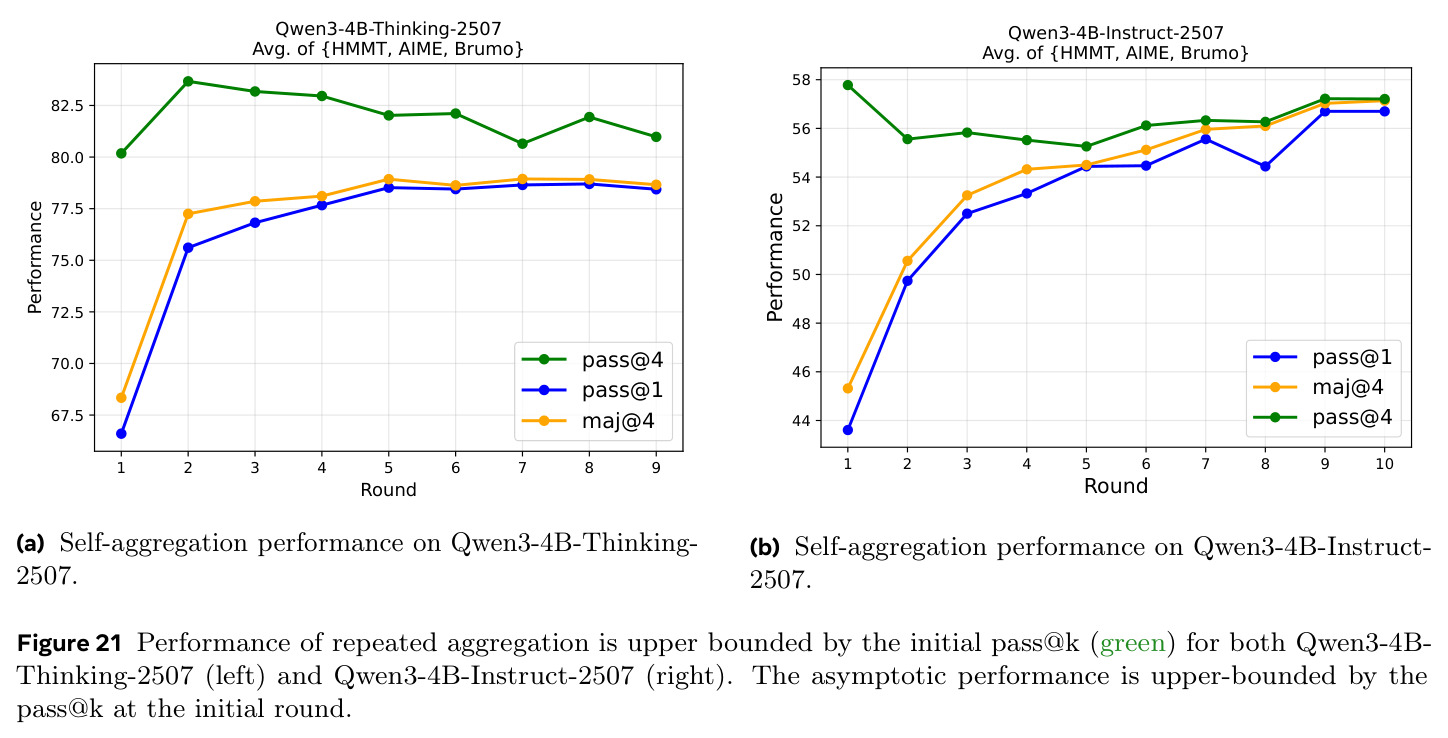
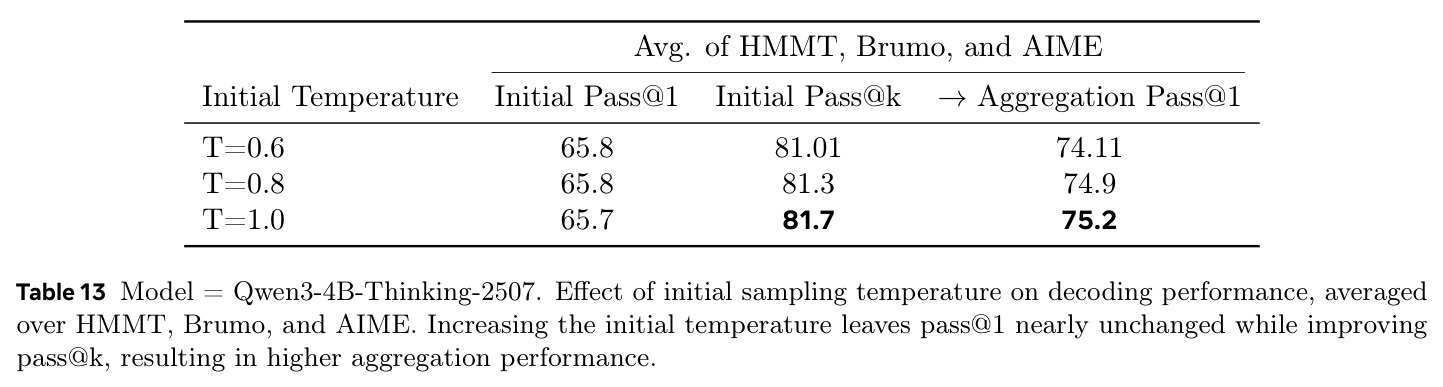
Figure 21展示Qwen3-4B-Thinking-2507和Qwen3-4B-Instruct-2507的多轮聚合性能。pass@1曲线(蓝色)从未超过初始pass@4(绿色),说明聚合性能的上界是初始pass@k。这motivates pass@k优化的必要性。
这张图证明pass@k优化的理论基础:只有提高初始多样性(pass@k)才能提升聚合性能。